 Lynden Exterior
 Why Blaine Roofs Wear Differently Than Roofs Inland
Blaine sits right up against the water at the northern edge of Whatcom County, and that location shapes everything about how a roof ages here. Homes just a few miles inland in Lynden or Ferndale deal with plenty of rain, but Blaine roofs also take on salt-laden air off the water, more direct exposure to wind coming across open shoreline, and long stretches of shade and dampness that feed moss growth almost year-round. A roofing system that would hold up fine in a drier, more sheltered part of the county can wear out faster in Blaine if it wasn't specified and installed with that exposure in mind.
This page is about one job done right for this one area: a full new roof installation on a Blaine home, built around what the local climate actually does to a roof over time — not a generic overview of roofing in general.
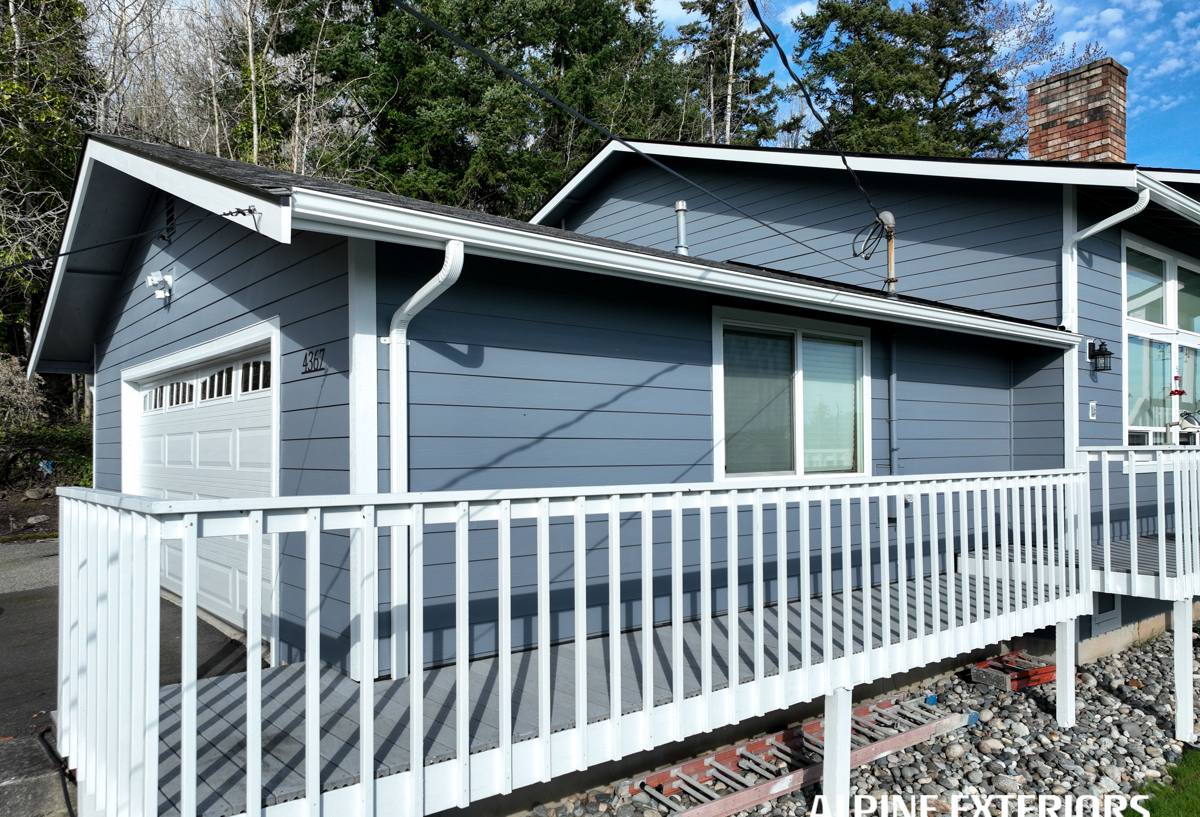
What Salt Air Actually Does to a Roof
Salt air doesn't just affect boats and dock hardware. On a roof, airborne salt accelerates corrosion on anything metal — nail heads, flashing, drip edge, roof vents, and the fasteners holding shingles or panels in place. Once corrosion starts on a fastener, it loses holding power well before it looks obviously bad from the ground. A roof that's corroding from the inside out is a slow, mostly invisible problem until something starts leaking.
For a Blaine install, that means a few things matter more than they would on a roof ten miles inland:
- Fasteners and flashing rated for corrosion resistance, not just the cheapest stock option
- Careful attention to any exposed metal — vent boots, valley flashing, chimney flashing — since these are the first parts to show salt-related wear
- Avoiding metal-on-metal contact points where galvanic corrosion can accelerate breakdown
- Regular visual inspection built into a maintenance plan, since corrosion issues are easier to catch early than to repair after a leak starts
None of this is exotic. It's mostly about not treating a Blaine roof like it's identical to one built in a drier, more sheltered location — and specifying materials and hardware accordingly.
Driving Rain and Wind Exposure
Blaine's position along the water means wind often carries rain in sideways rather than straight down, especially during fall and winter storms. Driving rain finds weaknesses that a straight-down rain never would — it pushes up under shingle tabs, into poorly lapped flashing, and through any gap in the underlayment at valleys, eaves, and roof penetrations.
A correctly installed roof accounts for this with proper underlayment coverage, ice-and-water membrane at the vulnerable spots (eaves, valleys, around chimneys and skylights), and flashing details that are lapped and sealed the right direction relative to prevailing wind and water flow. This is standard, well-established roofing practice — the difference in a place like Blaine is that shortcuts here get exposed faster. A poorly lapped valley might go unnoticed for years on a sheltered inland roof and start leaking within a season or two on an exposed Blaine roof line.
Moss, Shade, and the Long Wet Season
Whatcom County's long wet season, combined with tree cover and north-facing or shaded roof sections common on Blaine properties, creates ideal conditions for moss and algae growth. Moss isn't just a cosmetic issue. As it establishes on a roof surface, it holds moisture against the shingles or panels far longer than the material was designed to tolerate, which shortens the life of the roofing material and can work its way under shingle edges over time.
A new roof installation is the right time to address this proactively rather than treating moss as a maintenance afterthought:
- Zinc or copper strips at the ridge, which release trace metals that discourage moss growth as rain washes over them
- Shingle products with algae-resistant granules where that fits the homeowner's material choice and budget
- Attention to roof design details — proper overhangs, ventilation, and slope — that help the roof dry out faster between rain events
- A straightforward conversation about which sections of the roof are most shaded, since those areas may need more frequent gentle cleaning regardless of what preventive measures are built in
We won't promise a moss-proof roof — no roof in this climate is completely immune — but a correctly installed roof with the right preventive details will hold up noticeably better and need less aggressive cleaning over its life.
What a Correct New Roof Installation Actually Involves
A roof replacement is more than swapping old shingles for new ones. Here's what a proper job includes, in the order it typically happens:
- Full tear-off. Old roofing material and underlayment come off down to the decking. Roofing over an existing layer hides problems and shortens the life of the new roof — we don't recommend it for a full replacement.
- Decking inspection and repair. Once the deck is exposed, any water-damaged, soft, or delaminated sheathing gets identified and replaced. This step matters everywhere, but especially on a coastal home where hidden moisture damage is more common than it looks from the surface.
- Ice-and-water shield at vulnerable areas. Eaves, valleys, and any roof penetration get a self-adhering waterproof membrane before the rest of the underlayment goes down.
- Synthetic underlayment across the full roof deck. This is the roof's real second line of defense against wind-driven rain, and it matters more in an exposed location like Blaine than in a sheltered one.
- Flashing at every transition. Chimneys, skylights, sidewalls, and valleys all get new flashing, installed and lapped correctly for water to shed away from the house, not into it.
- Ventilation check and correction. Proper intake and exhaust ventilation keeps the attic dry and temperature-regulated, which protects the decking from the inside and helps prevent ice damming during cold snaps.
- Material installation. Shingles, metal panels, or whatever material was chosen go down to manufacturer spec, with attention to nailing patterns and exposure — details that directly affect wind resistance.
- Final inspection and cleanup. Walking the roof, checking flashing and fastener details, and making sure the property is left clean of debris and nails.
Choosing the Right Material for a Blaine Home
There's no single "best" roofing material for every home — it depends on budget, roof pitch, architectural style, and how much long-term maintenance the homeowner wants to take on. Here's an honest comparison for a coastal Whatcom County property:
| Material | Coastal Durability | Moss Resistance | Maintenance | Typical Lifespan |
|---|---|---|---|---|
| Architectural asphalt shingle | Good, with proper fasteners and flashing | Moderate; improves with algae-resistant granules | Periodic cleaning recommended | 25–30 years |
| Standing seam metal | Very good with corrosion-resistant coating | Good; sheds moisture quickly | Low | 40–50+ years |
| Synthetic composite shingle | Good | Moderate to good, depending on product | Low to moderate | 30–50 years |
| Cedar shake | Requires diligent maintenance in wet, mossy conditions | Lower without regular treatment | High | 20–30 years with upkeep |
We're generally cautious recommending cedar shake for shaded, moisture-heavy Blaine lots — not because the material is bad, but because it demands a maintenance commitment that a lot of homeowners underestimate in a climate this wet. That's a trade-off worth discussing honestly before you commit to a material, not after the roof is installed.
Cost Factors Homeowners Should Understand
We won't quote a price without seeing the roof, but the main factors that move the number are consistent from job to job:
| Factor | Why It Matters |
|---|---|
| Roof size and pitch | Steeper or larger roofs take more time, material, and safety setup |
| Number of penetrations and valleys | Chimneys, skylights, and valleys each need extra flashing work |
| Decking condition | Hidden rot found during tear-off adds repair cost, but it's cheaper to fix now than after a new roof is on top of it |
| Material choice | Metal and composite materials cost more upfront than asphalt but last considerably longer |
| Access and staging | Tree cover, tight lots, or difficult access can add time |
A written estimate should break these factors down clearly enough that you understand what you're paying for, not just a single lump-sum number.
Why a Crew That Already Works in Blaine Makes a Difference
Roofing crews that mostly work drier, more sheltered inland areas don't always think about salt exposure, wind direction off the water, or how aggressively moss establishes on a shaded coastal roof. A crew that regularly works Blaine and the surrounding Whatcom County coastline builds those considerations into the job by default — the fastener choice, the flashing details, the ventilation plan — instead of treating them as an afterthought or an upsell.
There's also a practical side: local crews understand Whatcom County permitting requirements, are familiar with the wind exposure categories that can affect material and installation specs near the water, and can schedule around the region's wetter months more realistically than a crew coming from farther away.
Signs a Blaine Home May Need a New Roof
Not every roofing problem means a full replacement, but here's a practical checklist for when it's time to have a roof evaluated seriously:
- Shingles are cupping, curling, or losing granules faster than expected for their age
- Moss coverage keeps returning heavily within months of cleaning
- You can see daylight or water staining in the attic near the roof deck
- Flashing around chimneys, vents, or valleys looks corroded, lifted, or gapped
- The roof is approaching or past the expected lifespan for its material
- Multiple recent repairs haven't solved a recurring leak
- Energy bills have crept up with no other clear cause, which can point to failing attic ventilation or insulation tied to roof condition
If a few of these apply, it's worth getting an honest evaluation before a small issue turns into decking damage or an interior leak.
Let's Take a Look at Your Roof
If you're weighing a new roof for a Blaine property, we're happy to come take a look, walk you through what we're seeing, and put together a clear, honest estimate — no pressure, no upsell tactics. Fill out the form below and we'll get in touch to schedule a time that works.