 Lynden Exterior
 Why Birch Bay's Coastal Climate Is Hard on Siding
Birch Bay sits right on the water, and that changes what siding has to survive compared to homes just a few miles inland in Whatcom County. Salt-laden air corrodes exposed metal fasteners and trim over time. Wind-driven rain off the Strait doesn't fall straight down — it gets pushed sideways into wall assemblies, seams, and butt joints that would stay dry on a more sheltered lot. And the same damp, shaded, cool conditions that make this stretch of coastline beautiful also make it one of the better places in the county to grow moss, algae, and mildew on a north-facing wall.
None of that means siding is doomed here. It means the installation has to be done with the coast in mind from the first course to the last piece of trim. A siding job that would hold up fine in a drier, more protected part of Whatcom County can fail early in Birch Bay if it's installed the same way. We've built our process around that difference.
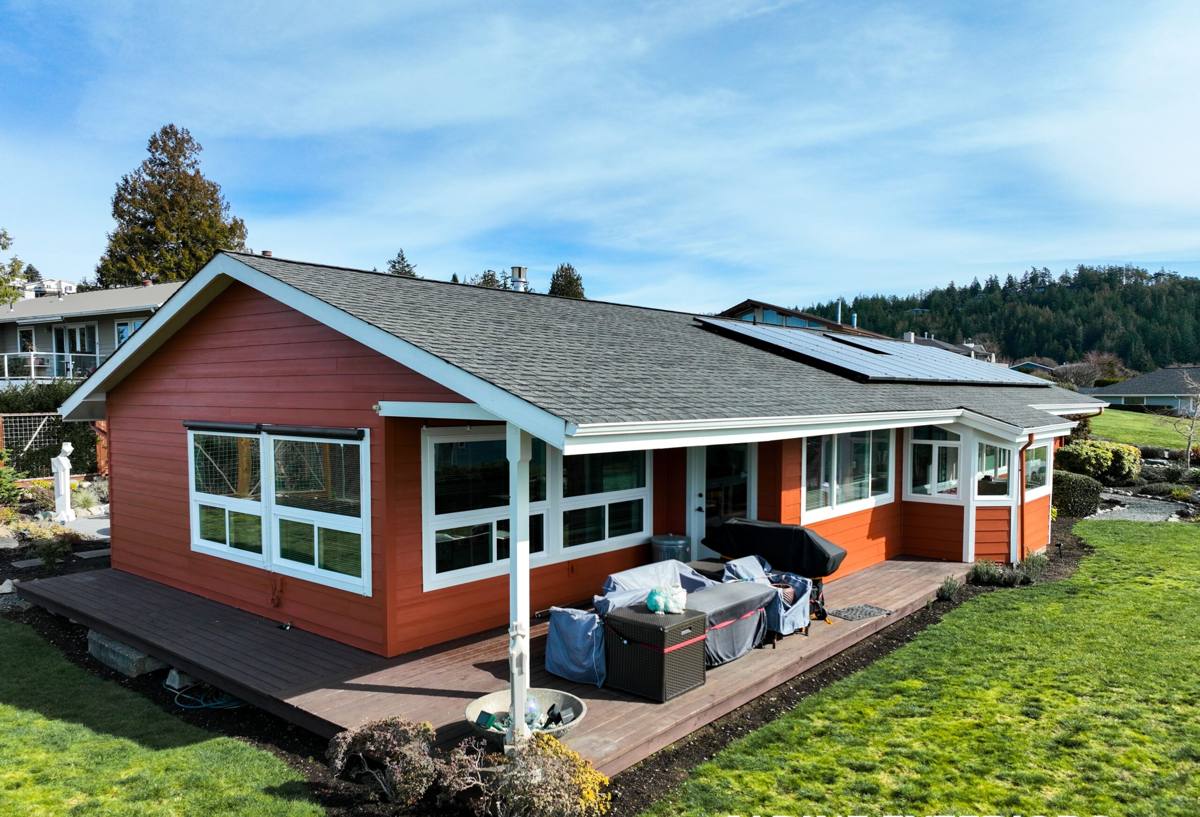
What "Correct" Siding Installation Means in a Salt-Air Environment
Moisture Management Starts Before the Siding Goes On
The siding itself is the last layer, not the first line of defense. Underneath it, a continuous weather-resistive barrier, properly lapped and taped, is what actually keeps wind-driven rain out of the wall cavity. Every window, door, and penetration needs flashing that directs water back out, not into the sheathing. Skipping or rushing this step is the single most common reason siding fails early on exposed coastal lots — the siding looks fine while the wall behind it is quietly rotting.
Fasteners and Hardware That Won't Corrode
Salt air is hard on metal. Fastener choice matters more in Birch Bay than it does a few miles inland: corrosion-resistant nails or screws, rated for the cladding and the exposure, keep rust streaks and loosening fasteners from showing up within a few seasons. The same goes for flashing metal, trim fasteners, and any hardware left exposed to the weather.
Clearance and Ventilation
Siding installed too close to grade, decking, or roofing wicks up moisture and stays wet longer than it should. Proper clearances, plus rainscreen or drainage gaps behind the cladding where the wall assembly calls for it, let the wall breathe and dry out between storms instead of staying saturated through the wet months.
Material Choice Matters More on the Coast
Every siding material behaves differently once you add constant moisture and salt exposure to the equation. Some hold paint well but swell or rot at cut edges and seams. Some resist moisture but expand and contract enough in temperature swings to stress caulk joints and fasteners over the years. The table below is a general look at how common siding materials tend to perform under coastal conditions like Birch Bay's — not a knock on any one product, just an honest comparison of trade-offs.
| Material | Moisture Behavior | Salt Air Exposure | Maintenance Burden |
|---|---|---|---|
| Vinyl | Doesn't rot, but seams and J-channels can trap moisture; warps in heat and can crack in cold | Fades and becomes brittle faster under UV and salt over time | Low, but limited repair options once damaged or discolored |
| Cedar / Wood | Absorbs moisture readily; prone to swelling, cupping, and rot at joints without diligent upkeep | Salt accelerates weathering and finish breakdown | High — regular refinishing and inspection required |
| LP SmartSide (engineered wood) | Resists rot better than raw wood, but edges and cuts remain moisture-sensitive if not sealed and maintained | Coating and caulk joints need consistent upkeep near the coast | Moderate — depends heavily on installation and ongoing sealing |
| James Hardie Fiber Cement | Non-combustible, dimensionally stable, engineered to resist moisture-related swelling and cracking | Factory-baked ColorPlus finish resists fading and doesn't rely on field-applied coatings for protection | Low — periodic washing, minimal repainting needed with ColorPlus finish |
Why We Install Only James Hardie Fiber Cement in Birch Bay
We made the decision to install James Hardie exclusively, and a coastal community like Birch Bay is exactly why. Fiber cement doesn't feed moss or algae the way wood fiber can, it doesn't warp or become brittle the way vinyl can in wide temperature swings, and it's non-combustible — a real consideration anywhere in Whatcom County given wildfire season concerns in recent years. Hardie's HardieZone system engineers its product lines for specific regional climates, including the wetter, cooler conditions found here in the Pacific Northwest, rather than shipping one generic product to every part of the country.
The factory-applied ColorPlus finish matters just as much as the substrate. Paint applied on-site after installation is only as good as the weather conditions and prep work on the day it's applied. A factory finish, baked on under controlled conditions before the boards ever leave the plant, holds color and resists fading and moisture intrusion far more consistently — and it's backed by its own warranty coverage. For a home taking on salt air and near-constant winter rain, that consistency is worth more than a lower sticker price up front.
We don't install LP SmartSide, vinyl, Cemplank, Allura, primed spruce, or cedar. Each of those has a place in the market, but we don't think any of them hold up as well, look as good as long, or carry as strong a warranty as Hardie does on an exposed Whatcom County coastline. We'd rather install one product well than offer five and cut corners on any of them.
Our Birch Bay Siding Installation Process
- On-site assessment — we walk the exterior, check the existing wall assembly, note wind exposure, drainage, and any moisture damage that needs addressing before new siding goes on.
- Weather barrier and flashing installation — a continuous, properly lapped weather-resistive barrier goes down first, with flashing at every window, door, and penetration.
- Substrate repair — any rot, soft sheathing, or damaged framing found underneath the old siding gets repaired before we close the wall back up.
- Hardie installation to manufacturer spec — correct fastener spacing, joint treatment, and clearances, using corrosion-resistant hardware suited to the coastal exposure.
- Trim, caulking, and finish detail — clean lines at corners, windows, and transitions, sealed against wind-driven rain.
- Final walkthrough — we review the completed work with the homeowner before calling the job done.
Every step matters on its own, but it's the sequence and the attention at the transitions — flashing, fastening, clearances — that determines whether a siding job holds up through Birch Bay winters or starts showing problems in a few years.
Moss, Algae, and Long-Term Maintenance in a Marine Climate
Even the best siding installation doesn't make moss and algae growth impossible near Birch Bay — shaded, north-facing walls and fence lines close to vegetation will always be more prone to it than open, sun-exposed elevations. What correct installation does is remove the moisture-trapping details — bad flashing, tight clearances, poor drainage — that turn normal coastal moss growth into a siding failure. A well-installed Hardie exterior sheds that growth with routine cleaning instead of absorbing it into the material itself.
Simple homeowner maintenance goes a long way here:
- Rinse siding gently once or twice a year, focusing on shaded and north-facing walls where moss and algae take hold fastest
- Keep gutters clear so overflow doesn't run down the wall face during heavy rain
- Trim back shrubs and trees that keep siding shaded and damp longer than the rest of the house
- Check caulking at trim and window edges annually and have any gaps resealed before winter rains set in
- Look for chalky staining, streaking, or bubbling at seams — early signs worth having a professional look at
Why Hiring a Crew That Already Works Birch Bay Matters
Siding installation in a coastal Whatcom County community isn't identical to siding installation twenty miles inland, and a crew that mostly works drier, more sheltered lots may not think through the same details by habit. A crew that regularly works Birch Bay knows to plan for wind-driven rain at every seam, to spec corrosion-resistant hardware without being asked, and to recognize which walls on a coastal property need extra attention to drainage and clearance. That local pattern-recognition is hard to replicate on a one-off job.
It also matters for permitting and code compliance specific to the area, and for realistic scheduling — coastal weather windows can be narrower than inland ones, and a crew familiar with the area plans around that instead of getting caught mid-job by a shift in conditions.
Signs Your Current Siding May Be Struggling With Birch Bay's Climate
- Persistent moss or algae that returns quickly after cleaning
- Soft spots, bubbling, or visible swelling, especially near the bottom courses or around windows
- Rust streaking from fasteners or trim hardware
- Paint that's peeling or failing faster than it should between repaints
- Gaps, cracking, or separation at seams and corner trim
- A musty smell or visible staining on interior walls that share an exterior wall with problem siding
Any one of these is worth a professional look before it turns into a bigger repair. Caught early, most of these issues are manageable; left alone through another wet Birch Bay winter, they tend to get more expensive.
Get a Straight Answer About Your Birch Bay Home
If your siding is showing its age, or you just want an honest read on how it's holding up against the salt air and rain, we're happy to take a look. Reach out for a free, no-pressure estimate — we'll walk the exterior with you, explain what we see, and lay out what correct James Hardie installation would look like for your home.