 Lynden Exterior
 Metal Roofing in Birch Bay: Built for a Waterfront Climate
Birch Bay sits directly on the water in northern Whatcom County, and that location puts more stress on a roof than almost anywhere else in the county. Homes here take a steady dose of salt-laden marine air off the bay, long stretches of wind-driven rain through fall and winter, and a moss season that can run most of the year on shaded or north-facing roof planes. Metal roofing holds up well against all three of those conditions when it's specified and installed correctly, which is exactly why it's become a common upgrade for waterfront and near-waterfront homes in this area.
This page is specifically about metal roofing for Birch Bay properties — what the local climate demands from a metal roof, what correct installation actually involves, and how to think through the decision if you're weighing it against asphalt shingles or an aging roof that's due for replacement. It's not a generic metal roofing overview; the details below are shaped around this one stretch of coastline.
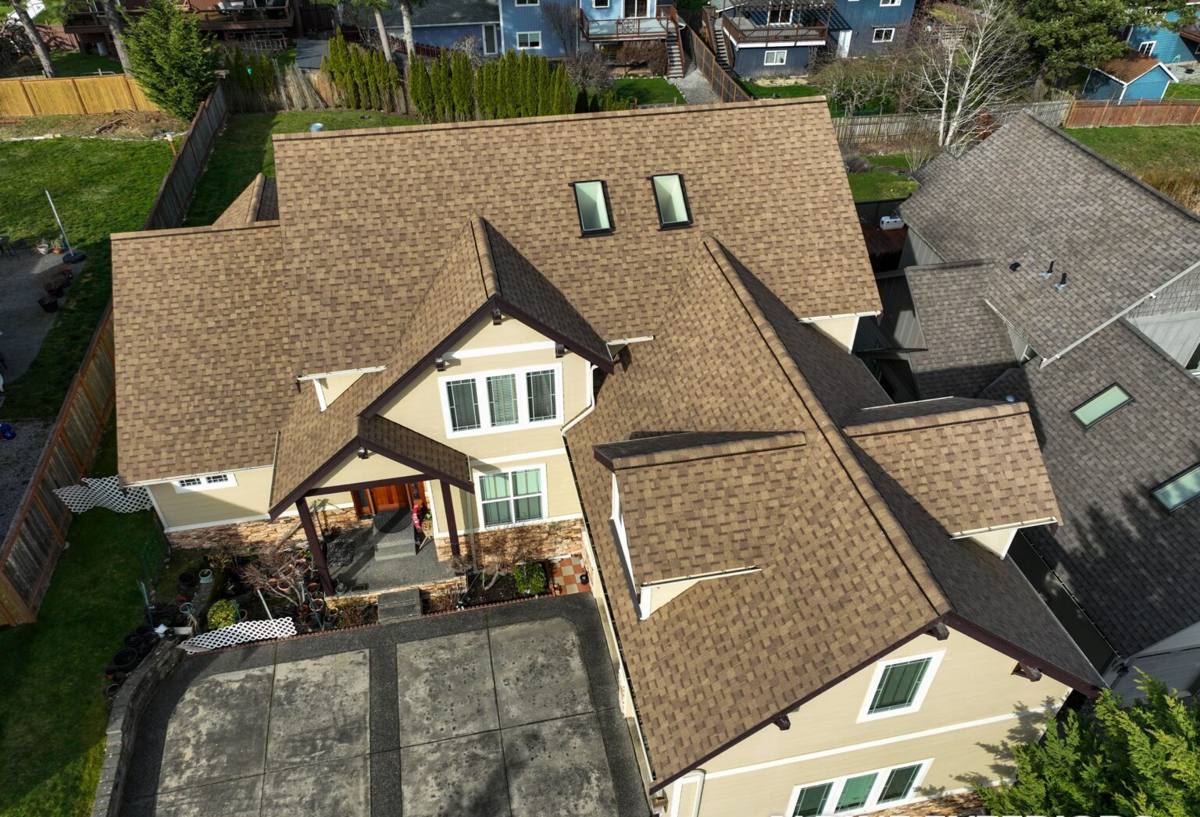
What Birch Bay's Climate Does to a Roof
Salt Air and Corrosion
Being on the bay means more direct salt exposure than homes even a few miles inland deal with. Salt-laden air accelerates corrosion on fasteners, flashing, and any metal component that isn't finished or coated for it. On a metal roof, that makes coating quality and fastener selection two of the most important decisions in the whole project — a panel system that would perform fine in a drier, inland setting can start showing premature corrosion at the fastener heads or cut edges here if it wasn't specified with this exposure in mind.
Wind-Driven Rain
Waterfront exposure also means more wind, and wind-driven rain doesn't fall straight down — it gets pushed sideways and even upward into seams, laps, and roof-to-wall transitions. That's a heavier moisture load than an annual rainfall figure suggests. Metal roofing sheds water aggressively when it's detailed correctly, but the seams, panel end laps, and penetration flashings still have to be built for water moving sideways under wind pressure, not just water running downhill.
Moss, Algae, and a Long Growing Season
Mild temperatures, shade, and near-constant moisture add up to a long moss and algae season across this part of Whatcom County. Roofs are usually the first place it shows up, especially on shaded slopes or under tree cover. Any roofing surface that's porous or holds moisture against itself becomes a growth surface over time — which is one of the main reasons metal performs so differently here than asphalt or wood-based roofing does.
Why Metal Roofing Performs Well in This Environment
Metal roofing isn't the right fit for every home or every budget, and we'll say so plainly during an estimate if a well-installed asphalt shingle roof is the more sensible call. But for a waterfront property like a Birch Bay home, metal has some real, specific advantages over other roofing materials:
- Smooth, non-porous surface: Moss and algae have a much harder time getting a foothold on metal than on a granulated or porous surface, and what does land on the roof tends to wash off rather than root in.
- Aggressive water shedding: Steep-sided panel profiles and interlocking or overlapping seams move water off the roof quickly, which matters directly for a property taking wind-driven rain off open water.
- No moisture absorption: Unlike wood shakes or lower-grade shingles, metal doesn't soak up water and swell, cup, or rot. It either sheds water or it doesn't — there's no slow degradation from repeated wetting and drying.
- Long service life: A correctly installed metal roof commonly outlasts asphalt shingle roofing by decades, which matters on a property where the roof is dealing with harder conditions to begin with.
- Non-combustible: Metal doesn't contribute fuel to a fire the way some other roofing materials can, which can matter for both safety and insurance considerations.
Panel Types We Work With
"Metal roofing" covers more than one product, and the right panel type depends on the roof's pitch, the look the homeowner wants, and budget. The two most common approaches for residential work in this area are standing seam and exposed-fastener panel systems.
| Panel System | How It's Fastened | Maintenance in Salt Air | Typical Fit |
|---|---|---|---|
| Standing seam | Concealed clips under raised, interlocking seams — no exposed fastener heads on the roof field | Low; no exposed fasteners to corrode or work loose over time | Most residential roofs, especially where longevity and a cleaner look matter |
| Exposed-fastener panel | Screws driven directly through the panel face into the deck or purlins | Moderate; fastener gaskets and heads need periodic checking and occasional replacement | Budget-conscious projects, outbuildings, or simpler roof geometries |
Standing seam costs more upfront because of the labor and the concealed clip system, but on a salt-air property it removes one of the biggest long-term maintenance items — exposed screw fasteners that eventually need re-torquing, re-gasketing, or replacing as their washers age. Exposed-fastener panels are a legitimate, lower-cost option and we install them where they make sense, but we're upfront that they carry more long-run maintenance in this specific climate than standing seam does.
What Correct Metal Roof Installation Requires
A metal roof only delivers on its reputation for longevity when it's installed correctly. The panel itself is a small part of what actually determines how the roof performs over twenty or thirty years in this climate.
Fasteners, Flashing, and Avoiding Galvanic Corrosion
Different metals react to each other when they're in direct contact and exposed to moisture — a process called galvanic corrosion — and salt air speeds that reaction up considerably. That means fastener material, flashing material, and panel material all have to be compatible, not just individually corrosion-resistant. We match fasteners and flashing to the panel system being installed and avoid combinations of dissimilar metals that would accelerate corrosion at the exact points where the roof is most vulnerable — seams, laps, and penetrations.
Coating and Finish Quality
The factory finish on a metal panel is what actually stands between the base metal and the weather for the life of the roof. Higher-grade coatings hold their color and resist chalking, fading, and film breakdown far longer in sustained salt and moisture exposure than a basic paint finish does. On a waterfront property like a Birch Bay home, we treat coating quality as a real decision point in the estimate, not an afterthought — a cheaper finish can shorten the practical service life of an otherwise well-installed roof.
Underlayment and Ventilation
Metal panels aren't the roof's only line of defense — a high-temperature synthetic underlayment underneath the panels, with self-adhered membrane at eaves, valleys, and penetrations, handles the wind-driven rain and any condensation that forms on the underside of the metal. Proper attic and roof deck ventilation matters just as much on a metal roof as any other roofing type, since trapped moisture underneath the panels can damage the deck even when the roofing surface above it is performing perfectly.
Allowing for Panel Movement
Metal panels expand and contract with temperature swings, and a correctly installed system accounts for that movement rather than fighting it. Standing seam systems use floating clips that let panels move slightly without stressing the seams or fasteners; getting that detail wrong is a common cause of oil-canning, loosened seams, or stress cracks that show up years after installation, not on day one.
Cost Factors for a Metal Roof in Birch Bay
There's no single price that applies to every metal roof, but the variables that move the number are consistent from job to job. Understanding them helps you read a written estimate instead of just comparing a bottom-line total.
| Factor | Why It Moves the Price |
|---|---|
| Panel system (standing seam vs. exposed-fastener) | Standing seam requires more labor and concealed clip hardware, raising upfront cost but lowering long-run maintenance |
| Roof pitch and complexity | Multiple valleys, dormers, and roof-to-wall transitions require more custom flashing and cutting per square than a simple roofline |
| Coating and finish grade | Premium coatings cost more per panel but resist salt-air fading and chalking meaningfully longer |
| Tear-off vs. new construction | Removing an existing roof to bare decking adds labor and disposal cost that a new build doesn't carry |
| Underlayment and flashing upgrades | Full synthetic underlayment and self-adhered membrane at eaves and valleys add cost but function as the roof's real second line of defense against wind-driven rain |
Metal roofing generally costs more upfront than architectural asphalt shingles. On a waterfront property where moss, salt exposure, and driving rain shorten the practical lifespan of lower-cost materials, that upfront difference is often smaller over the life of the roof than it looks on day one — but it's a real cost, and we'll walk through the honest trade-offs with you rather than assuming metal is automatically the right call for every budget.
Signs Your Roof Might Be a Good Candidate for a Metal Upgrade
- Your current roof needs moss removal every year or two and the moss keeps returning on the same shaded slopes
- You're seeing granule loss, curling, or cupping on an aging asphalt shingle roof
- You're planning to stay in the home long-term and want to stop thinking about roof replacement on a fifteen-to-twenty-year cycle
- Fasteners, flashing, or gutters elsewhere on the house show visible corrosion from salt exposure
- You want a roofing material that sheds wind-driven rain more aggressively than a shingle roof can
- You're already planning a full tear-off and want to weigh the real long-term difference between materials before deciding
Our Process for a Birch Bay Metal Roof
- On-site assessment: We look at the existing roof, deck condition, pitch, and how the current roofing has handled moisture and salt exposure over time.
- Panel and finish selection: We walk through standing seam versus exposed-fastener options, coating grades, and color, based on your budget and how long you plan to own the home.
- Written scope and timeline: A clear estimate that spells out panel system, underlayment, flashing details, and fastener specification before any work begins.
- Tear-off and deck prep: Old roofing comes off to bare decking where required, with any soft or damaged decking replaced and shown to you before it's covered.
- Underlayment and flashing installation: Self-adhered membrane at eaves, valleys, and penetrations, plus full synthetic underlayment, installed before a single panel goes on.
- Panel installation: Panels installed with fasteners and clips matched to the system and finished with properly lapped, corrosion-resistant flashing at every transition.
- Final walkthrough: We review the completed roof with you and go over any manufacturer warranty terms tied to the installation.
Why a Crew That Already Works Birch Bay Matters
A contractor who works this specific stretch of coastline regularly already knows how salt air, wind exposure, and sustained moisture behave differently here than they do even a few miles inland in Whatcom County. That familiarity shows up in the details that actually determine how a metal roof performs over decades — which fastener and coating combinations hold up, how much extra flashing detail a given valley or roof-to-wall transition needs, and which shortcuts show up as callbacks two or three winters later instead of on install day. Metal roofing rewards that kind of experience more than most materials, because the panels themselves are only as good as the fastening, flashing, and coating decisions made around them.
A Simple Checklist Before Hiring for Metal Roofing in Birch Bay
- Ask which panel system they recommend and why — standing seam versus exposed-fastener — for your specific roof and budget
- Confirm current Washington contractor licensing and active liability insurance
- Ask how they handle fastener and flashing material selection for salt-air exposure specifically
- Get the manufacturer coating warranty in writing, including what installation practices are required to keep it valid
- Get a clear, written scope of work before any contract is signed
If you're weighing a metal roof for a Birch Bay home, or comparing it honestly against a shingle replacement, we're glad to walk the roof with you and give a straightforward read on what it needs and what it would cost. Reach out below for a free, no-pressure estimate.