 Lynden Exterior
 Why Birch Bay Siding Takes a Different Approach
Birch Bay sits right on the water, and that changes what a house needs from its exterior. Homes a few miles inland in Lynden deal with plenty of rain, but Birch Bay properties get that rain combined with salt-laden air coming off the bay, near-constant coastal humidity, and long stretches of shade and moisture that make moss and algae a year-round concern rather than a seasonal nuisance. Siding here doesn't just need to look good for a season — it needs to hold up to salt exposure that accelerates corrosion on fasteners and trim, wind-driven rain that finds every gap in a poor installation, and a moss season that can stretch from fall through spring in the shadier, north-facing parts of a lot.
We install James Hardie fiber cement siding exclusively, and Birch Bay is one of the areas where that decision matters most. This page covers what a correct fiber cement siding job looks like for a Birch Bay home, why the material and the installation details both matter this close to the water, and how our process works from first estimate to finished wall.
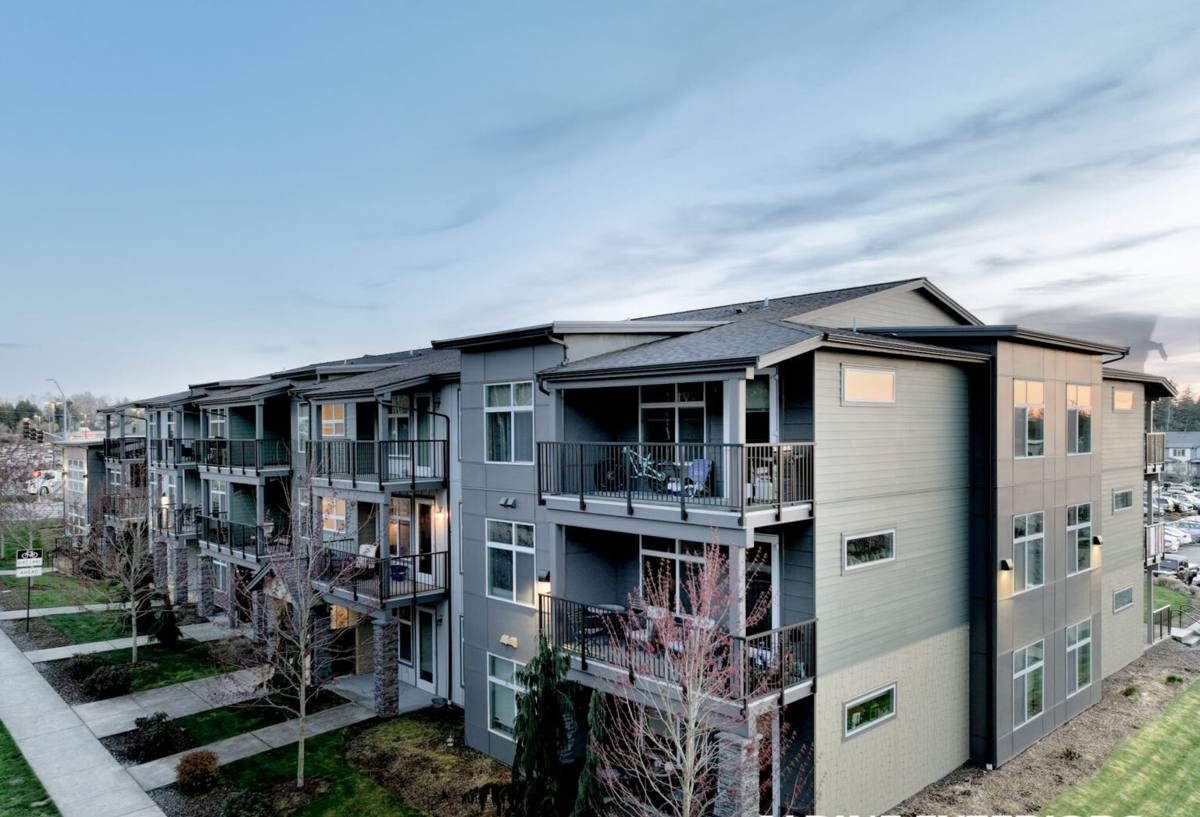
What Salt Air and Driving Rain Actually Do to a House
Salt Air
Airborne salt doesn't just sit on the surface of your siding — it works into fastener heads, trim joints, and any exposed wood or metal. Over years, that accelerates corrosion in staples, nails, and flashing that weren't rated for coastal exposure, and it breaks down paint film faster than it would a few miles inland. Homes closer to the water in Birch Bay see this show up first at corners, around window trim, and anywhere fasteners are exposed to weather.
Driving Rain
Wind off the bay pushes rain sideways, not straight down. That means water gets driven up under laps, into butt joints, and behind trim in ways that vertical rain never would. A siding system with generous, correctly calculated lap coverage and properly sealed joints handles this fine. A system installed to minimum spec, or with joints that rely on caulk alone to stay dry, will eventually let water in — and once water gets behind siding, it can sit there because coastal humidity slows drying time.
Moss Season
Moss and algae need moisture and shade, and Birch Bay's tree cover combined with marine air gives them both for a good part of the year. Moss itself doesn't damage fiber cement the way it can damage wood, but a heavy moss mat holds moisture against the wall longer, which stresses paint film, caulk joints, and anything underneath that isn't fully sealed. A siding job that accounts for airflow, proper flashing, and factory-cured finish handles moss as a cosmetic wash-down issue, not a structural one.
Why We Only Install James Hardie
We made a standardization decision a long time ago: fiber cement, and specifically James Hardie, is what goes on homes we work on. That's not a marketing position — it's a practical one, especially for a coastal community like Birch Bay.
- Non-combustible material — fiber cement doesn't burn, rot, or feed insects the way wood-based products can.
- ColorPlus factory finish — the color is baked on at the factory under controlled conditions, which holds up better against salt air and UV than field-applied paint, and it's backed by its own finish warranty separate from the product warranty.
- Climate-engineered HZ product lines — Hardie's HZ5 formulation is engineered for the freeze-thaw, moisture-cycling climate of the Pacific Northwest, which includes the wet coastal conditions Birch Bay sees.
- Dimensional stability — fiber cement doesn't swell and shrink with moisture the way wood-based siding can, which matters when a house is absorbing humidity most of the year.
- A strong, transferable warranty — one that holds up because the product performs, not because the fine print is generous.
We don't install LP SmartSide, vinyl, Cemplank, Allura, primed spruce, or cedar. Each of those has its place in the market, but none of them combine the fire performance, moisture behavior, and factory-finish durability that a coastal, high-moisture area like Birch Bay calls for. We'd rather install one product correctly and stand behind it than offer a menu of options with different trade-offs to manage.
What a Correct Installation Involves Here
Fiber cement siding is only as good as the installation behind it. In a low-moisture inland climate, sloppy details might not show up for years. In Birch Bay, they show up fast. A correct job includes:
- A drainage plane (weather-resistive barrier) installed and lapped correctly, shingle-style, so any water that gets past the siding has somewhere to go besides the sheathing.
- Rainscreen furring or a drainage gap where conditions call for it, so the back side of the siding and the wall assembly can actually dry between weather events instead of staying damp.
- Corrosion-resistant fasteners — stainless steel or hot-dip galvanized, not standard-coated fasteners that will corrode faster in salt air.
- Correct nailing pattern and fastener placement per Hardie's installation instructions — over-driven or misplaced fasteners are one of the most common causes of early siding failure.
- Proper lap dimensions and butt joint treatment — undersized laps are one of the main ways wind-driven rain gets behind siding.
- Flashing integrated at every window, door, and penetration — not caulk substituting for flashing.
- Correct clearance at the ground, decks, and roof lines, so siding isn't sitting in standing water or trapping moisture against untreated wood.
None of this is exotic. It's the difference between following the manufacturer's installation instructions to the letter and not — and in a marine climate, that difference determines whether a wall stays dry for decades or starts showing problems in five years.
Our Process for a Birch Bay Home
1. Walk-Through and Assessment
We look at your home's specific exposure — how close you are to the water, which walls take the worst of the wind-driven rain, where moss and algae are already established, and what condition your current siding, trim, and sheathing are in. Coastal exposure isn't uniform even within Birch Bay; a wall facing the water needs more attention to lap coverage and flashing than a sheltered wall on the same house.
2. Scope and Estimate
We put together a written scope covering the Hardie product line and profile that fits your home, the underlayment and fastener approach, trim and flashing details, and a straightforward cost breakdown. No pressure, no upsell script — just what your house needs and why.
3. Prep and Tear-Off
Old siding comes off, and we check the sheathing underneath for moisture damage before anything new goes on. This is often where coastal homes reveal problems that weren't visible from outside — catching that now, instead of covering it up, is part of the job.
4. Weather Barrier and Flashing
This is the step that matters most in a place like Birch Bay. The drainage plane, flashing, and any rainscreen gap get installed before a single piece of siding goes up, because this is the layer that actually keeps water out of your walls — the siding is the second line of defense, not the first.
5. Installation
Hardie siding goes up to manufacturer spec: correct fastener type and placement, correct lap and joint treatment, correct clearances. We don't cut corners on details that don't show up until years later.
6. Final Walk-Through
We go over the finished work with you, including basic care — how to wash off moss and algae buildup safely, what to watch for, and what's covered under warranty.
Comparing Siding Approaches for a Coastal Property
| Factor | Fiber Cement (Hardie), Installed to Spec | Minimum-Spec or Non-Hardie Installation |
|---|---|---|
| Salt air resistance | Factory finish and stable material resist salt exposure well over decades | Field-applied finishes and lower-grade fasteners degrade faster near the water |
| Wind-driven rain | Proper laps, flashing, and drainage plane keep water out of the wall assembly | Undersized laps or missing flashing let water track behind siding over time |
| Moss and algae | Cosmetic wash-down only; finish and joints stay sealed underneath | Trapped moisture under moss mats stresses seams and caulk faster |
| Fire performance | Non-combustible material | Varies; some wood-based products are combustible |
| Long-term maintenance | Occasional wash-down; factory finish reduces repainting needs | More frequent painting, caulking, and spot repairs |
Why Local Installation Experience Matters
A crew that already works in Birch Bay knows which walls on a coastal lot take the worst weather, how far moss and algae growth typically extends up a wall in a shaded, damp yard, and what fastener and flashing choices actually hold up here versus a few miles inland in Lynden or further into Whatcom County. That's not something you get from a general installation manual — it comes from doing the work in this specific environment and seeing what does and doesn't hold up over years.
It also means we're not guessing at your home's exposure category. Waterfront and near-waterfront lots need more conservative choices on fasteners, flashing, and lap dimensions than a sheltered inland lot, and a crew unfamiliar with the area may not know to make that distinction.
Signs Your Birch Bay Home May Need New Siding
- Persistent moss or algae staining that comes back quickly after cleaning
- Soft spots, bubbling, or visible rot at corners, trim, or near the ground line
- Paint that's chalking, peeling, or failing faster than it should for its age
- Visible gaps, warping, or separation at seams and joints
- Rust staining around fasteners or trim, a sign of fastener corrosion
- Rooms that feel damp, drafty, or musty along exterior walls
If you're seeing one or two of these, it may be a repair. If you're seeing several at once, especially combined with visible moisture damage, it's usually a sign the whole system — not just the surface — has reached the end of its service life.
Get a Straight Answer About Your Home
If you're dealing with recurring moss, early paint failure, or you just want to know what condition your siding is really in, we're happy to take a look. We'll give you a straightforward assessment of what your Birch Bay home needs, what a correct James Hardie installation would involve, and honest numbers to plan around. Reach out for a free, no-pressure estimate using the form below.