 Lynden Exterior
 Building a Deck That Actually Holds Up in Birch Bay
Birch Bay sits right on the water, and that changes what a deck has to deal with compared to a deck built a few miles inland. The salt air corrodes hardware faster, the wind-driven rain finds its way into joints that would stay dry elsewhere, and the shaded, damp stretches of the year grow moss on any surface that doesn't get regular sun or airflow. A deck built without those conditions in mind will still look fine on installation day. The problems show up two or three winters later, in the form of rust streaks, soft boards, and a slick, mossy surface that's genuinely dangerous to walk on.
We build decks for homeowners across Whatcom County, and Birch Bay properties get treated differently from the start because the coastal exposure is real, not theoretical. This page covers what that means in practice: the materials that make sense here, how we frame and fasten a deck to survive salt and moisture, and what our process looks like from first visit to final walkthrough.
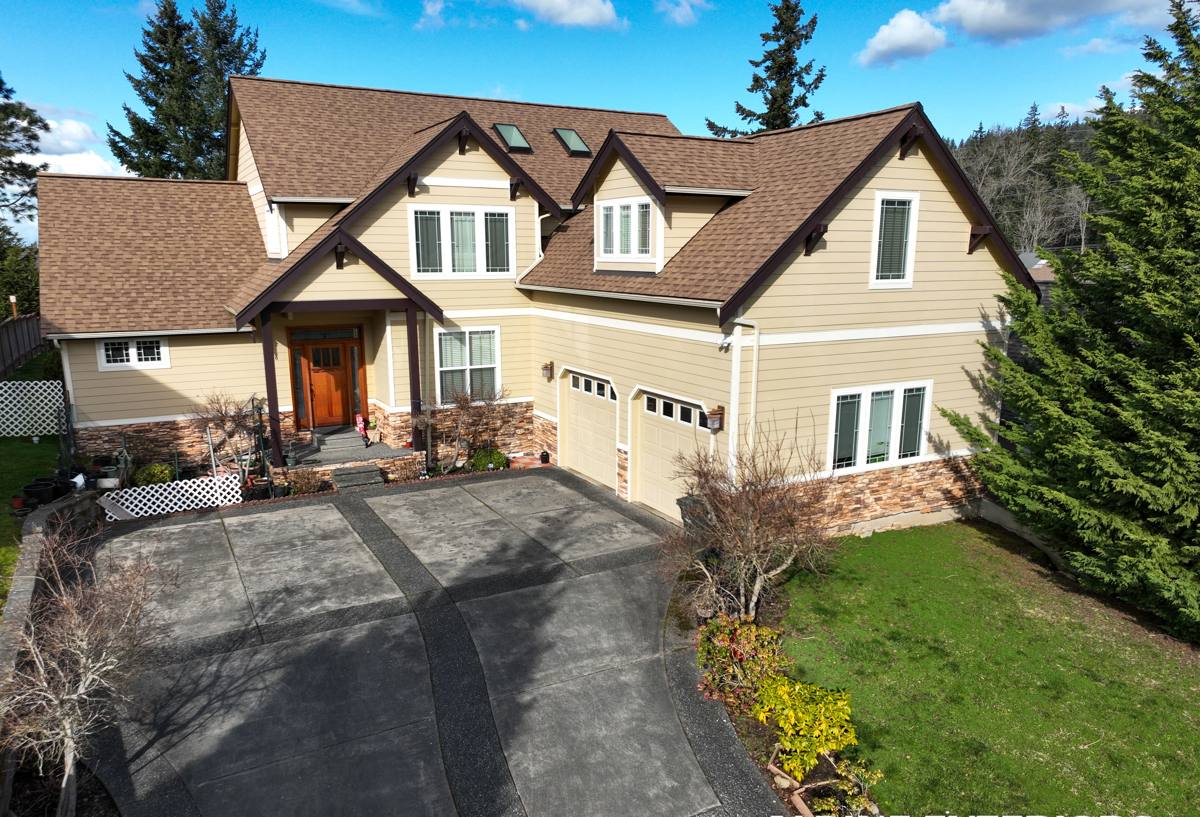
What Birch Bay's Climate Does to a Deck Over Time
Three conditions drive most of the deck problems we see in this area, and they compound each other.
Salt Air and Metal Fasteners
Airborne salt from the bay accelerates corrosion on any exposed metal — nails, screws, joist hangers, bolts. Standard galvanized hardware that would last decades in a drier, inland yard can start showing rust within a few years this close to the water. Once a fastener corrodes, it loses holding strength long before it looks obviously bad, which is part of why hardware selection matters more here than the framing lumber itself.
Wind-Driven Rain and Water Intrusion
Rain in this part of Washington doesn't just fall straight down — bay winds push it sideways, into ledger boards, railing posts, and any gap where flashing wasn't done right. Water that gets behind a ledger board or into an unsealed post base doesn't dry out quickly in our climate. It sits there through the wet season, which is most of the year, and that's how rot starts from the inside where you can't see it.
Moss, Algae and the Long Wet Season
Shaded decks, or decks under trees, stay damp long enough for moss and algae to take hold on almost any decking surface. Beyond looking bad, a mossy deck board is slippery when wet — which in Whatcom County is a large share of the calendar. Surface texture, board spacing, and how much sun and airflow a deck gets all affect how much of a moss problem you'll actually have.
Choosing the Right Decking Material for a Coastal Lot
There's no single "best" decking material — the right choice depends on how much maintenance you want to do, your budget, and how directly exposed the deck is to bay wind and moisture. Here's how the common options actually perform in a Birch Bay setting.
| Material | Salt/Moisture Resistance | Maintenance Needed | Typical Lifespan Here |
|---|---|---|---|
| Pressure-treated wood | Decent if sealed and maintained | Annual cleaning and re-sealing | 10-15 years |
| Cedar | Naturally rot-resistant, but softens with neglect | Regular sealing to hold color and resist moisture | 15-20 years |
| Capped composite | Strong — won't absorb moisture like wood | Occasional washing, no sealing | 25-30 years |
| PVC/vinyl decking | Excellent — fully synthetic, no wood fiber to rot | Lowest — periodic washing only | 30+ years |
Wood is still a reasonable choice for homeowners who like the look and don't mind the upkeep, but it's an honest tradeoff: skip a season of sealing on a bay-exposed deck and you'll feel it faster than you would inland. Composite and PVC cost more upfront but remove most of the moisture-absorption problem entirely, which is a big part of why we recommend them for decks with direct bay exposure or heavy shade.
What a Correctly Built Deck Involves
A deck's long-term performance is decided in the framing and connection details, not in the decking boards on top. This is the part that's invisible once the project is done, and it's also where corners get cut on lower-quality jobs.
Ledger Board and Flashing
The ledger board — where the deck attaches to the house — is the single most common source of hidden water damage on any deck, coastal or not. It needs proper flashing that directs water away from the house framing, not just caulk, which fails over time and doesn't stand up to years of wind-driven rain.
Fasteners and Hardware
Given the salt air here, we build with stainless steel or high-grade coated fasteners and hardware rated for coastal or high-corrosion environments, not the basic galvanized hardware that's fine further inland. It costs more per piece. It also means the connections holding your deck together aren't the first thing to fail.
Footings and Drainage
Footings need to be sized and set below frost depth per local code, and the ground around them graded so water doesn't pool against posts. On sites with poor natural drainage — common on flatter Birch Bay lots — that sometimes means additional grading or drainage work before the deck framing even starts.
Railings and Structural Details That Matter Near the Water
Railings take the brunt of bay wind and rain because they're the most exposed part of the structure. Post bases and railing brackets are worth the same corrosion-resistant hardware as the framing — a railing that loosens because its fasteners rusted out is both a repair headache and a genuine safety issue. We also pay attention to end grain on wood railings and posts, since exposed end grain absorbs moisture fastest and is usually where rot starts first on an otherwise sound railing system.
Our Process for a Birch Bay Deck Project
The process is the same discipline whether it's a small platform deck or a larger multi-level build — the details just scale.
- Site visit and assessment. We look at sun exposure, wind direction, existing drainage, and how close the deck will sit to the water, since that drives material and hardware decisions.
- Honest material discussion. We walk through wood versus composite versus PVC for your specific site and budget — no upselling toward whatever has the best margin.
- Design and permitting. We handle the plans and permitting through the appropriate local jurisdiction so the structure is built to code, not just to what looks right.
- Framing built for the coast. Proper ledger flashing, corrosion-resistant hardware throughout, and footings set to code.
- Decking and railing installation. Board spacing and layout accounts for drainage and airflow to reduce future moss buildup.
- Final walkthrough. We go over the finished deck with you, including what maintenance it actually needs and how often.
Keeping a Coastal Deck Clean and Safe Year-Round
Even the right materials and build quality still need some seasonal attention in this climate. Here's the baseline maintenance we recommend for a Birch Bay deck, regardless of material:
- Sweep and rinse the deck surface regularly to keep salt residue and organic debris from building up
- Clean moss and algae off with a deck-safe cleaner before it gets slick — don't wait until it's visibly bad
- Check railing posts and hardware once a year for early rust or looseness
- Keep gutters and downspouts near the deck clear so runoff isn't draining directly onto or under it
- Re-seal wood decking on the manufacturer's recommended schedule — don't stretch it to save a season
- Trim back overhanging branches to improve sun and airflow across shaded sections
Why Hiring a Crew That Already Works Birch Bay Matters
A deck built by a crew that hasn't worked this close to the water tends to use standard inland practices — standard hardware, standard flashing details, standard assumptions about how fast things dry out. None of that is wrong in most of Whatcom County. It's just not matched to what salt air and constant bay-driven moisture actually do to a structure over years, not months. We build decks across Lynden and the surrounding communities, including coastal areas like Birch Bay, and the material and hardware choices above aren't upsells — they're what we've found actually holds up here.
If you're planning a new deck or replacing one that's showing its age, we're happy to take a look and give you a straight assessment — what it needs, what it'll cost in broad terms, and what tradeoffs are involved. Reach out for a free, no-pressure estimate using the form below.