 Lynden Exterior
 Composite Decking for Birch Bay Homes
Birch Bay sits right on the water in northern Whatcom County, and that changes what a deck needs to survive out here compared to a deck a few miles inland. Salt-laden air blows off the bay almost constantly, driving rain comes in sideways during fall and winter storms, and shaded or north-facing sections of a deck can stay damp for weeks at a stretch during the long moss season. A deck built without those conditions in mind will show problems early — soft boards, corroded fasteners, slick moss buildup, gaps that trap debris. We install composite decking specifically for this kind of coastal exposure, and we treat the substructure, hardware, and drainage details as just as important as the decking material itself.
This page is about composite decking in Birch Bay specifically, not composite decking in general. The material choice matters, but so does how the deck is framed, fastened, and ventilated underneath — and that's where a lot of decks in this climate actually fail.
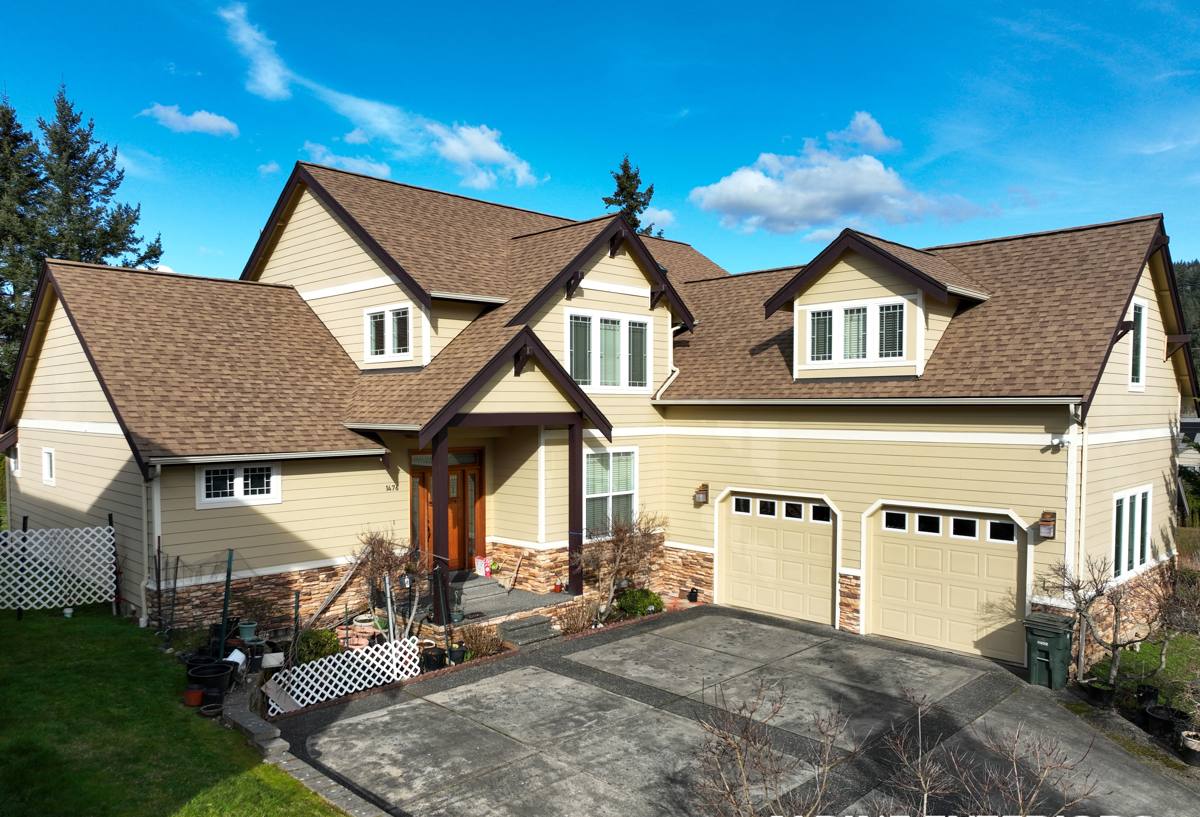
What Birch Bay's Climate Does to a Deck
Salt Air and Corrosion
Being close to the water means more airborne salt than most of Whatcom County sees, and salt accelerates corrosion in any fastener, bracket, or connector that isn't rated for it. A deck can look fine on the surface for a few years while the hardware holding it together is quietly rusting underneath. On a waterfront property, that's not a hypothetical — it's the most common reason we get called out to look at a deck that's starting to feel loose or spongy at the connections.
Driving Rain and Standing Water
Wind off the bay pushes rain sideways into railings, stair stringers, and any horizontal surface that isn't sloped to shed water. Decking boards that sit flat, joints that don't drain, and ledger connections without proper flashing all become places where water collects instead of running off. Composite boards don't absorb water the way wood does, but standing water still accelerates mildew growth on the surface and can find its way into fastener holes and end cuts if those aren't sealed correctly.
Moss, Algae, and a Long Wet Season
Mild temperatures and near-constant moisture add up to a moss and algae season that runs most of the year on shaded parts of a Birch Bay deck — under overhangs, on the north side of the house, or anywhere tree cover blocks direct sun. That growth isn't just cosmetic. It sits on top of the deck surface and holds moisture against it, and on stairs or high-traffic areas it becomes a real slip hazard during wet months.
Why Composite Fits This Climate
We recommend composite decking for most Birch Bay projects because it doesn't absorb and release moisture the way wood does, which matters in a climate where the deck rarely gets a long dry stretch to fully season. Composite boards won't warp, cup, or splinter from repeated wetting and drying, and they don't need annual staining or sealing to hold up. That doesn't mean composite is maintenance-free — it still needs regular cleaning to keep algae and pollen film from building up on the surface — but the maintenance burden is lower and more predictable than a wood deck exposed to this much sustained moisture.
We won't tell a homeowner that wood decking is a bad choice everywhere. Cedar and pressure-treated wood have a place, and plenty of people like the look and are willing to keep up with the upkeep. But on an exposed, moisture-heavy site like Birch Bay, we've found composite holds up with a lot less long-term maintenance risk, which is why it's what we lead with here.
What a Correct Composite Deck Build Involves
Framing and Substructure
The composite boards are only as good as what's underneath them. We use pressure-treated or naturally resistant framing lumber sized correctly for the span and load, and we check that joist spacing matches the manufacturer's specification for the specific composite board being installed — composite boards generally need tighter joist spacing than wood decking to prevent flexing over time.
Fasteners and Hardware Rated for Corrosion
Every fastener, joist hanger, and structural connector on a coastal build gets specified for corrosion resistance, not just whatever's standard inland. Stainless steel or coated fasteners rated for high-exposure environments cost more upfront, but replacing corroded hardware on a deck that's otherwise sound is expensive and avoidable.
Drainage and Ventilation Underneath
A deck built tight to the ground or against a wall without airflow underneath traps moisture, which speeds up corrosion on the framing hardware even when the visible boards are composite. We build in proper ledger flashing where the deck meets the house, maintain clearance and airflow underneath, and slope framing slightly to shed water rather than pool it.
Board Spacing and Expansion Gaps
Composite boards expand and contract with temperature more than most homeowners expect, and correct gapping between boards — and around any fixed obstruction like a post or house wall — keeps that movement from buckling the deck surface over time. Getting this wrong is one of the more common mistakes we see on decks installed by crews that don't work with composite regularly.
Comparing Decking Materials for a Birch Bay Deck
| Material | Moisture Behavior | Maintenance in Salt Air | Typical Longevity Here |
|---|---|---|---|
| Composite decking | Doesn't absorb/swell; stable through wet-dry cycling | Periodic cleaning to remove algae/pollen film | 25+ years with correct substructure |
| Cedar | Absorbs and releases moisture readily | Regular sealing/staining needed to resist moisture and graying | Shorter without consistent upkeep |
| Pressure-treated wood | Moisture-resistant chemically, but still absorbs water | Annual sealing recommended; prone to splitting/warping over time | Variable; depends heavily on maintenance |
| PVC decking | Fully moisture-resistant, similar to composite | Low; can look more plastic-like in appearance | 25+ years, comparable to composite |
Composite and PVC perform similarly on moisture resistance. We generally lead with composite because most homeowners prefer the wood-grain look and the range of color options, but we'll walk through both if appearance matters more than material to you.
Our Process
We start with an on-site look at the existing deck or the planned build area, checking grade, drainage, and how the deck will tie into the house. From there we put together a clear written scope covering the composite product, substructure materials, and hardware before any work begins. During the build, framing, flashing, and fastener details get handled as standard practice — not as optional upgrades priced separately — because those are the details that determine whether the deck holds up through Whatcom County's wet season year after year.
- On-site assessment of grade, drainage, and structural connection points
- Written scope covering decking product, framing materials, and hardware specification
- Demo of existing deck if applicable, with a check of ledger and foundation condition underneath
- Framing built to correct joist spacing for the composite product selected
- Composite board installation with correct fastening and expansion gapping
- Final walkthrough covering basic care and what to watch for seasonally
Maintenance a Birch Bay Composite Deck Actually Needs
Composite decking is lower-maintenance than wood, but "low-maintenance" in a coastal Whatcom County climate still means some regular attention, especially on shaded sections that stay damp longer.
- Rinse or sweep the deck surface periodically to keep salt residue, pollen, and organic debris from building up
- Clean shaded or north-facing sections more often, since those areas develop algae and mildew film faster
- Check the gap between boards seasonally to make sure debris hasn't packed in and blocked drainage
- Inspect visible fasteners and railing connections once or twice a year for early signs of corrosion
- Keep gutters and downspouts near the deck clear so runoff isn't dumping extra water onto or under the deck surface
Why a Local Crew Matters
A crew that works Birch Bay regularly already knows how salt air, wind, and prolonged dampness behave on this stretch of coastline differently than they do a few miles inland. That shows up in the choices that don't get noticed until years later — which fastener grade gets used, how the ledger is flashed, whether the substructure has enough airflow underneath. Those are exactly the details that decide whether a deck is still solid in fifteen years or starting to show corrosion and soft spots in five.
What to Ask Before Hiring for a Composite Deck in This Area
- Ask what composite brand and board line they use, and whether joist spacing is set to that manufacturer's spec
- Ask what fastener and hardware grade they use for coastal exposure, not just their standard inland spec
- Confirm current Washington contractor licensing and active liability insurance
- Ask how they handle ledger flashing and drainage where the deck meets the house
- Get a clear, written scope of work — materials, hardware, and structural details included — before signing anything
If you're weighing a new composite deck or replacing an aging wood deck in Birch Bay, we're happy to walk the site with you and give an honest read on what it needs. Reach out below for a free, no-pressure estimate.