 Lynden Exterior
 Roofing for Abbotsford's Coastal-Influenced Climate
Abbotsford sits close enough to the coast and the Fraser Valley's damp air patterns that roofs here take on a specific kind of wear: salt-laden air pushing in off the water, long stretches of driving rain through the fall and winter, and a moss season that can run most of the year if a roof holds shade and moisture. None of that is unusual for a Whatcom County or lower Fraser Valley home, but it does mean a shingle roof installed with generic, one-size-fits-all methods will show its age faster here than it would in a drier inland climate.
Lynden Exterior Co works this area regularly, and the asphalt shingle roofs we install and repair in Abbotsford are detailed around three things: keeping wind-driven rain out of the deck, keeping moisture from sitting on the shingles long enough to feed moss and algae, and keeping salt-tinged air from corroding the metal components faster than the shingles themselves wear out.
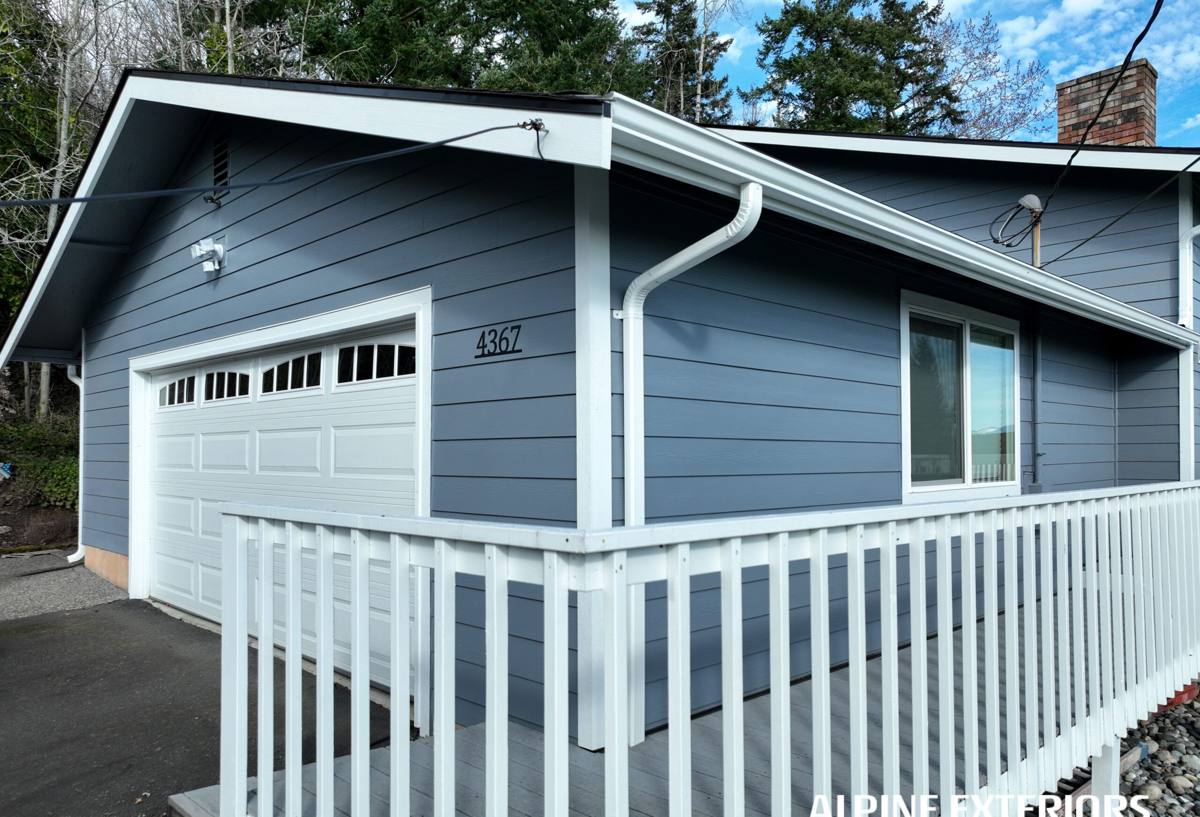
What Abbotsford Homes Actually Need From a Shingle Roof
A correctly built asphalt shingle roof in this climate needs to do more than shed water on a sunny day. It needs to perform in three recurring conditions:
- Sustained wind-driven rain — rain that comes in at an angle for hours, testing every lap, seam, and fastener rather than just the open field of the roof.
- Persistent damp shade — north-facing slopes, tree-covered lots, and low-pitch sections that never fully dry out between storms, which is exactly where moss and algae get a foothold.
- Corrosive air exposure — salt content in the air accelerates rust on exposed fasteners, cheap flashing, and unprotected metal edges long before the shingles themselves fail.
A roof that ignores any one of these will still look fine on installation day. The problems show up two, five, and ten years in — as granule loss, soft decking, streaked shingles, or rusted flashing bleeding rust stains down the field.
Signs a Roof Isn't Handling the Climate Well
Homeowners in Abbotsford should watch for a few early indicators rather than waiting for an active leak:
- Dark streaking or green-black patches, especially on north-facing or shaded slopes
- Granules collecting in gutters or at downspout outlets
- Curling or lifting shingle edges, particularly on older or lower-grade shingles
- Rust staining running down from valleys, vents, or flashing
- Soft spots or slight sagging felt underfoot near valleys or eaves
Choosing the Right Shingle for This Climate
Not every asphalt shingle product handles sustained damp and salt-air exposure the same way. The differences come down to granule adhesion, algae-resistant treatment, and the weight/thickness of the mat underneath the granules.
| Shingle Tier | Typical Lifespan Here | Algae Resistance | Best Fit |
|---|---|---|---|
| Standard 3-tab | 12–18 years | Minimal unless treated | Budget-driven projects, secondary structures |
| Architectural / laminate | 20–30 years | Usually available with algae-resistant granules | Most Abbotsford homes — best balance of cost and durability |
| Premium/designer laminate | 25–35+ years | Higher-grade algae-resistant treatment standard | Steep, shaded, or heavily tree-covered lots |
We generally steer Abbotsford homeowners toward an architectural shingle with algae-resistant (AR) granules as the baseline, not the upgrade. On a shaded or north-facing roof, the jump to a premium AR shingle often pays for itself in fewer moss treatments and a longer visual life before streaking sets in.
What a Correct Installation Actually Involves
The shingles are the visible layer, but the parts underneath them are what determine whether the roof handles this climate for its full rated life.
Tear-Off and Deck Inspection
We remove existing roofing down to the deck rather than layering over old shingles. That's the only way to actually see the plywood or OSB underneath — damp climates like this one can hide soft or delaminated decking under a roof that looks fine from above. Any compromised sheathing gets replaced before anything new goes down.
Ice-and-Water Protection at Vulnerable Points
Eaves, valleys, and roof-to-wall transitions get a self-adhering waterproof membrane underneath the shingles. In a climate with this much sustained rain, this layer is what stops water that gets past the shingle surface — from wind-driven rain or ice damming on a cold snap — from reaching the deck.
Underlayment Across the Field
A synthetic underlayment covers the rest of the roof as a second line of defense. It's a small line item but it's the difference between a roof that tolerates a wind-driven storm and one that doesn't.
Flashing and Metal Components
Given the salt-air exposure here, we use corrosion-resistant flashing at valleys, chimneys, skylights, and wall transitions rather than the thinnest stock material. Flashing failure — not shingle failure — is the most common source of leaks we find on roofs that are otherwise in decent shape.
Ventilation
Balanced intake and exhaust ventilation keeps the attic space at a consistent temperature and moisture level. Poor ventilation traps humidity, which shortens shingle life from underneath and contributes to the kind of damp conditions moss thrives on.
Fastening
Shingles are nailed to the manufacturer's pattern and nailing zone, not the fastest pattern. Under-nailed or misplaced fasteners are one of the most common causes of early wind damage, and it's invisible until a storm finds the weak spot.
Moss, Algae, and Salt Air — What Maintenance Actually Looks Like
Even a well-built roof in Abbotsford benefits from some ongoing attention, because moss season here is long and salt air doesn't stop working just because the roof is new.
- Keep gutters and valleys clear — trapped debris holds moisture against the shingles and is where moss usually starts.
- Trim overhanging branches where practical, to cut down on shade and debris on north-facing slopes.
- Address moss early — light moss can be treated and removed gently; heavy, established moss should be handled by a roofer, not pressure-washed, since aggressive cleaning strips granules and shortens shingle life.
- Check exposed metal periodically — vent boots, flashing edges, and fasteners are the first things salt air affects, well before the shingles show wear.
None of this is about babying the roof — it's the same low-effort maintenance that any coastal-influenced Whatcom County property benefits from, and it meaningfully extends the interval between roofs.
Repair or Replace? What Actually Drives That Decision
Not every issue we find on an Abbotsford roof means a full replacement. The right call depends on a few consistent factors.
| Factor | Leans Toward Repair | Leans Toward Replacement |
|---|---|---|
| Age of roof | Under 10–12 years | Approaching or past shingle's rated life |
| Extent of damage | Localized — one valley, one slope, isolated flashing | Widespread granule loss or curling across multiple slopes |
| Deck condition | Solid, dry decking under the affected area | Soft or water-stained decking found during inspection |
| Moss/algae history | First occurrence, treatable | Recurring heavy moss despite treatment |
We give a straight answer either way. If a repair genuinely solves the problem, that's what we recommend — a full replacement isn't the right call just because it's on the roof.
How Our Process Works
The process is the same whether it's a full replacement or a targeted repair — we just scale the steps to the job.
- On-site inspection — we walk the roof (not just look from the ground), check the attic for ventilation and moisture signs, and note the condition of flashing, valleys, and decking.
- Written estimate — a clear breakdown of what's being replaced or repaired, the shingle and underlayment products involved, and the timeline, with no vague allowances.
- Install day — tear-off, deck check, ice-and-water membrane, underlayment, flashing, shingles, and ventilation, in that order, with debris and nail cleanup as part of the job, not an afterthought.
- Final walkthrough — we go over the finished roof with the homeowner before calling the job done.
Why a Crew That Already Works Abbotsford Matters
A roofer who works this specific area regularly already knows which slopes tend to hold moss, which older neighborhoods commonly have thinner original flashing, and how much wind-driven rain a given roof pitch actually needs to handle in a typical winter. That's not something you learn from a single job — it comes from doing this work repeatedly in the same climate and terrain.
Lynden Exterior Co is based nearby and treats Abbotsford as regular service territory, not an occasional trip. That means realistic scheduling, familiarity with the area's roofing conditions, and a crew that's still reachable after the install if something needs a look.
What to Expect After the Roof Is Done
A correctly installed asphalt shingle roof shouldn't need attention again for years beyond basic gutter and debris upkeep. We stand behind our workmanship, and manufacturer material warranties cover the shingles themselves. Keep any paperwork provided at project close, and if moss or streaking does show up down the line, catching it early is always easier and cheaper than waiting.
If you're dealing with an aging roof, active leaks, or just want an honest read on where your current roof stands, we're happy to take a look. The estimate is free, there's no pressure attached to it, and you can use the form below to get in touch.