 Lynden Exterior
 New Roof Installation for Aldergrove Homes, Done by a Crew That Works This Area Every Week
Aldergrove sits close enough to Lynden that a lot of homeowners here already know our trucks. We work both sides of the border regularly, and that matters more than it sounds like it should. A roof that holds up in a dry inland climate is not automatically the right roof for a place that gets steady Pacific moisture, salt-tinged air moving in off the Strait, and long stretches of shade that never really dry out until summer. When your roof has reached the point of replacement rather than repair, the goal isn't just "new shingles" — it's a system built for what this specific stretch of the Fraser Valley and Whatcom County border actually throws at a house year-round.
This page covers new roof installation specifically for Aldergrove-area homes: what the climate demands, what a correct installation actually includes, how our process runs from first look to final walkthrough, and why local experience changes the outcome.
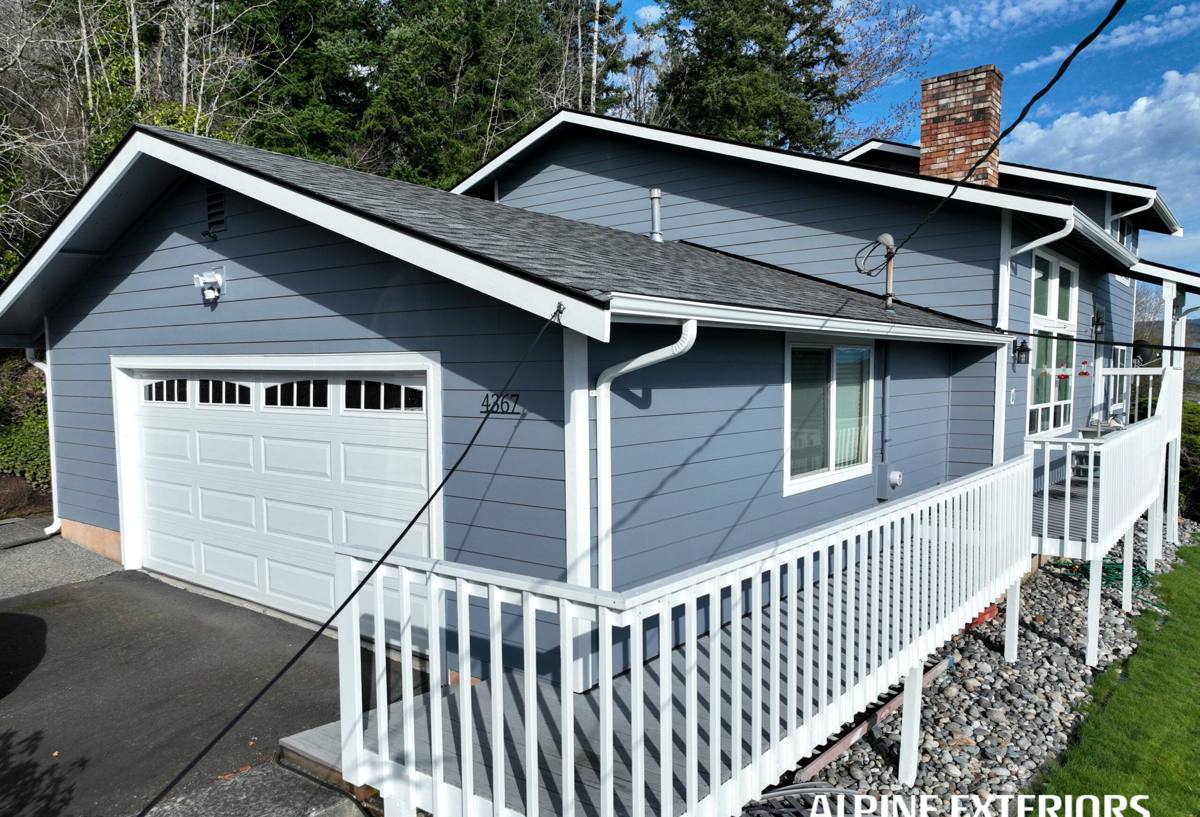
Why the Aldergrove Climate Is Harder on Roofs Than It Looks
Salt Air and Metal Fatigue
Aldergrove isn't oceanfront, but prevailing air off the Strait of Georgia and Puget Sound carries enough salt content inland to accelerate corrosion on flashing, fasteners, and any exposed metal components over a roof's lifetime. Homeowners are often surprised that a roof only 12-15 years old shows rust bleed at valleys or around vents — it's rarely bad material, it's usually under-specified fasteners or flashing that wasn't rated for a marine-influenced environment.
Driving Rain and Wind-Driven Water
This region doesn't just get rain — it gets rain pushed sideways by wind often enough that it matters for how a roof is detailed. Standard shingle installation assumes water running straight down and off. When wind drives rain up and under shingle tabs, standard nailing patterns and starter courses aren't always enough. Underlayment quality and how edges, valleys, and penetrations are sealed end up mattering as much as the shingle brand itself.
Moss, Shade, and Slow-Drying Roof Sections
Aldergrove's tree cover and long overcast season mean north-facing slopes and shaded roof sections can stay damp for days after a storm passes. That moisture retention is what feeds moss and algae growth, and moss does real damage — it lifts shingle edges, holds water against the roof deck, and works its way into fastener lines over time. A new roof installation is the right time to address this at the source, not just plan on future moss treatments.
What a Correct New Roof Installation Includes Here
A roof replacement done right in this climate isn't just laying new shingles over what's there. It's a full system, and every layer has a job:
- Full tear-off to the deck — so we can actually inspect for rot, soft spots, or old damage hidden under the existing layer.
- Deck repair or replacement where sheathing has taken on moisture damage, before anything new goes down.
- Ice-and-water shield at eaves, valleys, and around all penetrations — the parts of the roof most exposed to wind-driven water and ponding.
- Synthetic underlayment rated for this climate's moisture exposure, not the minimum builder-grade option.
- Corrosion-resistant flashing and fasteners sized and specified for a marine-influenced air environment, not just whatever ships standard with the shingle package.
- Proper intake and exhaust ventilation so the attic can actually dry out between storm systems instead of trapping humidity against the deck.
- Manufacturer-correct nailing pattern and exposure for the wind zone this area sits in.
Choosing the Right Roofing Material for Aldergrove Conditions
There's no single "best" roofing material — there's a best fit for your roof's slope, shade exposure, budget, and how long you plan to stay in the home. Here's how the common options actually perform under this region's conditions:
| Material | How It Handles Moisture & Moss | Salt-Air Durability | Typical Lifespan Here |
|---|---|---|---|
| Architectural asphalt shingle | Good with proper ventilation; algae-resistant granules recommended for shaded slopes | Good, if flashing/fasteners are corrosion-rated | 20-30 years |
| 3-tab asphalt shingle | Fair; more prone to moss lift on shaded sections | Fair | 15-20 years |
| Standing seam metal | Excellent shedding, low moss retention | Requires marine-grade coating/fasteners to avoid premature corrosion | 40-50+ years |
| Composite/synthetic shake | Very good; doesn't absorb moisture like wood shake | Good | 30-40 years |
| Cedar shake (natural) | Poor without diligent maintenance — holds moisture, needs regular treatment | Fair | 20-25 years with upkeep |
For most Aldergrove homes we recommend architectural asphalt with algae-resistant granules or standing seam metal, depending on roof slope and budget. Natural cedar shake can look great, but it comes with a real maintenance burden in a climate this damp — that's a trade-off worth discussing honestly before you commit, not something we'll talk you out of if it's what you want.
How Our Process Works, Start to Finish
1. On-Site Assessment
We walk the full roof, check the attic from inside where accessible, and look at slope, shade exposure, existing ventilation, and any visible moss or water staining. We're honest about what's repairable versus what genuinely needs replacement — not every roof that looks rough needs a full tear-off.
2. Written Estimate and Material Selection
You get a clear, itemized estimate — material, labor, tear-off, disposal, and any deck repair contingency spelled out before work starts, not discovered afterward.
3. Scheduling Around Weather
Roofing in this climate means watching forecasts closely. We stage materials and schedule tear-off in windows where we can get the deck covered and dried in before the next system rolls through — an open deck sitting exposed overnight is how deck damage happens on jobs that aren't planned carefully.
4. Tear-Off, Deck Inspection, and Repair
Old roofing comes off down to the deck. Any soft or damaged sheathing gets replaced before a single new layer goes down — this step gets skipped on rushed jobs and it's the single biggest source of early roof failure.
5. Underlayment, Flashing, and Ventilation Install
This is where the climate-specific detailing happens — ice-and-water membrane at vulnerable zones, correct flashing at every penetration and transition, and ventilation sized to your attic's actual volume.
6. Roofing Material Installation
Installed to manufacturer specification for nailing pattern, exposure, and fastener count — the details that determine whether your warranty is actually valid if a wind event does cause damage down the road.
7. Final Walkthrough and Cleanup
We walk the property with you, check gutters and downspouts tie in correctly to the new roof edge, and do a full magnetic sweep for stray fasteners before we consider the job done.
Signs an Aldergrove Roof May Be Ready for Replacement
- Granule loss showing up in gutters or at downspout outlets
- Shingles curling, cupping, or lifting at edges, especially on shaded slopes
- Moss established in mats rather than light surface growth
- Daylight visible through the roof deck from inside the attic
- Rust staining at valleys, flashing, or around vent penetrations
- Multiple recent repairs in different areas rather than one isolated spot
- Roof age at or past 20 years for asphalt shingle products
What Drives Cost on a Roof Replacement
| Factor | Why It Matters |
|---|---|
| Roof square footage and pitch | Steeper roofs take longer and require more safety setup |
| Number of penetrations (vents, chimneys, skylights) | Each one needs individual flashing detail |
| Deck condition underneath the old roofing | Rot or soft sheathing found during tear-off adds material and labor |
| Material choice | Asphalt, metal, and composite all carry different price points and labor time |
| Access and staging | Tight lots or difficult truck access can add setup time |
| Existing ventilation adequacy | Adding proper intake/exhaust where none exists is an added scope, not optional upgrade |
We won't quote a number without seeing the roof — anyone who does is guessing, and guesses turn into change orders. What we can say honestly: a mid-size Aldergrove-area home typically falls into a broad mid-four-figure to low-five-figure range for a full architectural shingle replacement, with metal roofing running higher upfront but lower over the roof's full lifespan. Your written estimate will break this down by line item.
Why a Crew That Already Works Aldergrove Makes a Difference
We're a short drive from Aldergrove and we're out here regularly — that means we already understand this specific area's exposure patterns, which slopes tend to hold moisture longest, and what permitting and access look like locally. It also means if something needs a warranty check or follow-up after a storm, we're not driving in from three hours away. A roof installation is only as good as the crew standing behind it after the trucks leave, and that's easier to guarantee when the crew already knows the area.
Get a Free, No-Pressure Estimate
If your roof is showing its age or you just want an honest read on where it stands, we're happy to come take a look. There's no pressure and no obligation — just a straight assessment from a crew that already knows what Aldergrove roofs are up against. Use the form below to request your free estimate.