 Lynden Exterior
 Windows Built for the Aldergrove Climate, Not a Catalog
Aldergrove sits close enough to the Lynden border crossing that a lot of our customers treat it as an extension of our home service area. It's also close enough to salt water and open farmland that homes here take a specific kind of beating: wind-driven rain off the Pacific systems that roll through the Fraser Valley, salt-laden air that migrates inland on coastal storms, and a wet season that stretches long enough for moss and algae to get a real foothold on anything that stays damp. Windows are one of the first places that shows up. Swollen sashes, black streaking on sills, foggy double-pane glass, and drafts that weren't there five years ago are all symptoms of a climate doing exactly what it does here every winter.
A custom window job for an Aldergrove home isn't just picking a style out of a brochure. It's choosing materials, glazing, and flashing details that are actually suited to sustained moisture exposure and to homes that see real temperature swings between damp Pacific air and colder inland snaps. This page walks through what that looks like in practice.
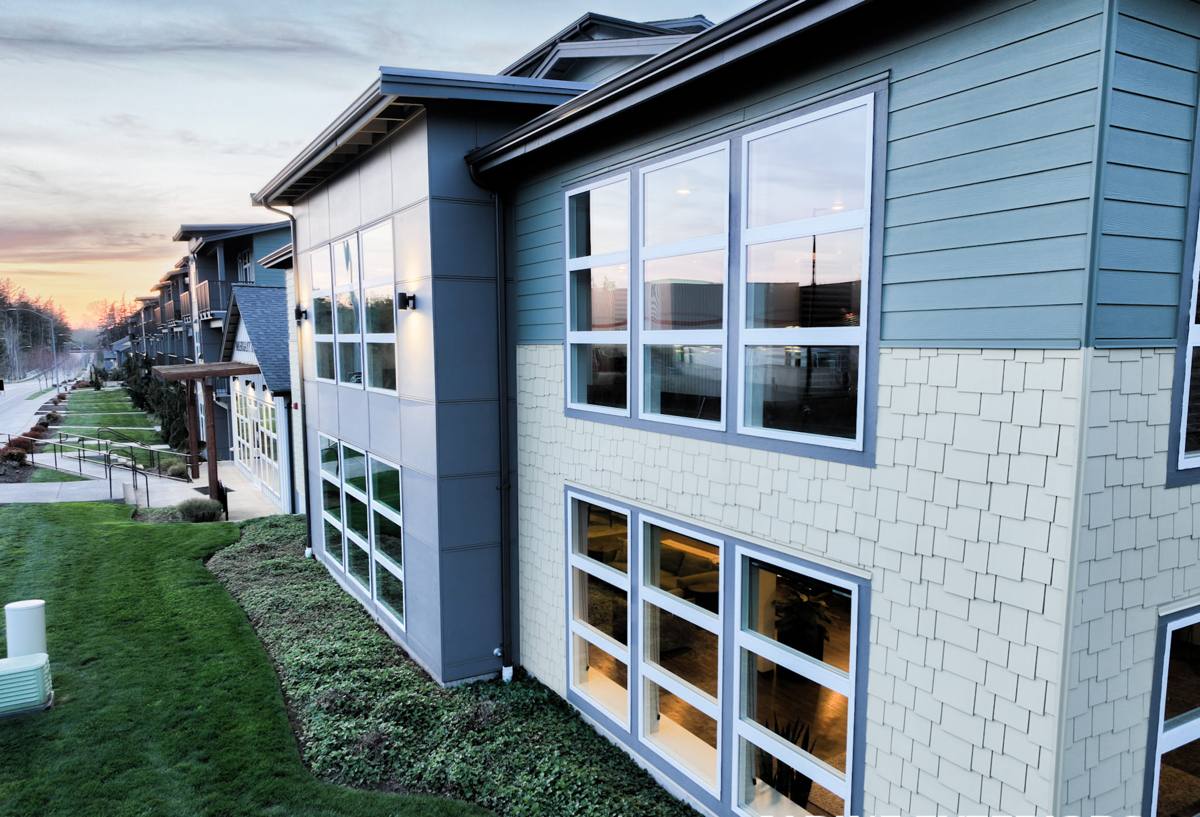
What This Climate Actually Does to Windows
Driving Rain and Wind Load
Rain here rarely falls straight down. Storms push it sideways, and that matters enormously for window performance — a window can be watertight in a light shower and still leak during a wind-driven event if the flashing and sill pan weren't detailed correctly. Most of the window failures we get called out for aren't bad windows; they're windows that were installed without accounting for wind-driven water finding its way behind the trim.
Moss, Algae, and Prolonged Dampness
The long wet season here means anything that holds moisture — wood sills, unsealed trim joints, north-facing frames that never get direct sun — becomes a place for moss and mildew to establish. On older wood or poorly sealed vinyl units, that moisture works its way into the frame itself over years, not weeks, which is why the damage often isn't obvious until a window is already failing.
Salt Air and Hardware Corrosion
Even at some distance from open salt water, coastal storm systems carry enough salt content to accelerate corrosion on cheaper window hardware — hinges, cranks, and locking mechanisms — over time. It's a slower process than direct waterfront exposure, but it's real, and it's one of the reasons hardware quality matters as much as glass quality in a custom order.
Condensation Between Seasons
Aldergrove gets enough of a temperature swing between a wet Pacific pattern and a cold inland snap that condensation and even minor frost on interior glass shows up on underperforming units. That's usually a sign the seal has failed or the glazing package was never rated for this kind of swing to begin with.
What a Correct Custom Window Job Actually Involves
"Custom" doesn't just mean a non-standard size. It means every window is specified and installed to match its exposure — a west-facing window catching the worst of the driving rain needs different flashing detail than a sheltered window under an eave. A correct job includes:
- Accurate field measurement of each opening — old homes are rarely square, and forcing a stock size into an out-of-square opening is where leaks start
- Removal of the old unit down to the framing so rot, moisture damage, or failed flashing can actually be seen and dealt with, not covered over
- A properly lapped sill pan and flashing sequence so any water that does get behind the trim drains back out instead of into the wall
- Continuous, correctly rated sealant and backer rod at the perimeter — not just a bead of caulk around the trim
- Glazing and gas-fill specified for the exposure of that specific opening, not a single spec applied to the whole house
- Hardware rated for coastal/marine-influenced conditions on any elevation that takes direct weather
Skip any one of these steps and you can still end up with a window that looks right for a season or two before the underlying problem shows up.
Choosing Window Materials for This Climate
There's no single "best" window material — the right choice depends on the home, the budget, and how exposed a given elevation is. Here's how the common options actually perform under sustained wet-climate conditions:
| Material | Moisture Resistance | Maintenance | Typical Lifespan | Best Suited For |
|---|---|---|---|---|
| Vinyl | Very good — won't rot, doesn't corrode | Low — occasional cleaning | 20–30 years | Most elevations, budget-conscious full-home replacement |
| Fiberglass | Excellent — very stable in temperature and moisture swings | Low | 30–40+ years | Exposed elevations taking the worst of driving rain |
| Wood-Clad | Good on the exterior clad side, but the wood core is only as good as the seal | Higher — clad exterior needs monitoring at joints | 20–30 years, seal-dependent | Homes prioritizing interior wood appearance, sheltered elevations |
| Aluminum | Fair — prone to condensation without thermal breaks | Moderate | 20–25 years | Limited use; we're selective about where we'll recommend it here |
We don't push one material as a blanket answer. It's common and reasonable for a single Aldergrove home to use fiberglass or vinyl on the weather-facing side and a different, lower-maintenance option on sheltered elevations, if that fits the budget better.
Glazing and Gas Fill
For this climate, dual-pane with a Low-E coating and argon fill is a reasonable baseline for most rooms. Triple-pane adds cost but pays off most on north- and west-facing rooms that take the brunt of weather and cold. We'll talk through where triple-pane actually earns its cost on your home versus where it's just added expense.
Our Process, Start to Finish
- On-site walkthrough — we look at every opening being replaced, note exposure, existing damage, and any framing issues before quoting anything
- Honest assessment — if we find rot or moisture damage behind existing trim, we tell you before ordering material, not after
- Custom order — windows are built to the actual field measurements and specified by elevation, not a single spec for the whole house
- Removal and prep — old units come out, framing is inspected and repaired as needed
- Flashing and installation — correct sill pan, flashing lap, and air/water sealing sequence, not just trim and caulk
- Final check and walkthrough — operation, seal, and finish reviewed with you before we consider the job done
Why a Crew That Already Works This Corridor Matters
Lynden sits right at the Aldergrove border crossing, and we've been going back and forth for jobs on both sides for years. That matters in a few practical ways. We already know the logistics of scheduling a crew and material deliveries around border wait times, so a project doesn't stall out over paperwork nobody planned for. We make a point of confirming permit and insurance requirements on the Canadian side before work starts, since those requirements aren't identical to what applies just a few miles south in Whatcom County — and we'd rather sort that out up front than mid-project. And because we're regularly working homes in this exact stretch of climate — not just generically "Pacific Northwest," but the specific rain, wind, and moss pattern that shows up on this side of Langley — we're not guessing at how a window will hold up here. We've seen how it holds up.
Signs Your Aldergrove Home Needs New Windows
- Sashes that stick, bind, or won't stay open on their own
- Visible fogging or moisture trapped between panes — a sign the seal has failed
- Black streaking, moss, or soft spots on sills or exterior trim
- Noticeable draft near the frame during windy, wet weather
- Condensation forming on the interior glass regularly during cold snaps
- Paint or finish that keeps failing around the frame no matter how often it's redone
- Hardware that's stiff, corroded, or won't lock properly anymore
Any one of these on its own might just mean a repair. Several at once, especially on a home more than 15–20 years old, usually means it's time to talk about replacement before the underlying wall structure takes on damage too.
What Affects the Cost of a Custom Window Project
| Factor | Why It Moves the Price |
|---|---|
| Material choice | Fiberglass and higher-end wood-clad cost more up front than vinyl but last longer and need less upkeep |
| Number and size of openings | Larger and non-standard sizes require more custom fabrication |
| Glazing package | Triple-pane and specialty Low-E coatings add cost but improve performance on exposed elevations |
| Existing damage | Rot or moisture damage found behind old trim means repair work before new windows go in |
| Elevation and exposure | Weather-facing sides may warrant a higher-spec window than sheltered ones |
| Access and site conditions | Second-story or hard-to-access openings take more labor time |
We'd rather walk your home and give you real numbers than throw out a broad range that doesn't mean much until we've seen the actual openings.
Keeping Your Windows Performing Once They're In
Even a well-installed window benefits from a little seasonal attention in this climate. A quick rinse of sills and tracks a couple times a year keeps moss and algae from getting established. Checking exterior caulk lines annually — especially after a hard winter — catches small gaps before they become water intrusion problems. And keeping gutters and downspouts clear matters more than people expect, since overflowing gutters dump extra water right down the wall and past window heads.
If you're weighing new windows for an Aldergrove home, we're happy to come take a look and give you a straightforward, no-pressure estimate — what we'd actually recommend for your home's exposure, and why, with no obligation attached. You can get that process started with the form below.