 Lynden Exterior
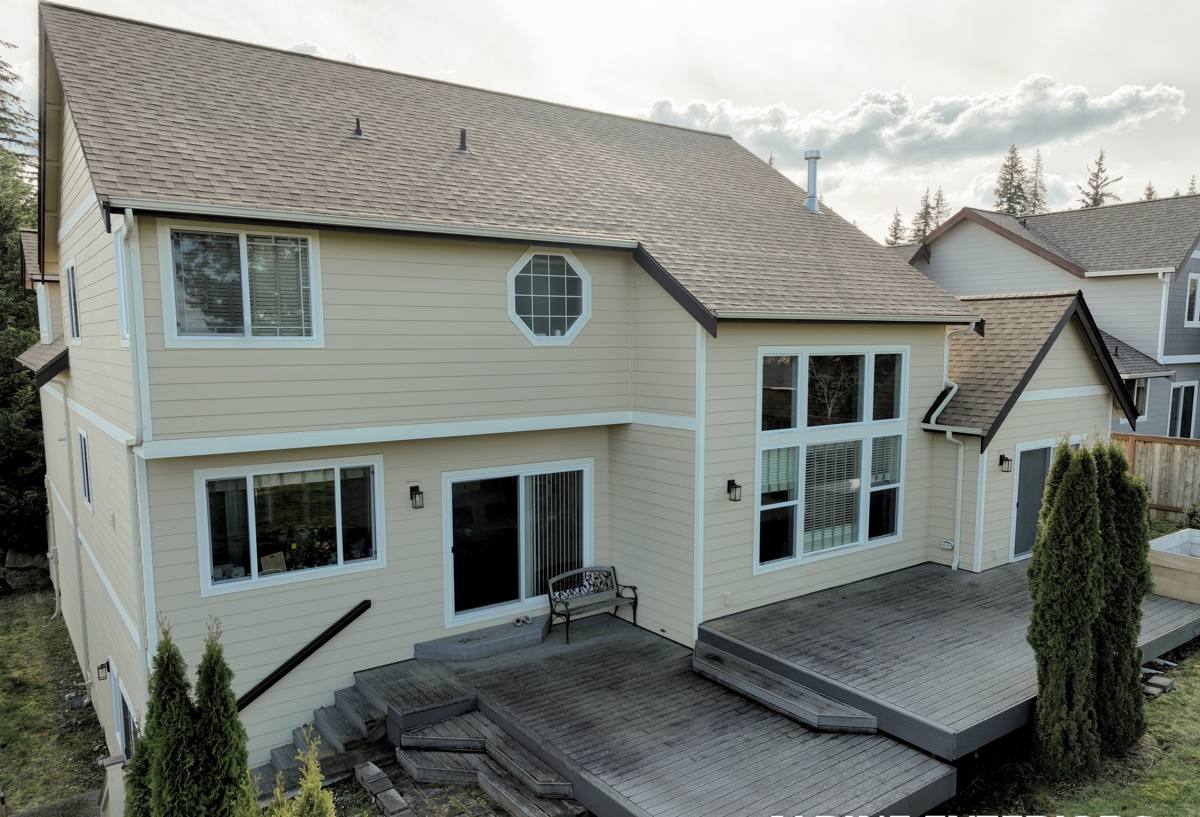
 Deck Replacement in Acme: Built for This Climate, Not Just Any Climate
Acme sits back in the South Fork Nooksack valley, under heavier tree cover and closer to year-round dampness than a lot of Whatcom County. That combination — shade, moisture, and long stretches without a hard dry-out — is exactly what shortens a deck's life. Wood stays wet longer between rain events, moss and algae get a foothold on horizontal surfaces, and hardware that would last a couple decades in a drier climate starts working loose or rusting years early. None of that is unusual for this part of Washington. It just means a deck built here has to be built for it, not built the way a generic online plan or a big-box materials list assumes.
We work on decks throughout Lynden and the surrounding Whatcom County communities, and the ones that fail early almost always fail for the same reasons: water getting trapped somewhere it can't dry out, fasteners that weren't rated for ground contact or coastal-influenced moisture, or a structure that was fine when it was built but was never sized or flashed for decades of driving rain and moss growth. A proper replacement fixes those root causes, not just the boards you can see.
How to Tell a Deck Needs Replacement, Not Just Repair
Not every tired-looking deck needs to come out. But there's a point where patching individual boards is just delaying a bigger, more expensive failure — and in a wet climate, that point arrives faster than most homeowners expect.
Signs You're Past the Point of Repair
- Boards that feel spongy, soft, or flex noticeably underfoot, especially near the house
- Rot or dark staining where the deck attaches to the house (the ledger board)
- Support posts that have shifted, sunk, or show rot at the base where they meet the ground or a footing
- Rust streaking from screws or joist hangers, or hardware that's visibly corroded
- Noticeable sway or bounce when several people are standing on it
- Persistent moss or algae growth that comes back within weeks of cleaning, even in the same spots every year
What Repair Can — and Can't — Fix
Swapping out a handful of surface boards is a reasonable repair when the framing underneath is sound and dry. It's not a fix when the problem is structural: a ledger that's been absorbing water for years, joists with soft spots, or footings that were undersized or never properly set to begin with. Replacing boards on top of failing framing just buys a season or two before you're doing the same work again, except now some of it is hidden behind new decking.
What's Underneath Matters More Than What's On Top
The decking boards are the part everyone notices, but the part that actually determines how long a deck lasts is underneath: the ledger board, the flashing behind it, the joists, and the footings. In a climate that gets sustained rain and long moss seasons, the ledger connection — where the deck attaches to the house — is the single most common failure point we see. If water gets behind that ledger and can't escape, it rots the ledger, the rim joist, and sometimes the house framing behind it, often well before anything looks wrong from the surface.
A correct replacement means proper flashing integrated with the house's water-resistive barrier, structural fasteners rated for the connection (not just deck screws), joists sized and spaced for the actual load and span, and footings set below frost depth and sized for the soil conditions on the property. None of that is visible once the deck is finished, which is exactly why it's worth asking a contractor to walk you through it rather than taking it on faith.
Choosing Decking Material for Acme's Moisture and Shade
There's no single "best" decking material — there's a best material for a given deck's sun exposure, budget, and how much upkeep the homeowner actually wants to do. In a shaded, damp setting like Acme, moisture and moss resistance matter more than they would on a sunny, exposed lot.
| Material | Moisture / Moss Resistance | Maintenance | Typical Lifespan |
|---|---|---|---|
| Pressure-treated lumber | Moderate — needs sealing to perform well in shaded, damp areas | Annual cleaning and periodic re-staining/sealing | 15–20 years with upkeep |
| Cedar | Naturally decent, but loses resistance as the surface weathers and greys | Regular cleaning and sealing to prevent moss and graying | 15–25 years with consistent care |
| Capped composite | Strong — the cap resists moisture absorption and slows moss/algae growth | Periodic washing; no staining or sealing | 25–30+ years, manufacturer-warrantied |
| Uncapped composite (older style) | Weaker than capped composite — more prone to surface moisture retention | More frequent cleaning; some products need periodic sealing | 15–20 years |
We'll install any of these based on what a homeowner wants, but our default recommendation for shaded, moisture-heavy lots is capped composite specifically because it doesn't need seasonal sealing to keep performing — in a climate where that maintenance window is easy to miss, that matters. Wood is a completely reasonable choice too, especially for homeowners who want a natural look and are willing to stay on top of yearly maintenance; we just want that trade-off to be a decision, not a surprise two summers in.
Our Deck Replacement Process
- On-site assessment. We inspect the existing deck, ledger, framing, and footings to confirm whether replacement (versus repair) is actually the right call, and check for site-specific issues like drainage, shade, and tree cover.
- Design and material selection. We go over decking material, railing style, and layout based on how the deck is actually used and the site's sun/shade and moisture exposure.
- Permitting. We handle the permit application through the relevant jurisdiction and make sure the design meets current code before work starts.
- Demolition and disposal. Full removal of the old structure, including hauling away old decking, framing, and hardware.
- Structural rebuild. New footings, framing, and — critically — properly flashed ledger attachment to the house, sized and fastened to code.
- Decking, railing, and stairs. Installed to the manufacturer's spacing and fastening specs, with attention to drainage gaps and ventilation underneath.
- Final walkthrough and inspection. We confirm the work with you, and it goes through any required county or city inspection before we call it finished.
Permits and Code Requirements
Most attached deck replacements in and around Lynden require a permit, and for good reason — the ledger connection and railing systems are exactly the parts of a deck most likely to cause serious injury if they're done wrong. Code typically covers things like ledger fastening and flashing, footing depth, guardrail height, and baluster spacing on any deck above a certain height off grade. We pull the permit, build to the current code, and go through inspection rather than treating it as optional paperwork. If a previous deck on the property was never permitted, replacement is often the right time to get it into compliance.
Keeping Moss and Standing Water From Shortening Its Life
A well-built deck in this climate can still lose years off its life to poor maintenance habits. Most of what keeps a deck healthy here isn't complicated — it just has to actually get done.
- Sweep leaves and debris off the deck surface regularly, especially in fall — trapped organic matter holds moisture and feeds moss
- Keep the gaps between boards clear so water can drain through rather than pooling on the surface
- Clean gutters and downspouts above or near the deck so runoff isn't dumping directly onto it
- Wash off moss and algae as soon as it appears rather than letting it establish — it's much harder to remove once it's set in
- Make sure the area underneath the deck has airflow; fully enclosing it without ventilation traps moisture against the framing
- Re-seal wood decking on a yearly or every-other-year schedule if you've chosen wood over composite
Why Hire a Crew That Already Works Acme
A deck built to a generic spec sheet can still fail early if it wasn't built with the actual site conditions in mind. We already know what shaded, tree-covered lots around Acme do to a deck over time, which footings and flashing details hold up, and which materials are worth the extra upfront cost versus which ones are a false economy in this climate. That's not a substitute for doing the work correctly — it's what lets us make the right calls on framing, drainage, and material selection instead of guessing.
Rural and semi-rural properties in this part of Whatcom County also come with practical considerations — driveway and equipment access, septic or well locations, tree roots near footings — that are easier to plan around when you've dealt with similar sites before rather than encountering them for the first time.
If your deck is showing its age or you're just not sure whether it needs repair or full replacement, we're happy to take a look and give you a straight answer. Reach out for a free, no-pressure estimate using the form below.