 Lynden Exterior
 Acme Decks Take a Different Kind of Beating
Acme sits in one of the wetter, greener pockets of Whatcom County, and decks out here don't fail the way they do in drier climates. You won't usually see sun-bleached boards cracking from UV exposure. What you see instead is slow, quiet damage: fasteners that rust from the inside out, ledger boards that trap moisture against the house, and a film of moss and algae that never fully dries out between fall and spring. By the time a soft spot or a wobbly post gets noticed, the underlying damage has usually been building for a year or more.
A deck repair done right in this area has to account for that pattern. It's not just about swapping a rotten board — it's about understanding why that board rotted in the first place and making sure the fix doesn't just buy you another season before the same failure shows up two feet away.
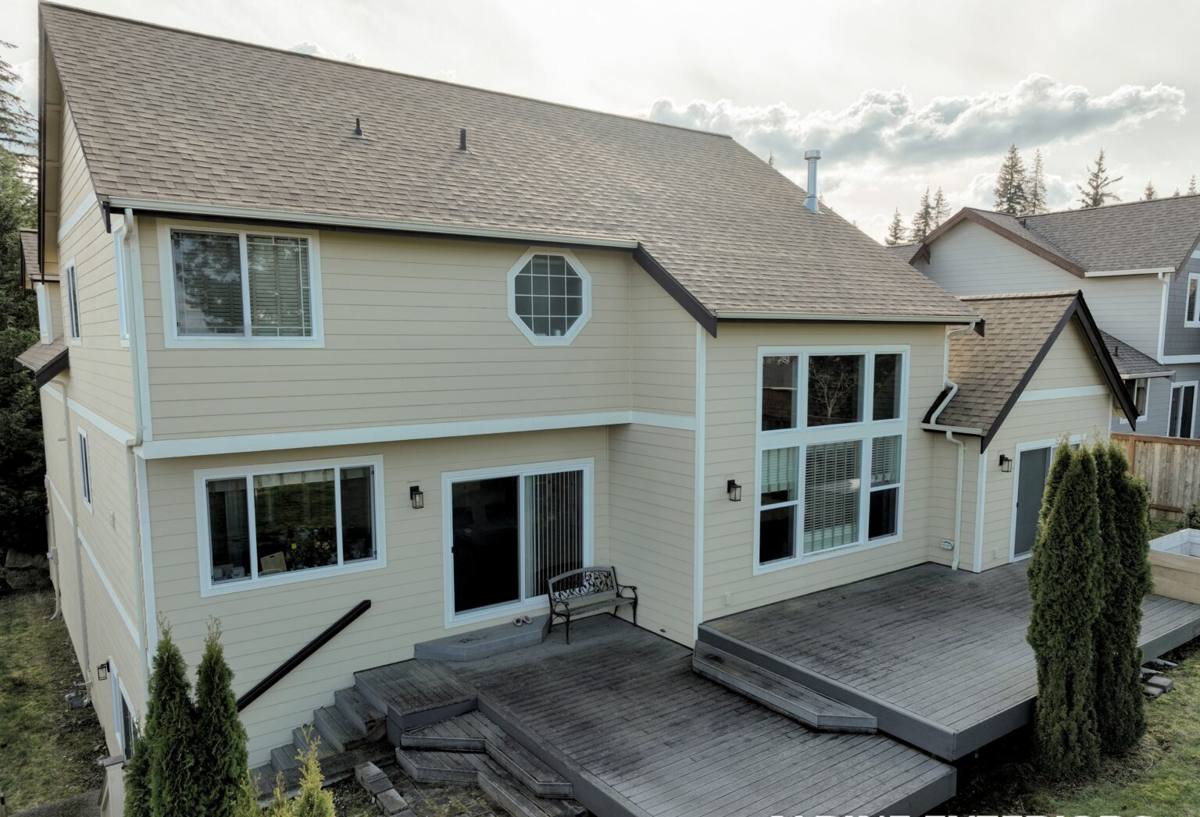
What Whatcom County Weather Actually Does to a Deck
Three things drive most of the deck damage we see in and around Acme, and they compound each other.
Driving Rain
Wind-driven rain doesn't just fall on a deck — it gets pushed sideways into railing joints, under fascia boards, and into the end grain of decking where it's cut and unsealed. End grain soaks up water many times faster than the face of a board, which is why boards often rot first at the cut ends near the house or at stair stringers, long before the rest of the deck looks like a problem.
A Long Moss Season
Mild, damp winters and shoulder seasons mean moss and algae have months to establish themselves on shaded or north-facing decks. Moss isn't just cosmetic — it holds moisture directly against the wood or composite surface, keeps that surface from ever fully drying, and accelerates rot underneath even when the top of the board still looks intact.
Salt-Tinged Air
Whatcom County's proximity to Puget Sound means homes here get some degree of salt-laden air, especially in exposed or elevated spots. Salt accelerates corrosion in exposed metal — screw heads, joist hangers, railing brackets, structural bolts — well before it would fail in a drier inland climate. A deck that looks structurally fine can have fasteners that are quietly losing their grip.
Signs an Acme Deck Needs Repair, Not Just a Cleaning
A pressure wash and a new coat of stain can make a tired deck look better for a season, but it won't fix what's actually failing underneath. Here's how to tell the difference.
- Soft or spongy decking — press on boards near the house, at stair edges, and anywhere moss collects. Give means rot, not just surface wear.
- Rust streaks around fasteners — a clear sign the screw or bolt underneath is corroding and losing holding strength.
- Wobble in the railing system — railings loosen when post connections or blocking behind the rim joist have started to fail.
- Gaps or separation where the deck meets the house — often points to a failing ledger board connection, one of the more serious repair issues since it affects the whole structure.
- Persistent moss that comes back within weeks of cleaning — usually means the deck isn't drying properly between rains, often due to poor drainage or missing flashing.
- Stair stringers that flex or creak — stairs take concentrated weight and are frequently the first structural element to show wear.
What a Correct Deck Repair Actually Involves
Deck repair gets treated as simple carpentry more often than it should be. Done properly, it's part carpentry and part moisture management — fixing the visible damage without leaving the conditions in place that caused it.
Framing and Structural Repairs
This is the part that matters most and shows the least. We check ledger board attachment and flashing, joist and beam condition, post bases, and hardware condition before touching a single decking board. A deck that looks fine on top can have a compromised frame underneath, especially near the house where moisture collects.
Decking Board Repair and Replacement
Individual boards get replaced when they're soft, split, or badly cupped — there's rarely a reason to replace an entire deck surface if the framing is sound and only a portion of the boards have failed. New boards get properly gapped for drainage and airflow, which is a common shortcut that leads to repeat moss and rot problems.
Railings, Guards, and Stairs
Railing posts and stair stringers carry real structural load and code requirements around height and baluster spacing. Repairs here aren't just cosmetic — a railing that's been patched instead of properly reattached to blocking is a safety issue, not just a maintenance one.
Fasteners and Hardware
Given the corrosion risk from salt air and constant moisture, we replace failing fasteners and connectors with hardware rated for exterior, coastal-adjacent exposure rather than matching whatever was originally used — which is often the actual reason a repair needed to happen in the first place.
Repair or Replace? What Actually Drives That Decision
| Factor | Leans Toward Repair | Leans Toward Replacement |
|---|---|---|
| Framing condition | Solid, dry, no rot at ledger or beams | Rot or soft spots at multiple structural points |
| Extent of damage | Isolated boards or one section | Damage spread across most of the surface |
| Age of the deck | Under 15–20 years, well-built originally | Original construction is old or undersized by current standards |
| Fastener condition | Localized rust, easily replaced | Widespread corrosion throughout the structure |
| Moss/moisture history | Manageable with better drainage and airflow | Chronic moisture trapped by design (poor slope, no ventilation) |
Most decks we look at in Acme fall into the repair category — the frame is sound and the damage is concentrated where water collects. Full replacement usually only makes sense when the structural frame itself is compromised or the deck was undersized for its use to begin with.
Our Deck Repair Process
- On-site inspection. We walk the full deck, check under it where possible, test boards and railings by hand, and inspect the ledger connection to the house — the single most important structural point on any attached deck.
- Honest scope of work. You get a clear breakdown of what's failing structurally versus what's cosmetic, so you're not paying to replace boards that don't need it or ignoring a framing issue that does.
- Repair, not just patch. We address the moisture source — drainage, gapping, flashing — alongside the visible damage, so the same spot isn't back on our list in two years.
- Cleanup and final check. Fasteners torqued, railings tested for movement, and the work area left clean.
Materials: What We Use and Why
Both pressure-treated lumber and composite decking hold up well in this climate when they're installed correctly — the material matters less than the details around it. Pressure-treated wood is a solid, cost-effective choice for framing and can work well for decking if it's properly sealed and maintained, since it forgives spot repairs easily. Composite decking costs more up front but resists moisture absorption and moss staining better over time, which matters given how long our decks stay damp each year. We'll walk through the honest trade-offs — upfront cost, long-term maintenance, and how each material behaves under Whatcom County's wet-and-shaded conditions — rather than pushing one product for every situation.
Why a Crew That Already Works Acme Matters
Deck repair mistakes in this region usually aren't about carpentry skill — they're about not accounting for how this specific climate behaves. A crew unfamiliar with the area might reseal a deck without addressing the drainage problem underneath it, or use standard hardware where corrosion-resistant fasteners were needed. Working regularly in and around Acme and greater Lynden means we've seen how ledger boards, fasteners, and shaded north-facing decks actually hold up here over years, not just how a repair looks the day it's finished.
Keeping a Repaired Deck in Good Shape
A repair holds up longer with a little seasonal attention. This isn't a maintenance contract — just the basics that make the biggest difference in our climate.
- Sweep debris off the deck regularly, especially in fall when leaves trap moisture against boards.
- Clean moss and algae off shaded areas before it spreads, rather than waiting for a deep annual clean.
- Check that gaps between boards stay clear so water can drain instead of pooling.
- Reseal or restain wood decking on the manufacturer's recommended schedule — don't stretch it because the deck "still looks fine."
- Glance underneath once or twice a year for early rust on visible hardware.
If you're noticing soft boards, a loose railing, or moss that keeps coming back on a deck in Acme, we're happy to take a look and give you a straight answer about what actually needs fixing. Reach out for a free, no-pressure estimate using the form below.