 Lynden Exterior
 Deck Building in Acme: Built for the Land You Live On
Acme sits in the tree-lined foothills of Whatcom County, tucked along the South Fork Nooksack River corridor south of Lynden. It's a different world from the open farmland closer to town — more shade, more standing moisture, more organic debris falling on every horizontal surface. A deck built here needs to handle that reality from day one, not get "upgraded" after the first winter of soft spots and green film.
We build and repair decks throughout Whatcom County, and Acme properties get treated differently in our planning because the site conditions are different. This page covers what that actually means: what the climate does to a deck out here, what a correctly built one involves, how we run the job, and why local experience matters more than it sounds like it should.
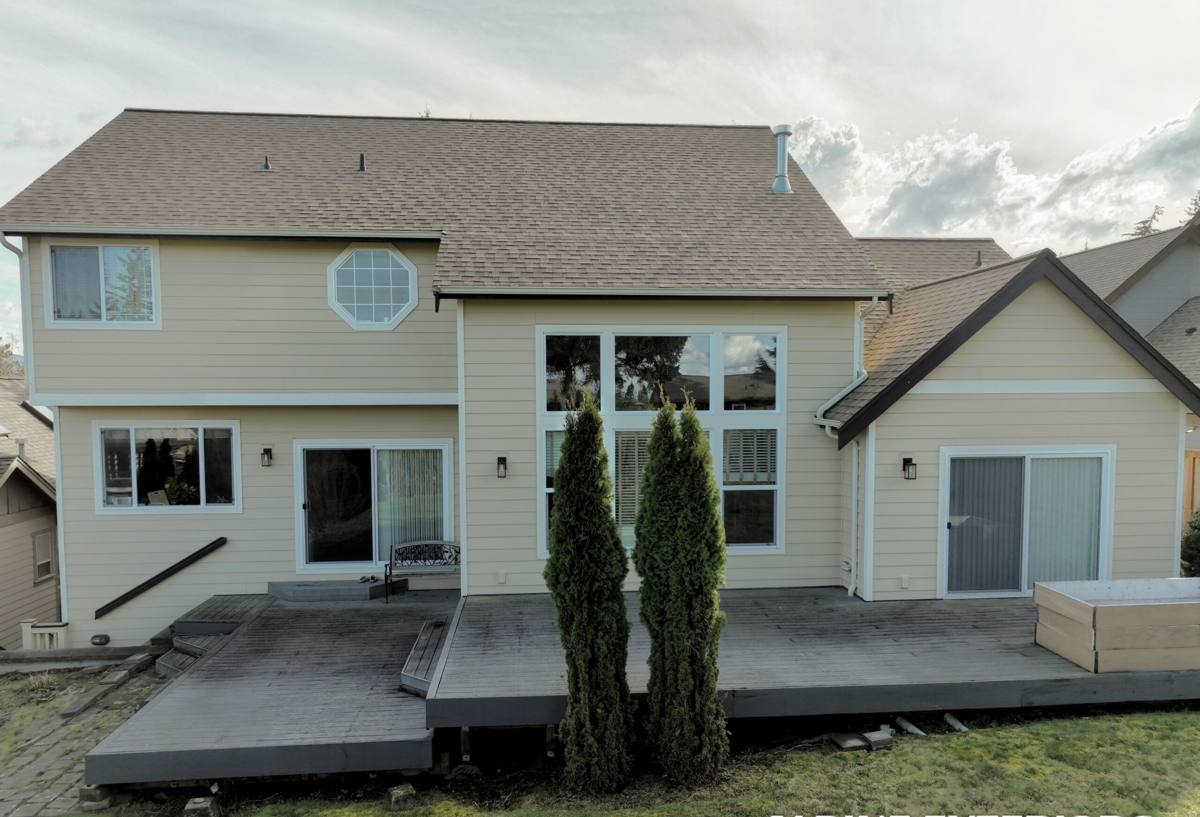
What Acme's Climate Does to a Deck
Whatcom County as a whole deals with driving rain off Puget Sound weather systems, long damp stretches, and salt-carrying air that moves inland during storms. In Acme specifically, that regional moisture pattern gets compounded by heavy tree cover and a valley setting that holds humidity longer than open, sun-exposed lots.
Moisture That Doesn't Let Up
It's not the volume of rain that wears out a deck — it's how long the wood or composite stays wet between dry spells. On a shaded Acme lot, a deck surface can stay damp for days after a storm has already moved through. That extended wet time is what drives rot, fastener corrosion, and coating failure, far more than any single downpour.
Moss and Shade From Tree Cover
Acme's tree canopy is part of what makes the area attractive, but it also means less direct sun hitting deck boards, which means moss, algae, and lichen get a head start every fall and hold on well into spring. Left unaddressed, that growth holds moisture against the surface and makes boards slick and dangerous underfoot — not just an appearance issue.
Wood Movement and Seasonal Swings
Framing lumber and decking both expand and contract with moisture cycles. In a climate where damp and dry periods alternate for months at a time, gaps close up, fasteners back out, and boards cup if the material or spacing wasn't chosen with that movement in mind. This is a design problem as much as a material problem, and it's where a lot of lower-end deck builds start showing their age within a few years.
Choosing the Right Decking Material for an Acme Property
There's no single "best" decking material — there's a best material for a given site, budget, and maintenance appetite. For a shaded, damp lot like most in Acme, we weigh moisture and moss resistance more heavily than we would on an open, sun-exposed property closer to Lynden.
| Material | Moisture & Moss Behavior | Maintenance | Typical Lifespan |
|---|---|---|---|
| Pressure-treated fir/pine | Resists rot with proper treatment, but end grain and cut edges are vulnerable; moss grows readily in shade | Annual cleaning and re-sealing recommended | 15–20 years with upkeep |
| Cedar | Naturally rot- and insect-resistant, but softer surface holds moisture and shows moss/graying faster in deep shade | Periodic cleaning, oil or stain every 2–3 years | 20–25 years with upkeep |
| Composite decking | Doesn't absorb water like wood, but can still grow surface algae/moss in constant shade if not cleaned | Occasional washing, no staining or sealing | 25–30+ years |
| PVC/capped decking | Best moisture resistance of the group; least hospitable surface for moss to root into | Lowest — soap and water cleaning | 25–30+ years |
We're honest about trade-offs on all of these. Composite and PVC cost more up front and some homeowners simply prefer the look and feel of real wood — that's a legitimate choice as long as you go in knowing the maintenance commitment on a shaded lot is higher. What we won't do is install a wood deck without proper drainage and airflow underneath and call it low-maintenance, because on an Acme property that combination sets the deck up to fail early.
What a Correctly Built Deck Involves
A deck is only as good as what's underneath it, and this is where a lot of the difference between a deck that lasts and one that doesn't gets decided — long before the surface boards go down.
Footings and Framing
Footings need to be sized and set below frost depth per Whatcom County building code, on soil that's actually been evaluated, not guessed at. On sloped or partially wooded Acme lots, that sometimes means additional footings or engineered beams to handle uneven grade — something a generic deck estimate done without a site visit will miss every time.
Ledger Attachment and Flashing
Where a deck ties into the house, proper flashing is what keeps water from working its way behind siding and into the wall framing. This is one of the most common failure points we find on older decks in wet climates — a ledger board that was lag-bolted to the house with no flashing at all, or flashing that was installed but lapped the wrong direction.
Airflow Underneath
A deck built low to the ground with poor ventilation underneath traps moisture and accelerates rot in the joists and beams, regardless of what decking material sits on top. On shaded Acme lots where things already dry slowly, this detail matters even more than it would on an open, sunny site.
Fasteners and Hardware
We use corrosion-resistant, code-rated hardware — hot-dip galvanized or stainless connectors and fasteners rated for treated lumber contact. In a damp, tree-covered environment, mismatched or bargain-grade fasteners corrode faster and can fail well before the wood around them does.
Our Process for Acme Deck Projects
- Site visit: We walk the actual lot — grade, drainage, tree cover, sun exposure — before quoting anything, because Acme sites vary a lot from one property to the next.
- Design and material selection: We talk through decking and framing options honestly, including what each choice means for maintenance given the shade and moisture on your specific lot.
- Permitting: Deck construction in unincorporated Whatcom County typically requires a building permit depending on size and height; we handle that process as part of the job.
- Construction: Footings, framing, flashing, and decking installed in sequence with inspections where required.
- Final walkthrough: We go over the finished deck with you, including a basic maintenance rundown specific to a shaded, damp site.
Maintenance Checklist for Acme Homeowners
Whatever material you choose, a little seasonal attention goes a long way in this climate. This is the baseline we recommend to Acme clients:
- Sweep leaves, needles, and other debris off the deck regularly during fall and winter — trapped organic matter is what feeds moss and holds moisture against the surface
- Wash the deck surface at least once a year with a deck-safe cleaner to remove moss, algae, and grime before it takes hold
- Check and clear gaps between boards so water can actually drain through rather than pooling
- Inspect fasteners and hardware annually for corrosion, especially near the ledger board and stair connections
- Re-seal or re-stain wood decking on the schedule appropriate to the product — don't wait until it's visibly failing
- Trim back overhanging branches where practical to get a little more sun and airflow onto the deck surface
- Check under-deck ventilation isn't blocked by stored items, skirting, or overgrowth
Common Mistakes We See on Existing Decks
A lot of our Acme deck work is repair and replacement, not new construction, and the patterns repeat: ledger boards without flashing, footings that were never set to proper depth, decking installed tight to the house with no drainage path, and framing lumber that was never rated for ground or moisture contact in the first place. None of these show up as a problem on day one — they show up two, five, or ten years later as soft spots, sagging, or a deck that just feels wrong underfoot. When we're asked to repair a deck, we look at what's underneath before we touch the surface, because replacing boards on top of bad framing just delays the real problem.
Why Hire a Crew That Already Works in Acme
General deck-building knowledge only goes so far when the site conditions are as specific as they are around Acme. Knowing that a given lot is going to hold moisture longer because of tree cover, knowing what the local permitting process actually requires, and knowing how to get equipment and material to a rural, sometimes tricky-to-access property — that comes from having done the work here before, not from a generic estimate template. It also means we're not learning the property's quirks on your dime; we've already accounted for them in how we plan and price the job.
If you're thinking about a new deck, a replacement, or you're not sure whether your current deck is sound, we're happy to come take a look. A free, no-pressure estimate is the easiest way to find out what your property actually needs — use the form below to get started.