 Lynden Exterior
 Storm Damage Roof Repair, Built for Abbotsford's Fraser Valley Weather
Abbotsford sits at the eastern edge of the Fraser Valley, close enough to the Whatcom County border that its roofs face nearly the same weather our Lynden customers deal with every year. That means long, wet winters, wind events that funnel through the valley, and a moss season that never really ends. A roof that's been through a storm doesn't always show it in an obvious way. Sometimes it's a handful of lifted shingles. Sometimes it's a slow leak that starts weeks after the wind has died down. Either way, getting it looked at properly matters more here than in drier parts of the country, because moisture that gets under a damaged roof surface in this climate doesn't dry out fast.
This page covers what storm damage roof repair actually involves for an Abbotsford home, what we look for, and how a repair job should be done so it holds up through the next storm season and the one after that.
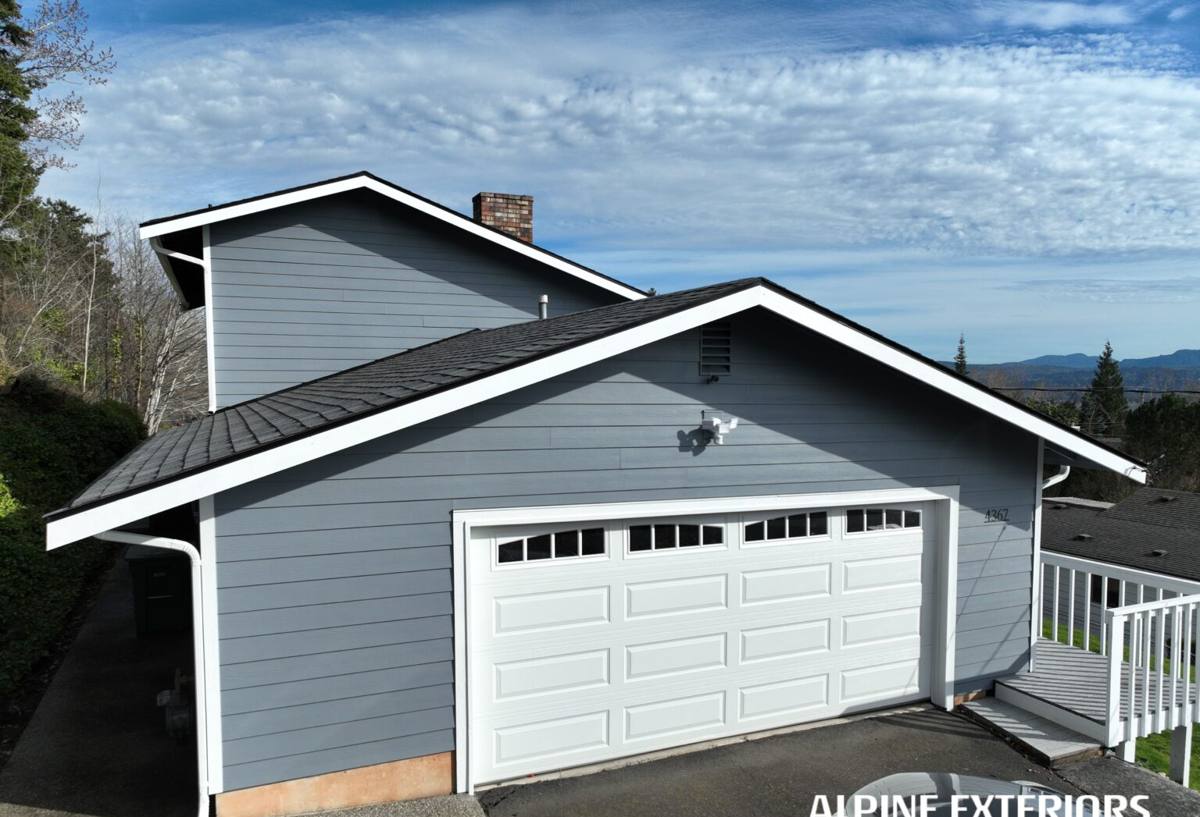
What Actually Counts as Storm Damage
Storm damage isn't just a hole punched through the roof deck. Most of what we repair after a wind or rain event in this region falls into a few categories:
- Wind-lifted or torn-off shingles — sustained gusts can break the seal strip on asphalt shingles or tear them loose entirely, especially on older roofs where the adhesive has already weakened from age and sun exposure.
- Flashing displacement — flashing around chimneys, vents, and roof valleys can shift or separate during high wind, opening a direct path for water even if the shingles around it look fine.
- Driving-rain intrusion — the Fraser Valley gets rain that comes in sideways during storms, not just straight down. That kind of rain finds gaps that a vertical downpour never would, pushing water under shingle edges and around poorly sealed penetrations.
- Debris impact — branches and debris from nearby trees can crack shingles, dent metal roofing, or puncture the underlayment without leaving damage that's visible from the ground.
- Accelerated moss and algae growth — this isn't storm damage in the classic sense, but repeated wet weather followed by mild, damp stretches is exactly what moss needs to take hold, and moss buildup makes existing storm damage worse by holding water against the roof surface.
Signs Your Abbotsford Roof May Have Storm Damage
Most homeowners don't get on their own roof after a storm, and they shouldn't — a wet, moss-covered roof is not a safe place to be walking around. Instead, look for these signs from the ground or from inside the house:
- Shingles in the yard or against fences after a windy night
- Granules collecting in gutters or at downspout outlets
- Visible gaps, curling, or shingles that look "lifted" at the edges
- Water stains on ceilings or upper interior walls, especially near chimneys or skylights
- A musty smell in an attic or upper closet that wasn't there before
- Sagging or uneven sections along the roofline
- Daylight visible through the roof deck from inside the attic
Any one of these on its own doesn't necessarily mean a major problem, but it's worth having someone take a proper look rather than waiting for the next storm to make the damage bigger.
What a Correct Storm Damage Repair Involves
Inspection Before Anything Else
A repair that skips the inspection step is a repair that guesses. Before we touch a shingle, we walk the roof (weather permitting) and check the attic from inside, because storm damage often shows up in two places at once — the surface and the underside of the deck. We're looking for the extent of the damage, not just the obvious spot, since wind damage in particular tends to be worse a few feet away from where it's visible.
Temporary Protection When Needed
If a storm has left an active leak or exposed deck, the priority is stopping water intrusion before doing the permanent fix. That usually means tarping the affected area properly — tucked and secured, not just draped over the top — so the house is protected while materials are sourced and the repair is scheduled.
Matching Tear-Off to the Actual Damage
Not every storm-damaged roof needs a full replacement, and not every damaged section can be safely patched. Part of doing this correctly is being honest about which one you're dealing with. A localized wind tear on a roof that's otherwise in good shape can often be repaired section by section. A roof that was already near the end of its service life before the storm hit is a different conversation, and we'll tell you that plainly rather than patching something that's going to need full replacement within a year or two anyway.
Proper Flashing and Underlayment Work
A lot of repeat leaks trace back to a repair that replaced the shingles but reused old, bent flashing or skipped fixing the underlayment underneath. Given how often this region sees driving rain, flashing and underlayment condition matter as much as the shingles themselves — we replace flashing that's been displaced or corroded rather than bending it back into place.
Our Storm Damage Repair Process
- Assessment and photos. We document the damage clearly, which is useful both for our own repair plan and for any insurance claim you may be filing.
- Written scope and honest estimate. You get a clear description of what's damaged, what needs to be repaired versus replaced, and a straightforward cost range — no vague allowances.
- Temporary protection if needed. If there's active exposure, we secure the area first.
- Scheduled repair. We coordinate timing around weather windows, since installing roofing materials in active rain isn't good practice and doesn't hold up.
- Cleanup and final check. Old materials, nails, and debris are cleared from the yard and gutters, and we do a final walk-through so you know exactly what was done.
Materials and Cost Factors
Storm damage repair costs vary a lot depending on scope, roof type, and access. Rather than quote a number that won't apply to your situation, here's what actually drives the price up or down:
| Factor | Why It Matters |
|---|---|
| Size of damaged area | A few missing shingles is a different job than a wind-torn section spanning multiple courses. |
| Roof pitch and access | Steep or high roofs take longer to work safely and require more setup. |
| Underlayment condition | If water has been sitting under the shingles, the underlayment and possibly the deck itself may need replacing, not just the surface. |
| Flashing condition | Corroded or bent flashing around chimneys, vents, and valleys often needs full replacement, not reuse. |
| Shingle matching | Older roofs with discontinued shingle colors or styles may need a wider repair area to blend properly. |
| Moss and debris removal | Heavy moss buildup adds cleanup time before the actual repair can even start. |
As a broad guide, a small, localized wind or flashing repair is generally a modest cost, while damage that involves deck replacement or a large section of the roof climbs from there. The only way to know for sure is a direct look, which is what the free estimate is for.
Insurance Documentation and Cross-Border Logistics
If your storm damage is being handled through an insurance claim, clear documentation matters. We provide photos and a written description of the damage that you can hand directly to your adjuster, and we're happy to answer follow-up questions about the scope of repair. Because we regularly work jobs on both sides of the Whatcom County–Fraser Valley border, we're used to coordinating scheduling, material transport, and site access for Abbotsford properties the same way we do for our Lynden customers — it's a normal part of how we run jobs in this area, not a special arrangement.
Why a Crew That Already Works in Abbotsford Matters
Storm damage repair isn't just about knowing how to replace a shingle. It's about knowing what this specific climate does to a roof over time — how moss establishes itself in shaded, north-facing sections, how driving rain off the valley finds weak points that a calmer climate never would, and how salt-tinged coastal air moving up through the Fraser Valley slowly degrades exposed metal flashing and fasteners faster than it would further inland. A crew that already services Abbotsford homes has seen these patterns repeatedly and knows where to look first, which means a faster, more accurate diagnosis instead of a generic repair that misses the underlying cause.
There's also a practical side to this: familiarity with the neighborhood, typical roof ages and styles in the area, and realistic scheduling around Fraser Valley weather windows all make the difference between a repair that goes smoothly and one that drags out over weeks of rain delays and guesswork.
Preventing the Next Round of Storm Damage
Repair is only half the picture. A few maintenance habits meaningfully reduce how much damage the next storm season causes:
- Keep gutters and downspouts clear so water isn't backing up under the roof edge during heavy rain
- Trim back branches that overhang the roof, since they're a common source of impact damage in wind events
- Address moss buildup before it spreads, rather than after it's lifted shingles
- Have flashing and roof penetrations checked periodically, not just after visible damage appears
- Deal with small leaks or lifted shingles promptly — they rarely get better on their own in this climate
A roof that's properly maintained between storms holds up dramatically better than one that only gets attention after something breaks.
Get a Free, No-Pressure Estimate
If your Abbotsford home has recent storm damage, or you just want a professional set of eyes on your roof before the next weather system rolls through, we're glad to take a look. There's no obligation and no pressure — just a straightforward assessment and honest recommendation, whether that's a small repair or something more. Use the form below to request your free estimate.