 Lynden Exterior
 Siding Built for the Fraser Valley, Not Just Sold Into It
Abbotsford sits in the Fraser Valley just north of the Sumas Prairie border crossing, close enough to our home base in Lynden that it's regular territory for our crew rather than an occasional out-of-town job. The valley's weather is a specific kind of hard on a house exterior: salt-tinged air pushing inland off Boundary Bay and the Strait of Georgia, driving rain that comes in sideways more often than it falls straight down, and a moss season that can run most months of the year on shaded roofs and north-facing walls. None of that is unusual for this corner of the Pacific Northwest, but it's exactly the kind of climate that separates a siding job that holds up for decades from one that starts showing problems within a few years.
We install James Hardie fiber cement siding exclusively. We don't offer vinyl, LP SmartSide, Cemplank, Allura, primed spruce, or cedar as alternatives, and this page explains why that standard exists, what correct Hardie installation actually involves on an Abbotsford home, and how our process works for a job that happens to sit on the Canadian side of a border we cross constantly.
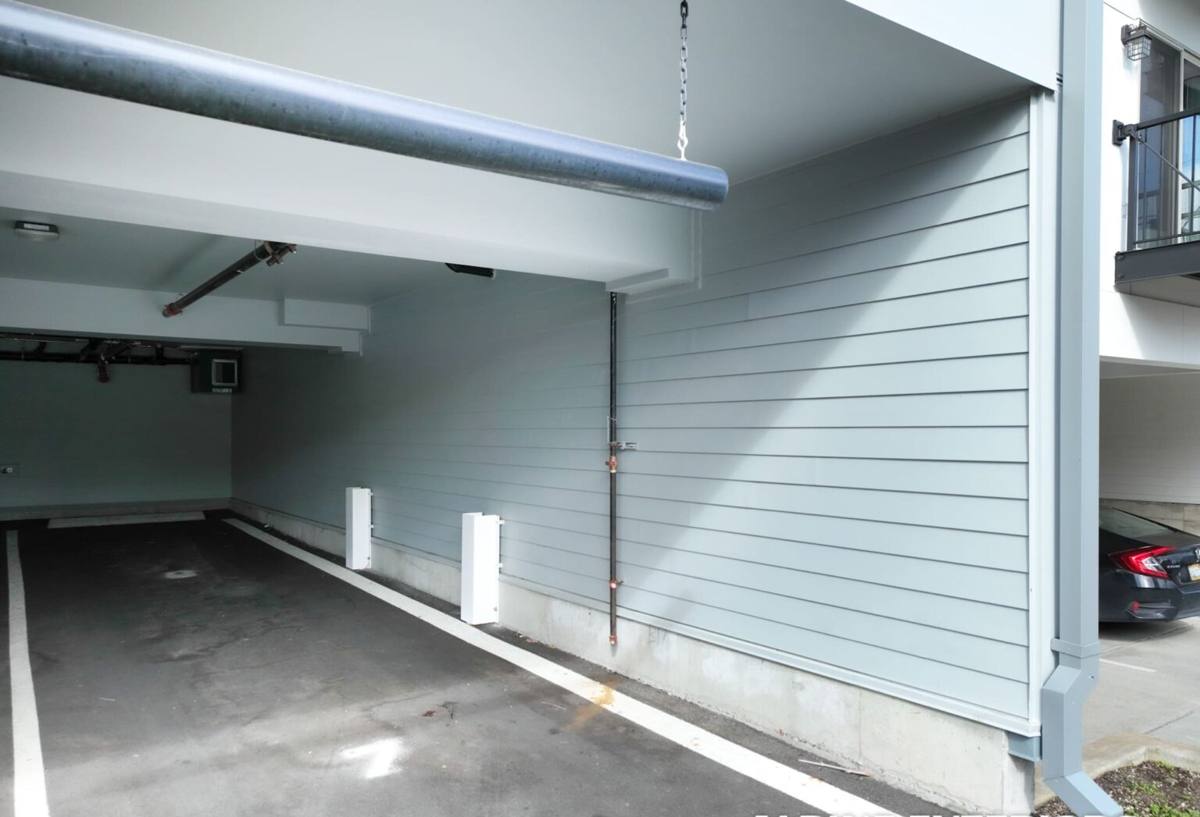
Why This Climate Is Hard on Siding
Salt-Tinged Air and Corrosion
Abbotsford isn't a waterfront community, but it's close enough to Boundary Bay and the Strait of Georgia that marine-influenced air moves up the valley regularly, especially with a westerly wind. That air carries enough salt to accelerate corrosion in fasteners, flashing, and any lower-grade metal trim over time, and it breaks down cheap paints and finishes faster than a drier inland climate would. It's a slower, quieter form of wear than a storm event, but it adds up on every wall of the house, not just the ones facing the weather.
Driving Rain and Wind-Driven Moisture
Fraser Valley storms coming off the Pacific don't always fall straight down. Wind pushes rain sideways into wall assemblies, window flashing, and roof-to-wall transitions with real force, which means water finds its way into joints and laps that a calmer climate would never test. Siding and flashing details that hold up fine somewhere with lighter, more vertical rainfall can still fail here specifically because the water pressure is coming from an angle they weren't built to handle.
A Long Moss Season
Mild temperatures, near-constant humidity, and shaded lots under mature trees give moss and algae a growing season that runs most of the year in this valley, not just a few wet months. Moss holds moisture directly against a wall surface far longer than open air would, and on lower-quality siding materials that sustained dampness is what eventually leads to swelling, delamination, or rot. Even a well-built Hardie exterior benefits from occasional gentle washing to keep moss from establishing on shaded walls and roof planes.
Why James Hardie Is the Standard We Install
James Hardie fiber cement is a cement, sand, and cellulose fiber composite, which makes it non-combustible and dimensionally stable in a way that wood-based and vinyl products aren't. It doesn't feed a fire the way wood-based siding can, it doesn't warp or soften with sustained moisture exposure the way engineered wood products can, and it doesn't get brittle and crack in cold snaps the way some vinyl formulations do. For a valley that cycles through wet, mild winters and the occasional sharp cold outflow event, that combination of properties matters more than it might in a milder, drier climate.
The HZ5 Product Line
James Hardie engineers different product lines for different climate zones, and the HZ5 line is built for regions with sustained moisture exposure and freeze-thaw cycling, which fits the Fraser Valley's winters better than a product engineered primarily for hot, dry regions further south. That climate-specific engineering, not just the fiber cement material itself, is a concrete part of why we standardized on this manufacturer rather than treating fiber cement as an interchangeable category.
ColorPlus Factory Finish
Most Hardie siding we install carries ColorPlus Technology, a finish baked onto the board in a factory under controlled conditions before it ever reaches the jobsite. That's a meaningfully more consistent process than a painter applying color on-site, where wind, humidity, and temperature all affect how a coating cures. In a climate that gives field-applied paint a hard time for most of the year, a factory-cured finish is a real practical advantage, not just a convenience.
A Warranty Built Around the Whole System
James Hardie backs its siding with a long, transferable substrate warranty, and ColorPlus finishes carry a separate finish warranty covering fading and chipping. Warranty coverage depends on installation to Hardie's specifications, which is one more reason installation quality matters as much as the material choice itself — a warranty is only as good as the install it's attached to.
| Material | How It Handles This Climate | Why We Don't Install It |
|---|---|---|
| Vinyl siding | Can crack or become brittle in cold snaps; seams and J-channels give wind-driven rain a path inward | Doesn't match Hardie's fire performance, dimensional stability, or long-term finish durability |
| LP SmartSide | Engineered wood strand product; sustained moisture exposure is its weak point if any edge or seam is compromised | Moisture sensitivity is a real long-term risk in a valley this wet, most of the year |
| Primed spruce / cedar | Natural wood movement, plus ongoing repainting and sealing to keep moisture out | High maintenance burden and higher long-term risk of rot in shaded, damp wall sections |
| Cemplank / Allura | Other fiber cement brands with broadly similar base material properties | We standardized on Hardie's specific climate-zone engineering, finish system, and warranty structure as one package |
| James Hardie HZ5 | Engineered for sustained moisture and freeze-thaw cycling; non-combustible; factory finish | What we install on every siding job, including in Abbotsford |
What a Correct James Hardie Install Involves
The material only performs as well as the installation underneath it. A correct Hardie install in this climate isn't just nailing boards to a wall — it's a sequence of decisions that determine whether the wall assembly manages water correctly for the next several decades.
Sheathing and Water-Resistive Barrier
Before any siding goes up, we check the sheathing underneath for existing damage and install a proper water-resistive barrier, lapped correctly from the bottom up so water sheds outward rather than working its way behind the barrier at a seam.
Rainscreen Gap
In a climate with this much sustained moisture, a rainscreen gap between the water-resistive barrier and the back of the siding gives any water that does get past the cladding a path to drain and dry out rather than sitting against the wall assembly. It's a detail that costs a little more labor and material up front and saves real problems down the line, especially on walls that stay shaded and damp for long stretches of the year.
Flashing at Every Penetration
Windows, doors, hose bibs, light fixtures, and any other wall penetration need properly integrated flashing so wind-driven rain can't work its way in around the edges. This is the single detail that separates a siding job that holds up from one that leads to hidden rot behind the wall a few years later, and it's also the detail that's easiest to rush on a job that isn't being supervised closely.
Fastening and Clearances
Hardie specifies fastener type, spacing, and placement, along with minimum clearances from grade, roof lines, and other surfaces so boards aren't sitting in standing water or trapped moisture. Following that spec isn't optional if you want the manufacturer's warranty to actually apply, and it's also just what keeps the siding performing the way it's engineered to over the long run.
Joint Treatment
Butt joints and trim intersections need to be treated correctly, whether that's a factory-mitered joint, a proper flashed joint, or specified caulking at the right locations. Done wrong, joints become the first place moisture gets in; done right, they're barely noticeable and stay weathertight for the life of the siding.
Our Process for an Abbotsford Job
The steps are the same whether the house is a few minutes from our shop in Lynden or across the border in Abbotsford — what changes is a bit of extra planning around logistics, which we cover in the next section.
- Assessment and estimate: we walk the property, look at the existing exterior, note wall orientation and shading, and put together a free, no-pressure quote.
- Product and color selection: we go over HZ5 profiles, textures, and the ColorPlus palette against your home's roof, trim, and surroundings.
- Permitting: siding work in Abbotsford requires a permit through the City of Abbotsford, and we handle that filing as part of the project rather than leaving it to the homeowner.
- Material staging and delivery: Hardie board is heavy and needs to be staged and handled correctly to avoid chipped edges before it's even installed.
- Tear-off and prep: removing existing siding, checking sheathing condition, and correcting anything found before new material goes up.
- Installation: water-resistive barrier, rainscreen, flashing, fastening, and joint treatment, in that order, to spec.
- Final walkthrough: we go over the finished job with you before calling it done, not just after final payment clears.
Cross-Border Considerations That Actually Matter
Plenty of contractors will quote a job in Abbotsford and not think twice about the fact that it's a different country until something goes sideways. A crew that works this corridor regularly plans for it from the start.
Licensing and Coverage on the Canadian Side
Working legally on a Canadian jobsite means being properly set up on that side of the border — registered to do business in BC, with WorkSafeBC coverage for anyone on the site, in addition to our Washington credentials. It's worth asking any contractor quoting Abbotsford work whether they're actually set up this way, or whether they're planning to work around it.
Permits and Local Code
Abbotsford siding work goes through the City of Abbotsford's permitting process, which isn't identical to permitting on the Washington side. A crew that pulls permits here regularly knows what the city expects and doesn't turn a routine job into a paperwork delay.
Getting Material Across the Border
Hardie board, trim, and accessories all have to cross the border to get to an Abbotsford jobsite, which means accounting for customs documentation and crossing time when scheduling delivery. It's a solvable logistics problem, but only if it's planned for up front rather than discovered mid-project.
Quoting in the Right Currency
We quote Abbotsford jobs in Canadian dollars so there's no confusion or exchange-rate guessing built into the number you're given.
Maintenance That Fits This Climate
- Rinse siding gently once or twice a year to keep pollen, road film, and early moss growth from taking hold, especially on shaded and north-facing walls
- Check caulking at trim and joint locations annually and have any cracked or missing sections redone before winter rains set in
- Keep gutters and downspouts clear so water isn't overflowing directly onto siding below the roofline
- Trim back vegetation and tree limbs that keep a wall section shaded and slow to dry after rain
- Have any impact damage or hairline cracking looked at promptly rather than waiting, since a small gap in the surface is where moisture problems start
- Walk the exterior after any major windstorm to check for loosened trim or flashing rather than waiting for the next scheduled inspection
What to Look for When Hiring a Contractor Here
| Factor | Why It Matters |
|---|---|
| Actual Abbotsford / Fraser Valley experience | A crew that only occasionally crosses the border is less likely to know local permitting steps or how this specific valley climate behaves on real homes |
| Manufacturer training on the specific product line | HZ5 installation details differ from other Hardie climate lines; installer familiarity affects whether the warranty actually applies |
| Written scope covering flashing and rainscreen details | These are the details that get skipped on a rushed job and are the hardest to verify after the siding is up |
| Proper licensing and coverage for a Canadian jobsite | Protects you if anything goes wrong on-site, and confirms the crew isn't cutting corners on the legal side of the job |
| Clear, itemized quote in CAD | Avoids surprises tied to exchange-rate assumptions or vague scope language |
A Job Worth Doing Once, Correctly
Siding is one of the few home improvements where getting it wrong doesn't just mean an inconvenience — it means moisture problems working their way into the wall assembly for years before anyone notices. In a valley climate that stays wet and mild for most of the year, that risk is real enough that the material choice and the installation quality both deserve real attention, not a quick decision based on price alone.
We've built our business around installing one material, James Hardie fiber cement, to one standard, because we've seen what happens on homes where either the product or the installation fell short. If you're planning a siding project in Abbotsford and want a straightforward look at what your home actually needs, we're happy to walk the property with you and put together a free, no-pressure estimate.