 Lynden Exterior
 Custom Windows Built for a Border-Country Climate
Lynden Exterior Co works Whatcom County every day, and that work regularly takes us north into Abbotsford, BC. The two areas sit minutes apart and share the same weather pattern: wet, mild winters, a long stretch of driving rain from fall through spring, salt-laden air pushing in off the Strait of Georgia and Puget Sound lowlands, and a moss season that seems to start earlier every year. Windows in this region don't fail because of one dramatic event. They fail slowly, from years of moisture finding its way into places it shouldn't be, and from hardware and seals that were never rated for this kind of exposure.
"Custom windows" doesn't mean fancy shapes or high-end trim packages, though it can include those. For most homes in Abbotsford, custom simply means the window is built and installed to fit an actual opening correctly, with materials chosen for how this climate behaves, rather than whatever standard size and spec happened to be on a supplier's shelf.
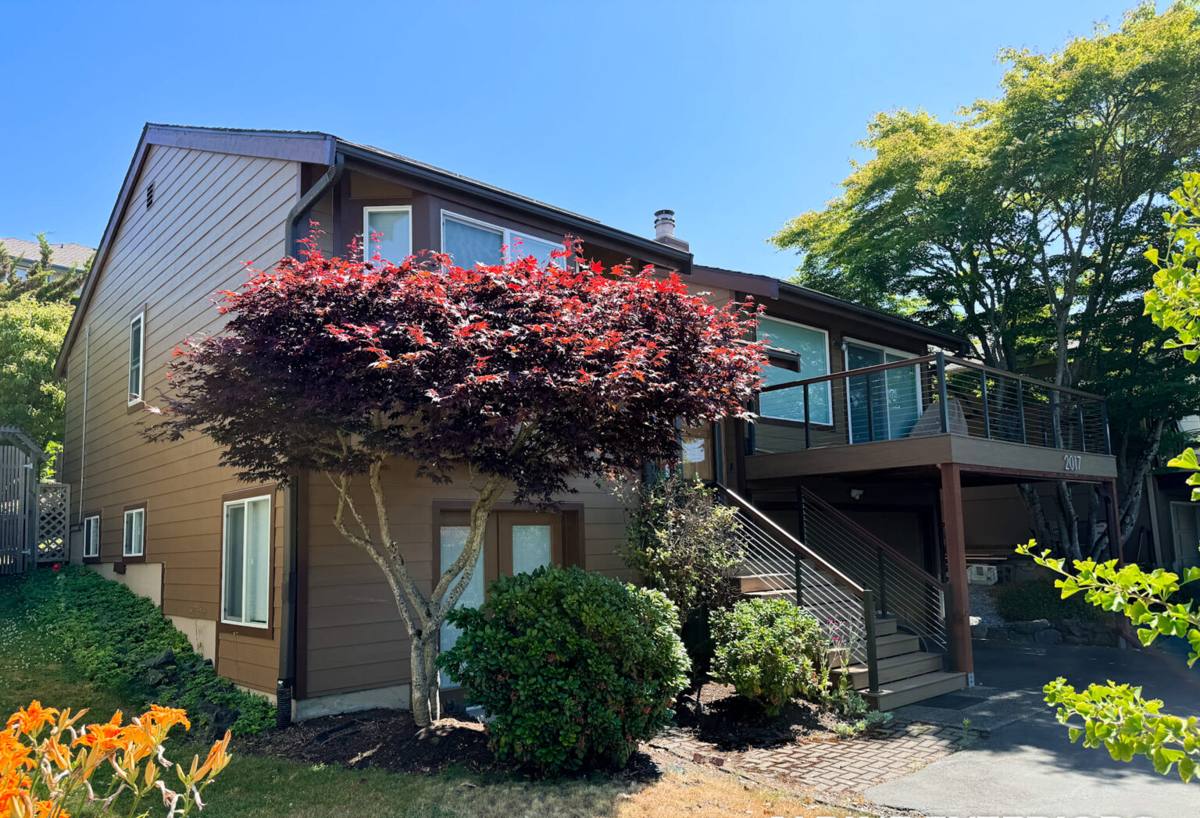
What "Custom" Actually Means for a Window Job
Non-Standard Openings and Older Homes
A lot of homes in and around Abbotsford, BC were built decades ago, before manufacturers standardized window sizes. Framing has settled, openings are slightly out of square, and trim details don't match anything you'd find in a big-box catalog. Forcing a stock-size window into an opening like this means shimming gaps, which means more caulk doing the job that solid framing should be doing. Custom sizing means the window is built to the actual opening, so the water and air seal isn't relying on caulk as a first line of defense.
Retrofit (Insert) vs. Full-Frame Replacement
Most replacement jobs fall into one of two categories. A retrofit or "insert" replacement keeps the existing exterior frame and trim in place and fits a new window inside it — faster and less invasive, and often the right call when the existing frame is solid and dry. A full-frame replacement removes everything down to the rough opening, including the flashing, and rebuilds from there. In a climate with this much driving rain, we push for full-frame whenever there's any sign of moisture damage around the old frame, because an insert installed over a compromised opening just seals the problem in.
Choosing Frame Material and Glass for Driving Rain and Salt Air
There's no single "best" window material — there's a best fit for the exposure a particular wall or elevation actually gets. Coastal-influenced air and repeated wetting change that calculus compared to a drier inland climate.
| Material | How It Handles This Climate | Trade-Off |
|---|---|---|
| Vinyl | Won't rot or corrode; handles moisture well | Can expand/contract with temperature swings; frame color is baked in, not paintable long-term |
| Fiberglass | Very stable dimensionally, holds paint well, strong moisture resistance | Higher upfront cost than vinyl |
| Wood-Clad | Warm interior look, good performance when maintained | Cladding seams and end grain need attention; not our first pick for direct salt-air exposure |
| Aluminum | Strong and slim sightlines | Poor insulator and prone to corrosion pitting near salt air unless properly coated and maintained |
For most Abbotsford and Lynden homes we lean toward vinyl or fiberglass for exterior exposure, reserving wood-clad for interior-facing or sheltered elevations where the look matters more and the weather exposure is lower.
Glass Packages That Actually Matter Here
Double-pane with a low-E coating and argon gas fill is the baseline we'd recommend for this region; triple-pane adds real value on north- and west-facing walls that catch the worst of the wind-driven rain, and on homes where condensation on the interior glass has been a recurring complaint. Warm-edge spacers (rather than older aluminum spacers) reduce the cold edge effect that shows up as fogging or frost around the glass perimeter during our damp, cool winters — a detail that matters more here than it would in a drier climate.
Water Management: The Part Nobody Sees
The window itself is rarely what fails first. What fails is the water management around it — the details that are invisible once the trim goes back on.
Flashing and Sill Pans
Every opening needs a sloped sill pan and properly lapped flashing tape integrated with the house wrap, so any water that gets past the window sheds outward instead of soaking into the framing. In a climate with sustained driving rain, this detail does more to prevent rot than the window brand or glass package ever will.
Sealant Is a Backup, Not a Strategy
Caulk and sealant should be the second line of defense, not the only one. We see failed installs around Abbotsford where the flashing was skipped or done poorly and the whole job relied on a bead of sealant to keep water out. Sealant degrades, shrinks, and cracks; flashing, done correctly once, doesn't need to be perfect every single year to keep working.
Salt Air and Hardware Longevity
Homes closer to open water or exposed to onshore wind see faster corrosion on window hardware — locks, hinges, roller tracks, and screen frames. We spec corrosion-resistant hardware finishes and stainless or coated fasteners on these installs rather than the standard-grade hardware that ships with some builder-basic window lines. It's a small cost difference upfront that avoids stuck locks, seized rollers, and pitted hardware a few winters in.
Moss Season and Long-Term Sill Care
Moss and algae don't just grow on roofs. On shaded or north-facing walls, they take hold on window sills, exterior trim, and anywhere water sits instead of draining. Left alone, that moisture retention accelerates trim rot, holds sealant lines wet longer than they should be, and gives corrosion a head start on hardware. A correctly built sill has a slight outward slope and clear drainage so water sheds instead of pooling — a detail worth checking on existing windows even if you're not replacing them yet, since a re-sloped sill and better drainage can add years to trim and casing that would otherwise sit wet through the moss season every year.
Our Process for a Custom Window Job
- On-site assessment — we check each opening for square, look for existing moisture or rot damage, and note exposure (elevation, wind direction, shading) before recommending retrofit vs. full-frame.
- Measurement and ordering — each window is measured and ordered to the actual opening, not a nominal stock size.
- Removal and opening prep — old windows come out, and if we're doing full-frame, the opening gets inspected and repaired down to sound framing before anything new goes in.
- Flashing and sill pan installation — this is the step that determines how the window performs in year ten, not just year one.
- Window installation and shimming — set plumb, level, and square, with proper fastening per the window's engineering specs.
- Insulation, sealing, and trim — gaps insulated (not overpacked), sealant applied as a backup layer, trim reinstalled or replaced.
- Final check — operation, locks, and weep holes tested before we call the job done.
Signs It's Time to Replace, Not Just Repair
- Visible condensation or fogging between the panes (a failed seal, not fixable by cleaning)
- Soft or discolored trim and sill wood around the frame
- Drafts you can feel near the frame even with the window fully latched
- Windows that are difficult to open, close, or lock — often a sign of a warped or swollen frame
- Visible moss or persistent black staining on sills that won't dry out between rains
- Rising energy bills without another clear explanation
What Affects the Cost of a Custom Window Job
| Factor | Why It Matters |
|---|---|
| Retrofit vs. full-frame | Full-frame costs more but is often necessary once moisture damage is present |
| Frame material | Vinyl, fiberglass, wood-clad, and aluminum carry different upfront and long-term costs |
| Glass package | Double- vs. triple-pane, low-E coatings, and spacer type all affect price and performance |
| Opening condition | Rot repair or reframing adds labor beyond the window itself |
| Number and size of openings | Larger picture windows and multi-window bays take more labor and material than standard units |
We walk every homeowner through these factors before quoting, so the number reflects the actual job in front of us rather than a generic estimate.
Why a Crew That Already Works Abbotsford, BC Matters
Working both sides of the border regularly means we're used to the logistics that trip up crews who only occasionally take a job north — scheduling around the crossing, sourcing materials that need to be on-site on time, and coordinating with homeowners across two different permitting environments. More importantly, we've seen how Whatcom County and Fraser Valley homes age under the same weather, so the failure points we check for — sill drainage, flashing integration, hardware corrosion, moss buildup on trim — aren't theoretical. They're what we find, over and over, on real openings in this exact climate.
If your windows are original, showing wear, or you're planning a renovation that includes new openings, we're happy to come take a look. Estimates are free, there's no pressure, and we'll tell you honestly whether a job calls for a full replacement or if a smaller repair will hold for now.