 Lynden Exterior
 Decks Around Wiser Lake Face a Different Set of Problems
Wiser Lake sits in a pocket of Whatcom County where the ground stays damp longer than it does on higher, more open ground closer to town. Tree cover around the lake keeps decks shaded through a lot of the year, which sounds pleasant until you notice how long it takes a shaded deck surface to actually dry out after a storm. Add in the driving rain that comes through this part of Washington for months at a stretch, plus the salt-tinged air that reaches inland from the Georgia Strait and Puget Sound systems, and you've got conditions that are genuinely harder on a deck than what a house a few miles south or east might deal with.
None of that means a deck around Wiser Lake can't last. It means the build has to account for moisture that lingers instead of moisture that passes through. That's the difference between a deck that needs real work in year six and one that's still solid at year twenty.
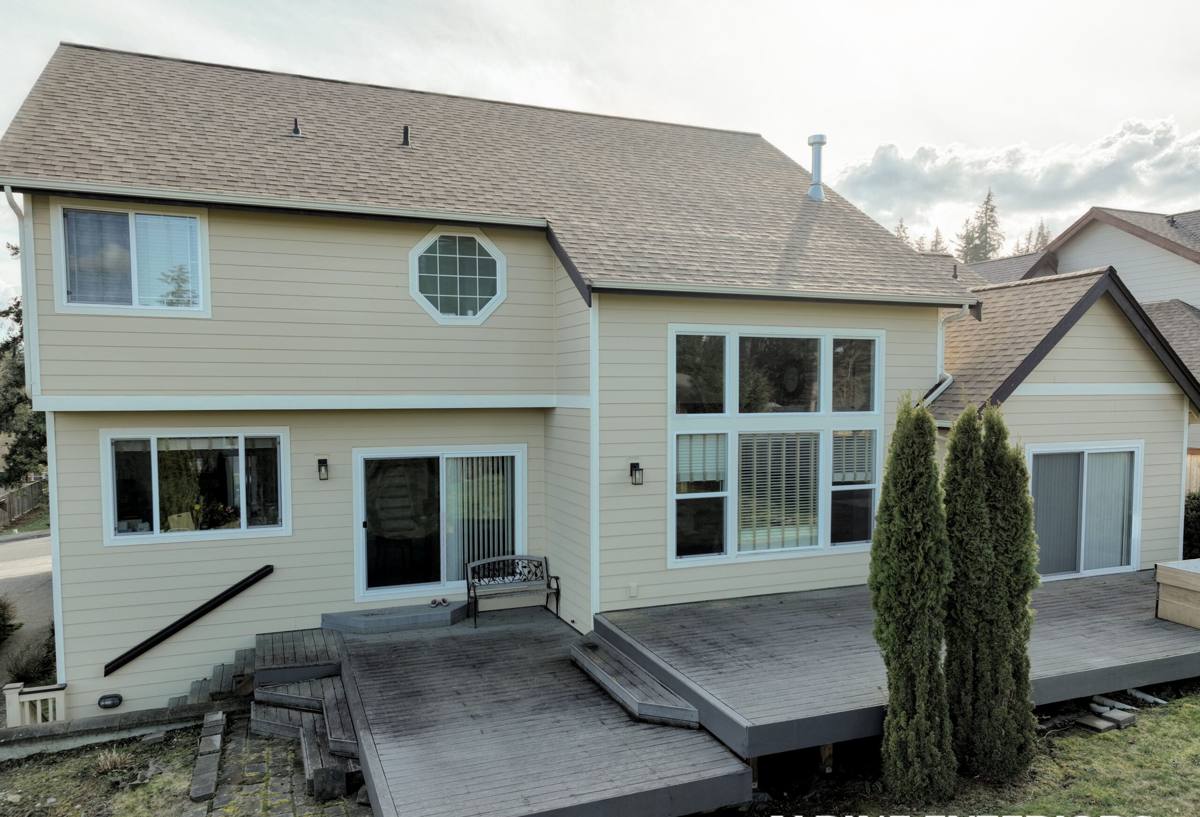
What a Wiser Lake Deck Actually Needs
Moss and Standing Moisture
Moss doesn't just make a deck look neglected — it holds water against the wood or composite surface long after the rain has stopped, and that constant dampness is what actually causes rot, staining, and slick footing. Homes near the lake with shade cover and higher ambient humidity are exposed to this more than most. A correctly built deck fights this with drainage gaps between boards, joist spacing that lets air move underneath, and a slight pitch away from the house so water has somewhere to go instead of pooling.
Wood Movement and Fastener Corrosion
Long wet season followed by a drier stretch means wood decking expands and contracts more here than it would in a drier climate. Fasteners and hardware that aren't rated for it will corrode, streak the decking, and eventually loosen. This is a bigger deal near water than most homeowners expect, and it's one of the first things we check when we look at an older deck that's showing rust streaks or soft spots at the fastener points.
Getting the Structure Right the First Time
Footings and Frost Depth
Whatcom County's frost depth requirements and soil conditions around the lake mean footings need to go down far enough to stay stable through freeze-thaw cycles. Skipping this — or pouring shallow footings to save time — is exactly what causes decks to heave, settle unevenly, or pull away from the house over a few winters. We size and place footings based on the actual load and soil at your site, not a generic minimum.
Ledger Attachment and Flashing
The ledger board — where the deck attaches to the house — is the single most common failure point on decks in this climate. If it isn't flashed correctly, water works its way behind the siding and into the rim joist or wall framing, and you don't see it until there's rot to deal with. Correct flashing, proper lag or through-bolt attachment, and a gap that lets water drain instead of collecting against the house are non-negotiable on every deck we build.
Joist Spacing and Hardware
Joist spacing affects both structural strength and how well the deck sheds water underneath. We use hardware rated for exterior, high-moisture use — not standard interior-grade connectors — because the difference shows up as rust and weakened connections within a few seasons otherwise.
Choosing the Right Decking Material
There's no single "best" decking material — there's the right material for how you'll use the deck, how much upkeep you want to do, and how much shade and moisture it'll actually sit in. Around Wiser Lake, that last factor matters more than it does on a dry, sun-exposed lot.
| Material | Upfront Cost | Maintenance | Moisture & Moss Behavior | Typical Lifespan |
|---|---|---|---|---|
| Pressure-treated lumber | Lowest | Annual cleaning, periodic sealing | Prone to moss and mildew in shaded, damp areas without upkeep | 10–15 years with maintenance |
| Cedar | Moderate | Regular cleaning and re-oiling to hold color and resist moisture | Naturally more rot-resistant than PT lumber, but still needs airflow underneath | 15–20 years with maintenance |
| Capped composite | Higher | Occasional washing, no sealing or staining | Resists moss staining well; still needs drainage gaps to shed standing water | 25+ years |
| PVC decking | Highest | Minimal — washing only | Best moisture resistance of the group; won't absorb water or rot | 25–30+ years |
For homes right around the lake with heavy shade, we usually steer clients toward capped composite or PVC for the deck surface, simply because they don't feed moss the way wood does when they stay damp for days at a time. That's a maintenance and long-term-cost conversation, not a knock on wood decking — a well-maintained cedar deck can look great for a long time, it just asks more of the homeowner every year.
Fasteners and Hidden Details That Matter Later
What holds a deck together matters as much as what you can see on top. We use stainless steel or hot-dip galvanized fasteners rated for ground contact and coastal-influenced air, not standard zinc-coated screws that streak and weaken over a few wet seasons. On composite and PVC decking, we install hidden fastener systems where the product line supports it, which keeps the surface free of exposed screw heads that trap water and grime. Joist tape over the top of the framing is standard on our builds — it's a small add that meaningfully slows down joist rot underneath the decking.
Railings and Code Requirements
Any deck over 30 inches above grade needs a code-compliant guardrail, and Whatcom County follows Washington State building code for height, baluster spacing, and load requirements. Lakeside properties sometimes have grading that makes deck height — and therefore railing requirements — less obvious than it looks from the yard, so this gets checked and permitted properly rather than assumed. We handle the permit application and inspection scheduling as part of the build so you're not the one tracking down the county.
How We Build a Deck at Wiser Lake
- Site visit and design — we look at sun exposure, shade, grading, and how close you are to the water before we talk materials.
- Permit and engineering — footing design and permit submission handled up front, sized for your actual soil and load.
- Framing and structure — footings, ledger flashing, joists, and hardware installed to hold up in wet, shaded conditions, not just pass inspection.
- Decking and railing — material installed with proper drainage gaps and hidden or corrosion-rated fasteners.
- Final walkthrough — we go over the deck with you, including what upkeep it actually needs given where it sits.
Keeping a Wiser Lake Deck Solid Year to Year
A well-built deck around the lake still needs some seasonal attention — that's the nature of the climate, not a sign something was done wrong. This is the routine we recommend to clients:
- Sweep leaves and debris off the surface regularly through fall, especially in shaded corners where moisture sits longest
- Wash the deck surface at least once a year to break up early moss and mildew before it takes hold
- Check and clear drainage gaps between boards so water isn't pooling underneath
- Inspect the ledger board area at the house connection annually for staining or soft spots
- Re-oil or reseal wood decking on the schedule the material calls for — don't wait for it to look faded
- Look over railing connections and fasteners for rust or looseness each spring
Why a Crew That Already Works Wiser Lake Is Worth It
A lot of deck problems around the lake trace back to a build that was done to a generic spec instead of the actual conditions on site — the wrong footing depth for the soil, decking that never had a chance to shed water in that much shade, hardware that wasn't built for the air quality this close to the lake. Working this area regularly means we already know where those mistakes tend to happen and build around them from the start, rather than learning it on your project. It also means we're a known name with the county when it comes to permits and inspections, which keeps the process moving instead of stalling.
If you're planning a new deck or replacing one that's showing its age around Wiser Lake, we're happy to come take a look and talk through what makes sense for your property. Reach out for a free, no-pressure estimate using the form below.