 Lynden Exterior
 Building New Near Acme: What Whatcom County's Climate Asks of Your Windows
Acme sits in the foothills of Whatcom County, close enough to Lynden and the Nooksack valley to share the same weather pattern: long wet winters, driving rain that comes in sideways off the marine air, and enough shade and dampness in places to keep moss growing on north-facing surfaces most of the year. Salt-tinged marine air moving inland off the Sound adds a slow corrosive edge to anything with exposed fasteners or unprotected metal. None of that is dramatic on its own, but it adds up over a few decades, and a new-construction window installation is the one point in a home's life where you get to build in protection against it before the walls close up.
On a new build, the windows go in raw — no siding, no trim, nothing hiding the rough opening. That's an advantage if the install is done right, because every flashing layer and every seam is fully accessible. It's also the reason mistakes made at this stage are the ones that cause trouble ten or fifteen years down the road, quietly, behind finished walls.
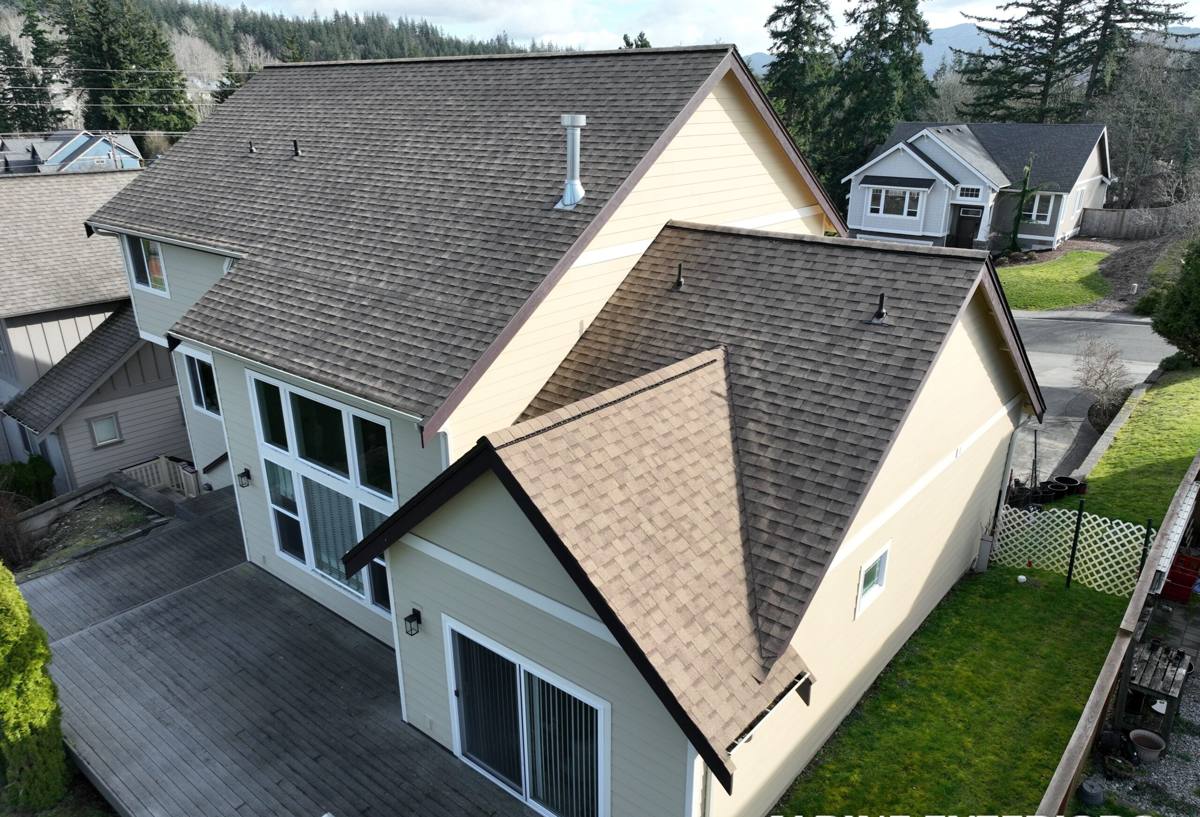
New-Construction Windows vs. Replacement — Why the Distinction Matters Here
"New-construction" isn't just a marketing label — it describes a specific window style and a specific installation method. New-construction windows have a nailing flange (or "nail fin") around the perimeter of the frame that gets fastened directly to the sheathing, then integrated with the house wrap and flashing before siding goes on. Replacement windows are typically block-frame units built to slide into an existing opening with the old frame still in place, relying more on sealant than on a fully lapped drainage plane.
On a spec home or custom build near Acme, you want the nail-fin approach every time — it's the only method that lets the water-resistive barrier (WRB) and flashing tape do their job the way they're designed to, shingle-style, so water is directed out and down rather than trapped against the sheathing.
| Factor | New-Construction (Nail-Fin) | Replacement (Block-Frame) |
|---|---|---|
| Best used for | New builds, additions, full wall re-sheathing | Existing homes keeping the original frame |
| Water management | Fully integrated with WRB and flashing tape | Relies more heavily on sealant at the perimeter |
| Glass area | Full rough opening available | Slightly reduced by the existing frame |
| Long-term moisture risk | Low, if the flashing sequence is followed correctly | Higher if sealant ages or the original frame was already compromised |
Getting the Water Management Sequence Right the First Time
Given the amount of driving rain Whatcom County sees in the fall and winter, the flashing sequence at each rough opening matters more than the window itself. A correct install starts with a sloped sill pan and back dam at the bottom of the opening, so any water that does get past the window has somewhere to go besides straight into the framing. From there, the WRB and flashing tape get lapped in the correct order — sides, then head, then the WRB over the top — so every layer sheds water onto the one below it, never up and under.
This is the part of the job that's invisible once siding and trim are on, which is exactly why it deserves the most attention while it's still open. A window that leaks on a new build usually isn't a bad window — it's a flashing sequence that was rushed or done out of order. We treat this step as non-negotiable, not because it's complicated, but because getting it wrong is expensive to find later and even more expensive to fix once finish work is in place.
Meeting Washington's Energy Code Without Overpaying for Performance You Don't Need
Whatcom County new construction has to meet the Washington State Energy Code, which sets maximum U-factor limits for windows based on the compliance path the builder is using. In practice this usually means vinyl or fiberglass units in the low-to-mid 0.20s to high 0.20s U-factor range, verified by the NFRC label on the glass — your builder or the county's plan reviewer can confirm the exact number required for your specific project and compliance path.
Where we add value beyond just hitting the code minimum is helping you avoid overspending on glass packages that don't match the house. Triple-pane makes sense on north- and west-facing walls that take the brunt of the weather, or on a home where quiet and consistent comfort are priorities. On sheltered south-facing walls with generous roof overhang, a well-rated double-pane low-E unit often performs almost as well for meaningfully less money. We'll walk through the plan set with you and point out where the upgrade is worth it and where it isn't.
Frame Material and Glass — What Actually Suits a Build in This Area
Vinyl, fiberglass, and wood-clad frames are all viable in Whatcom County's climate, but they carry different trade-offs once you factor in the long wet season and the maintenance a homeowner is realistically willing to keep up with.
| Frame Type | Upfront Cost | Maintenance | Notes for This Climate |
|---|---|---|---|
| Vinyl | Lowest | Minimal — occasional wash-down | Won't rot; good value on most new builds |
| Fiberglass | Mid to upper | Low | More dimensionally stable across temperature swings; strong long-term choice |
| Wood-clad | Highest | Moderate to high | Attractive interior wood look, but exterior clad seams need to be detailed carefully against constant moisture exposure |
We don't push wood-clad exteriors on every job — not because the product is bad, but because the extra seams at the cladding joints ask for more careful detailing and more long-term upkeep than a lot of homeowners want to sign up for in a climate this wet. If a homeowner wants that look and understands the maintenance, we'll install it correctly. If they'd rather not think about it again for twenty years, vinyl or fiberglass is usually the more honest recommendation.
Egress and Bedroom Windows
Any window serving as an emergency escape opening in a sleeping room has to meet Washington's egress requirements for minimum clear opening width, height, and sill height. On new construction this is easy to plan for correctly from the start — it's much harder to fix after the fact, so we confirm egress sizing against the approved plans before anything is ordered.
How We Coordinate With Builders and GCs on New Builds
Window installation on new construction happens at a specific point in the schedule — after the structure is framed, sheathed, and dried in with the WRB, but before siding and exterior trim start. Showing up too early or too late throws off every trade behind us, so we work directly with the general contractor or builder on timing, confirm the window order matches the approved plan set and energy code path before it's placed, and stay in communication as the schedule shifts, which it always does on a build.
We also flag anything in the rough openings — out of square, out of plumb, wrong dimensions — before windows go in, rather than forcing a fit that compromises the flashing later.
A Practical Checklist Before Windows Go In
- Rough openings are square, plumb, and match the ordered window sizes
- WRB is installed and properly lapped at every opening
- Sill pan and back dam are in place at the bottom of each opening
- Flashing tape is compatible with the WRB being used (not all products pair well together)
- Window schedule matches the approved plans and the energy code compliance path
- Bedroom windows meet egress size and sill-height requirements
- Manufacturer installation instructions are being followed, since warranty coverage depends on it
- Siding and trim crews know the flashing sequence so they don't cut corners or cover exposed tape improperly
Why Local Experience in Acme and Lynden Matters
A crew that regularly works this part of Whatcom County already knows what the weather does here — how far driving rain pushes water up under trim, how long moss and algae take to establish on shaded north walls, and which flashing details hold up over a real winter rather than just passing a dry-day inspection. That local knowledge shows up in small decisions: how generous the head flashing is, how a sill pan is sloped, which sealants actually stay flexible through a wet Whatcom winter and which get brittle. It also means we've worked alongside builders and GCs in this area before, so coordinating a new-construction schedule isn't guesswork.
If you're planning a new build in the Acme area and want the window package done right the first time — correct flashing, correct code compliance, and materials matched to this climate rather than a generic spec sheet — we're glad to walk the plans with you and put together a straightforward, no-pressure estimate.