 Lynden Exterior
 Roofing Around Wiser Lake Isn't the Same Job as Roofing in Town
Wiser Lake sits in a pocket of Whatcom County that holds moisture differently than the open farmland around most of Lynden. The tree cover along the shoreline keeps roofs shaded for long stretches of the day, the lake itself adds humidity to the air right above the property, and driveways in and out of the neighborhood tend to wind through mature trees that drop needles and leaf litter onto roof planes all year. None of that is a problem an asphalt shingle roof can't handle — but it's a problem that has to be planned for, not ignored. A roof installed with the same assumptions you'd use for a wide-open lot in town will wear differently out here, usually in the form of earlier moss growth, slower drying after storms, and more granule loss in valleys where debris collects.
We've worked enough roofs in this specific pocket of the county to know what actually shortens a shingle roof's life near Wiser Lake, and it's rarely the shingle itself. It's ventilation that wasn't sized for a shaded, humid roof deck, underlayment that wasn't upgraded for the amount of standing moisture the area sees, and flashing that was installed to a minimum-code standard instead of a standard built for this microclimate.
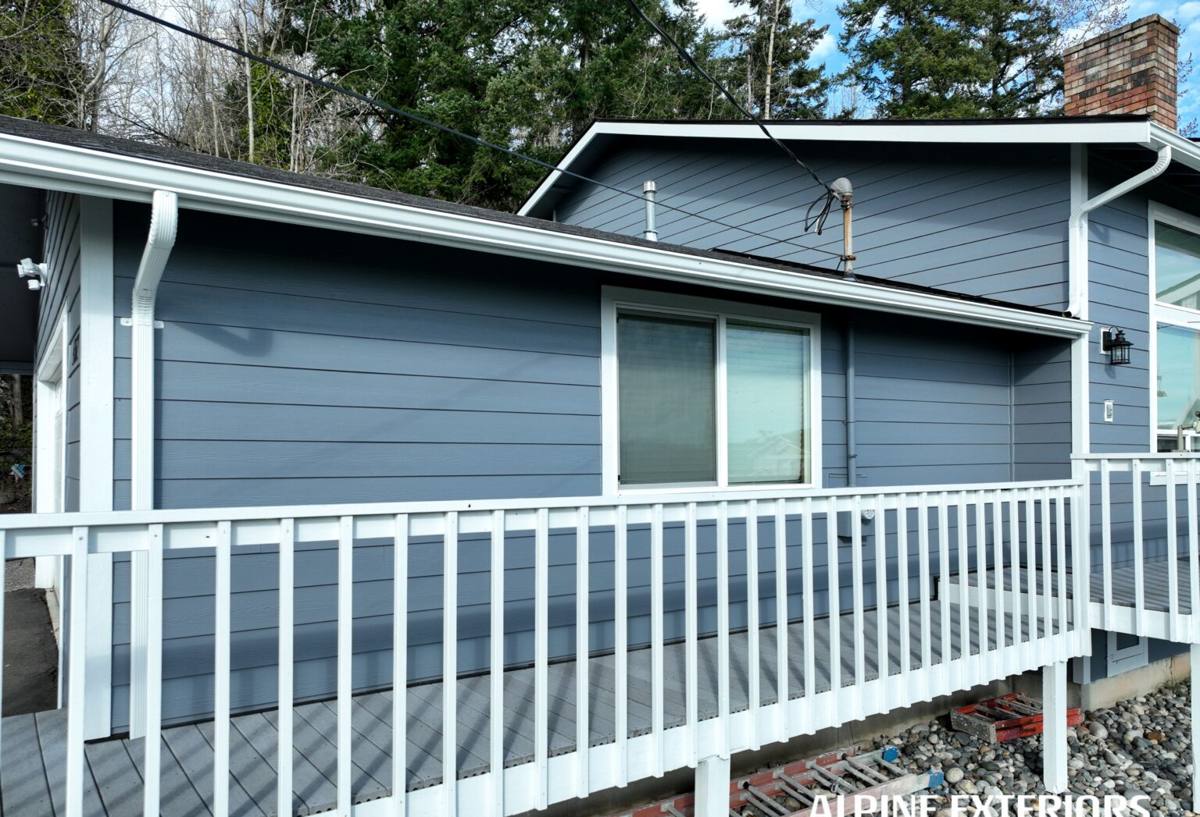
What the Regional Climate Actually Does to a Shingle Roof
Whatcom County roofs deal with three things year-round: salt-tinged air moving in off the Strait, long stretches of driving rain, and a moss season that can run eight months or more in shaded spots. Around Wiser Lake, the tree canopy and lake humidity stretch that moss season even longer than most Lynden lots see, and it keeps the roof deck cooler and damper than a comparable roof out in open sun.
Moss and Algae
Moss doesn't just sit on top of shingles — it works its way under the tabs, lifts them, and holds water against the mat underneath. On a shaded, lake-adjacent roof, moss can establish itself within a couple of seasons if the shingle wasn't chosen and installed with that risk in mind.
Driving Rain and Wind-Driven Water
Storms coming through this part of the county rarely fall straight down. Wind pushes rain sideways under shingle tabs and into any gap in the flashing, which is why flashing and underlayment detail matter more here than the shingle brand printed on the wrapper.
Prolonged Damp Cycles
A roof that dries out fast holds up better than one that stays damp. Shade from lakeside trees means roof decks near Wiser Lake often stay wet a day or two longer after a storm than roofs on open lots — which is exactly the condition that lets moss, algae, and eventually rot get a foothold.
What a Correctly Installed Roof Needs Out Here
A shingle roof is a system, not a single product. Every layer has to be matched to the site conditions, and for a Wiser Lake property that means a few specific upgrades over a bare-minimum install.
Ice and Water Shield in the Right Places
Valleys, eaves, and any roof-to-wall transition should get a self-adhering ice and water membrane, not just felt or synthetic underlayment. This is where wind-driven rain and pooled runoff cause the most damage, and it's cheap insurance compared to a deck repair later.
Balanced Ventilation
Intake at the eaves and exhaust at the ridge need to be sized to actually move air across a shaded roof deck. Under-ventilated roofs trap heat and moisture in the attic, which shows up as premature shingle curling and a shorter roof life — even if the shingle itself is a good product.
Flashing Details
Step flashing at walls, counter-flashing at chimneys, and properly woven or metal valley flashing all matter more on a tree-shaded roof because debris collects in exactly those spots. A flashing detail that would be fine on an open, clean-swept roof can fail faster here simply because it's dealing with more standing debris and moisture.
Algae-Resistant Shingles
Most major manufacturers now offer a shingle line with copper- or zinc-infused granules built to resist the black algae streaking common in wet, shaded climates. Given the tree cover around the lake, we treat this as a standard recommendation here, not an upsell.
Shingle Options Compared
There isn't one "right" shingle for every home, but for lake-adjacent, shaded lots, some options handle the conditions better than others. Here's how the common choices stack up for this specific setting.
| Shingle Type | Moss/Algae Resistance | Wind Rating | Best Fit For |
|---|---|---|---|
| Standard 3-tab | Low unless algae-resistant granules specified | Lower end of most product lines | Budget-driven projects on less-shaded portions of the roof |
| Architectural (laminate) | Good, especially with algae-resistant granule option | Mid-to-high, varies by product | Most Wiser Lake homes — the standard recommendation |
| Impact-resistant architectural | Good | High | Homes with more open exposure to wind off the lake or storm-prone roof planes |
For most properties in this area, a mid-to-upper-tier architectural shingle with algae-resistant granules is the best balance of upfront cost, appearance, and how well it holds up under shade and moisture. We'll walk through the actual product lines and warranty terms available at the time of your estimate rather than push one brand — the right call depends on your roof's specific exposure.
How We Approach a Wiser Lake Roofing Job
The process itself isn't exotic, but the sequence and attention to detail matter more here than on a typical open-lot reroof.
- Inspection first. We look at the deck condition, existing ventilation, flashing points, and how much shade and debris exposure the roof actually gets before quoting anything.
- Tear-off and deck check. Old shingles come off completely so we can see the deck underneath — this is where hidden moisture damage from long-term moss or leaks shows up.
- Deck repair as needed. Any soft or delaminated sheathing gets replaced before anything new goes down. We'll show you what we find, not just bill for it after the fact.
- Underlayment and ice/water membrane. Installed to match the exposure of each roof plane, with extra attention to valleys and eaves.
- Flashing. New step, counter, and valley flashing rather than reusing old metal wherever it's practical to replace it.
- Shingle installation. To manufacturer spec — correct nailing pattern, exposure, and starter course, which is what keeps a wind and algae-resistant warranty valid.
- Ventilation check. Intake and exhaust confirmed balanced before we close out the job.
- Cleanup. Magnetic sweep for nails, full debris haul-off, and a final walk-through with you.
Moss Prevention Doesn't End When the Roof Is Finished
Even a well-installed roof near Wiser Lake benefits from some upkeep given the tree cover and lake humidity. This isn't about creating extra work — it's about protecting the investment.
- Keep gutters and valleys clear of needles and leaf litter, especially heading into fall and winter
- Trim back overhanging branches where practical to reduce shade and debris on the roof plane
- Have moss growth treated or removed before it spreads under shingle tabs, not after
- Schedule a visual roof check after major windstorms to catch lifted or displaced shingles early
- Avoid pressure washing shingles — it strips granules and shortens the roof's life; a gentle, low-pressure treatment is safer
Cost Factors for This Area
Every roof is different, but the same handful of factors drive price on most Wiser Lake projects. We give firm numbers only after an on-site look, but this is generally what moves the estimate up or down.
| Factor | Why It Matters Here |
|---|---|
| Roof pitch and access | Steeper roofs and tree-tight lots around the lake take longer to work safely |
| Deck condition | Long-term moss or moisture exposure sometimes means sheathing repair, which isn't visible until tear-off |
| Shingle tier chosen | Algae-resistant and impact-resistant lines cost more upfront but hold up better under shade and moisture |
| Flashing scope | Homes with multiple valleys, dormers, or chimneys need more flashing work, which adds labor |
| Ventilation upgrades | Adding or correcting intake/exhaust venting is sometimes needed on older homes and adds to the scope |
Why It Matters That We Already Work This Neighborhood
A crew that only sees a property once doesn't have a reason to think past the minimum code requirement. A crew that works Wiser Lake regularly sees how roofs in this specific setting age over five, ten, and fifteen years — which shingle lines hold their color and granule coverage under shade, which flashing details actually keep pace with wind-driven rain off the lake, and which roofs need ventilation corrected versus just a new shingle layer. That experience shows up in the recommendations we make before a single shingle is ordered, not just in the workmanship once we're on the roof.
It also matters for the practical side of the job: knowing Whatcom County permitting requirements, understanding how to stage material delivery and debris haul-off on tree-lined lake-access roads, and being able to respond quickly if a storm causes damage between scheduled visits. Lynden Exterior Co. is a local crew — this isn't a market we drive in for once and move on from.
If you're weighing a repair against a full reroof, or just want an honest read on how much life is left in your current shingles, we're happy to take a look. Reach out for a free, no-pressure estimate — the form below gets you a straight answer, not a sales pitch.