 Lynden Exterior
 Decks in Sumas Face a Different Set of Problems Than Decks Inland
Sumas sits close enough to the border and the foothills that homeowners sometimes assume the weather here is milder than the coast. It isn't, not when it comes to what actually wears out a deck. Whatcom County's marine-influenced climate brings salt-tinged air off the Sound, long stretches of driving rain from fall through spring, and a moss season that can run eight or nine months if a deck is under any shade at all. A deck built the same way you'd build one in a dry climate state will show problems here in three or four years instead of fifteen or twenty.
We build decks for homeowners around Lynden and out toward Sumas regularly, and the failures we get called to fix are almost always the same handful of things: fasteners rusting and staining the boards, ledger boards rotting from behind because they were never flashed correctly, joists that stay wet for days after a storm because there's no airflow underneath, and surfaces that turn green and slick every winter because nobody planned for moss from the start. None of that is exotic. It's all preventable with the right materials and the right sequence of work.
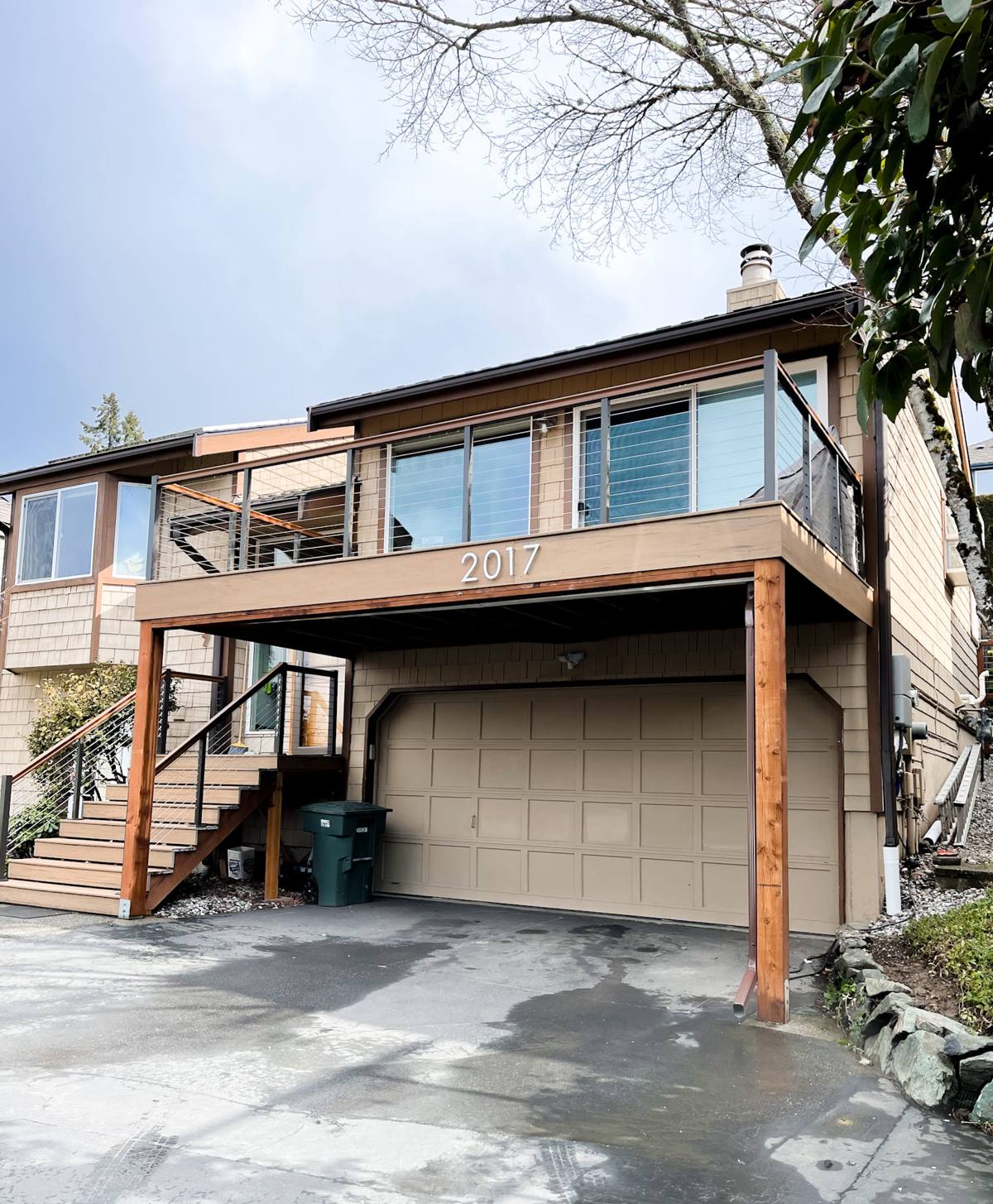
What a Correct Deck Build Involves in This Climate
Footings That Won't Move
Frost depth and soil drainage around Whatcom County vary more than people expect from one lot to the next — heavier clay soils hold water and heave differently than sandy, well-drained ground. Footings need to be sized and set to local code depth, not just "deep enough to look right." A footing that shifts even slightly over a few winters is what causes decks to develop that subtle bounce or gap at the house years down the road.
Ledger Board Flashing — The Single Biggest Point of Failure
If a deck attaches to the house, the ledger board connection is the most important detail on the entire project, and it's also the most commonly rushed. Water has to be directed away from the house band joist, not just sealed with caulk and hoped away. That means proper flashing that laps correctly with the house's existing weather-resistive barrier or siding, a gap for drainage, and fasteners rated for the connection. In a climate with this much sustained rain, a caulk-only ledger connection is a five-year problem waiting to happen, and it's often hidden until the rot has already spread into the rim joist.
Airflow and Drainage Underneath
Low decks built tight to grade, with no slope and no ventilation underneath, are where we see the worst moss and structural decay. Framing needs enough clearance and a plan for water to actually leave the area — grading away from the house, gravel or drainage fabric where needed, and joist spacing that doesn't trap standing water on top of the beams.
Fasteners and Hardware
Standard electro-galvanized screws and joist hangers corrode faster than most homeowners realize in a marine-influenced climate, and once they start rusting they streak the decking and weaken the connection at the same time. We use stainless steel or hot-dip galvanized hardware rated for treated lumber contact on every structural connection, not just where it's visible.
Choosing a Decking Surface That Fits Sumas Weather
There's no single "best" decking material — there's a best fit for how much maintenance a homeowner actually wants to do, and how much shade and moss exposure the site gets. Here's how the common options actually compare once you factor in this region's weather rather than a manufacturer's ideal-conditions numbers.
| Material | How it handles our rain and moss season | Maintenance reality |
|---|---|---|
| Pressure-treated wood | Sheds water fine if sealed and sloped correctly, but end grain and fastener holes are where rot starts first | Needs cleaning and re-sealing every 1–2 years to keep moss and mildew from taking hold |
| Cedar | Naturally more rot-resistant than treated fir, but softer and can gray or stain unevenly in constant damp shade | Regular cleaning plus oil or sealer if you want to keep the color; will gray naturally if left alone |
| Composite decking | Doesn't rot, but lower-quality boards can still trap moss on the surface texture in full shade | Occasional washing; no sealing or staining, which matters a lot given how often it rains here |
| PVC / capped composite | Best moisture resistance of the group; sheds surface water and resists staining | Lowest ongoing maintenance, but higher upfront material cost |
For a shaded, low-airflow site — which describes a fair number of lots around Sumas with mature trees close to the house — we lean homeowners toward composite or capped composite unless they specifically want the look and feel of real wood and are willing to keep up with sealing. It's not that wood is a bad choice; it's that wood in constant shade needs a maintenance commitment that not everyone actually keeps up with, and we'd rather be honest about that upfront than sell a low-maintenance story that isn't true.
Moss Isn't Just Cosmetic — It's a Slip Hazard and a Moisture Trap
A mossy deck surface holds water against the boards long after the rain stops, which accelerates rot underneath the moss and makes stairs and walking surfaces genuinely slick. Preventing it starts at design — decking oriented to shed water, gaps sized correctly for drainage and airflow between boards, and avoiding low spots where water pools instead of running off. It continues with material choice, since some surfaces (especially rough-textured composite boards under heavy tree cover) hold moss more than others. And it's finished with a realistic maintenance routine: an annual wash-down before the wet season sets in does more good than any one-time treatment.
How We Approach a Deck Project
- On-site assessment — we look at drainage, shade exposure, existing structure if it's a rebuild, and how the deck ties into the house before we talk materials.
- Design and material selection — sized to the site, with decking and hardware chosen for this climate, not a catalog default.
- Permit and code check — confirmed before work starts, not assumed.
- Footings and framing — set to proper depth, flashed correctly at the ledger, with drainage and airflow built into the framing plan.
- Decking, railing, and finish work — installed with fastener spacing and gapping that accounts for wood movement and drainage.
- Final walkthrough — we go over maintenance expectations honestly, including what your specific material choice will actually need from you year to year.
Permits and Local Code
Most new decks and many deck rebuilds in Whatcom County require a permit, particularly once you're above a certain height off grade or attaching structurally to the house. Requirements can differ depending on whether a property falls under county jurisdiction or a city, so we confirm what applies to your specific lot rather than assuming. We handle that step as part of the project so homeowners aren't left figuring out paperwork on their own, and so the finished deck is something that won't cause problems at resale or insurance time.
Why It Matters That We Already Work in Sumas
A crew that's only worked in drier climates tends to build decks the way the textbook says, without adjusting for what actually happens to a ledger board after its fifth straight winter of Whatcom County rain. We've seen which details hold up out here and which ones don't — which fastener finishes actually resist corrosion in this air, which decking surfaces stay walkable through moss season, and where on a typical Sumas-area lot water actually wants to go once it leaves the roof and gutters. That's not something you get from a spec sheet; it's something you get from having repaired the decks that were built without it.
Being local also means we're not disappearing after the final walkthrough. If a question comes up two winters from now about how a board is holding up, we're still in the area and still reachable.
Before You Call a Contractor: A Homeowner's Checklist
- Note where your deck site sits relative to shade and tree cover — this drives both material choice and drainage planning
- Check whether your current deck (if replacing one) has any soft or spongy spots near the house — that's often ledger rot
- Decide how much annual maintenance you actually want to do before choosing between wood and composite
- Ask any contractor what hardware and fasteners they use, specifically — this is a cheap detail to skip and an expensive one to fix later
- Confirm permit responsibility is spelled out in writing before work starts
- Ask how the ledger connection will be flashed, not just whether it will be — the method matters more than the promise
If you're planning a new deck or replacing one that's showing its age, we're happy to come take a look and give you a straightforward, no-pressure estimate — including an honest read on what your specific site and shade conditions call for. Use the form below to get started.