 Lynden Exterior
 Storm Damage Roof Repair for Laurel Homes
Laurel sits in the kind of in-between country that Whatcom County is full of: open farmland mixed with tree-lined lots, close enough to the water to catch salt-laden air off the Strait and Puget Sound, and close enough to the foothills to get hit by wind funneling down from the north and east. When a windstorm or heavy rain event moves through, homes here take it from more than one direction at once. If you've had a branch come down on the roof, shingles peel back in a gust, or water start showing up somewhere it shouldn't, you need a repair that actually accounts for what this climate does to a roof over time — not just a patch that gets you through until the next storm.
This page covers what storm damage repair looks like specifically for a Laurel-area home: what the local weather does to roofing, what a correct repair involves, and how we handle the job from first call to final inspection.
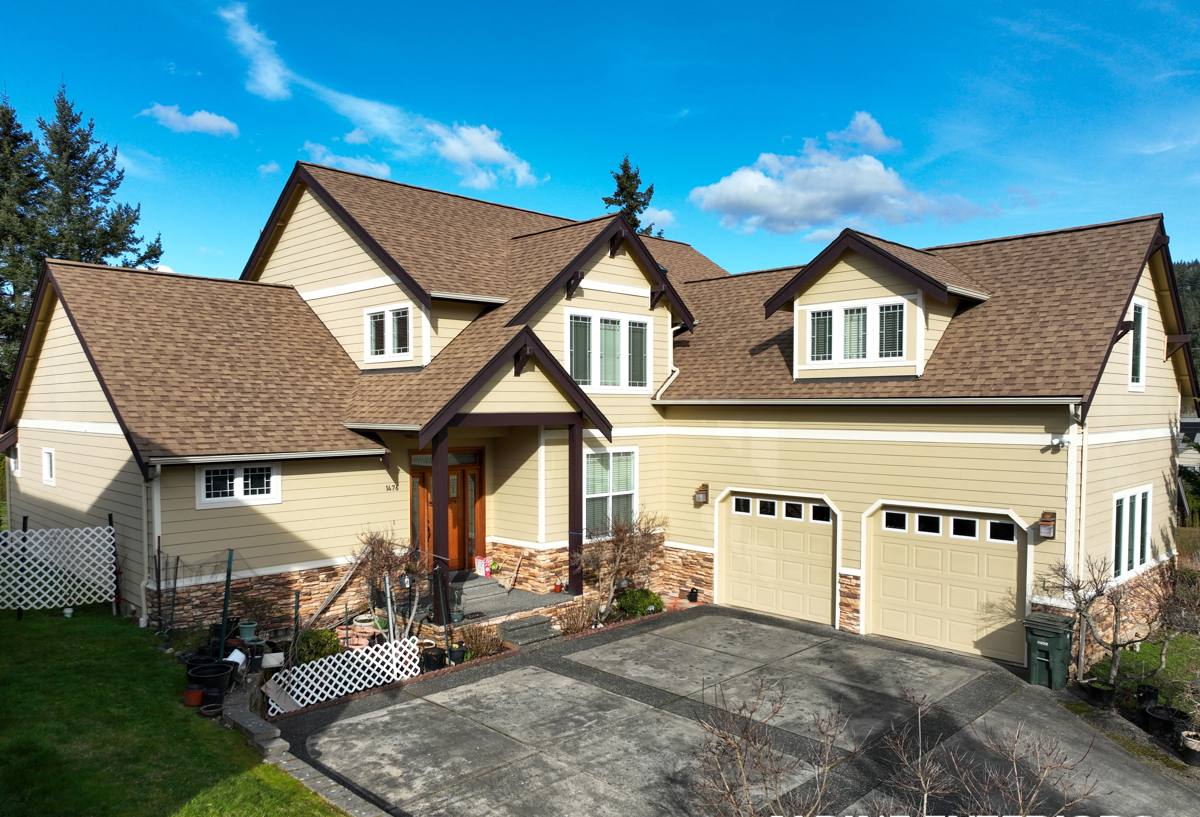
What Laurel's Climate Does to a Roof
Whatcom County doesn't get the dramatic hailstorms or hurricane-force winds you'd see in other parts of the country, but it makes up for that with persistence. The damage here is usually cumulative and then suddenly obvious — a roof that's been quietly weakening for a season or two finally gives way during one windstorm.
Wind and Driving Rain
Pacific storm systems that roll through in fall and winter bring sustained wind combined with heavy, sideways rain. That combination is harder on a roof than either one alone. Wind lifts shingle edges and works fasteners loose; once a shingle tab is lifted even slightly, wind-driven rain gets pushed up and under it instead of running off the surface the way the roof was designed to shed water. Repeated over several storm cycles, this is how a small wind event turns into an interior leak weeks later.
Salt Air and Corrosion
Laurel's proximity to Bellingham Bay and the Strait means homes here get some exposure to salt-laden air, especially on days with onshore wind. Salt air accelerates corrosion on exposed metal — flashing, fasteners, gutter hardware, and any exposed roofing nails. Corroded flashing and fasteners are one of the more common hidden contributors to storm damage: a flashing seam that's been slowly rusting for years is far more likely to fail during a storm than one that's still sound.
A Long Moss Season
Whatcom County's mild, wet climate means moss and algae have a long growing window — often close to nine or ten months out of the year with enough moisture and shade to keep growing. Moss doesn't just look bad; it holds water against the roofing material, works its way under shingle edges, and adds weight. A roof with established moss growth is already compromised before a storm even arrives, which is why moss condition is part of any honest storm damage assessment here, not a separate issue.
Common Types of Storm Damage We See in the Area
- Lifted or missing shingles — usually along ridges, edges, and any area exposed to prevailing wind
- Torn or creased shingles from wind flex or falling debris
- Damaged or displaced flashing around chimneys, vents, and roof-to-wall transitions
- Branch and debris impact — more common on wooded and rural lots in and around Laurel
- Gutter and downspout damage that lets water dump against the fascia and roof edge instead of draining away
- Granule loss on asphalt shingles from wind-driven rain, which accelerates aging even without visible tearing
- Soft or spongy decking found once shingles are pulled back, usually where moss or a slow leak has been present longer than the storm itself
What a Correct Storm Damage Repair Involves
A quick patch job addresses what's visible from the ground. A correct repair addresses what's actually happening at the roof deck. Here's the difference in practice.
Inspection Before Anything Else
We look at the whole roof, not just the spot you called about. Storm damage rarely stays in one place — wind that lifted a shingle on one slope was likely working on fasteners across the whole exposed side. We check flashing, valleys, penetrations, and the underlying decking wherever shingles have shifted, since that's where hidden moisture damage shows up.
Matching Materials Correctly
Replacement shingles need to match not just in color but in profile and age-appropriate blending where possible. Mismatched patches are one of the most common complaints homeowners have with rushed storm repairs — they function, but they look like exactly what they are: a patch. We also make sure any replaced underlayment and flashing meet the same standard as the rest of the roof, not a downgraded stopgap.
Addressing the Cause, Not Just the Symptom
If moss contributed to the failure, we deal with the moss and the moisture path, not just the torn shingle. If corroded flashing let water in, we replace the flashing — not just reseal it. A repair that ignores the underlying cause tends to fail again in the next storm cycle.
Our Process, Start to Finish
- Emergency response and mitigation: if you have active leaking or exposed decking, our first priority is stopping water intrusion — typically a tarp or temporary cover — before anything else.
- Full roof inspection: we document the damage thoroughly, including areas beyond what prompted the call.
- Written scope and estimate: a clear explanation of what's damaged, what needs repair versus what can be monitored, and honest pricing.
- Insurance documentation, if applicable: we provide the photos and written scope your adjuster needs — we don't file the claim for you, but we make sure you're not walking into that conversation without solid documentation.
- Repair work: matched materials, correct flashing and underlayment detail, and attention to the specific cause of the failure.
- Final walk-through: we confirm the repair with you before considering the job finished.
Storm Damage Repair vs. Full Replacement: What Drives the Decision
Not every storm-damaged roof needs replacing, and not every roof that "just needs a patch" should be patched. The right call depends on a few honest factors.
| Factor | Favors Repair | Favors Replacement |
|---|---|---|
| Age of existing roof | Roof is under roughly two-thirds of its expected lifespan | Roof is already near or past its expected service life |
| Extent of damage | Damage limited to one section or a handful of shingles | Damage spread across multiple slopes or large areas |
| Decking condition | Decking is sound once exposed | Decking is soft, rotted, or delaminating in multiple spots |
| Moss/moisture history | Isolated moss growth, otherwise healthy roof | Long-term moss damage affecting granules and decking broadly |
| Material availability | Matching shingles are still available or close enough to blend | Original material discontinued and mismatch would be significant |
We'll always tell you honestly which side of that table your roof falls on. There's no benefit to us in replacing a roof that only needs a repair, and no benefit to you in patching one that's structurally past it.
What Homeowners Should Check After a Storm
You don't need to get on the roof yourself — and we'd rather you didn't, especially right after a storm when surfaces are wet and debris is still around. But there's a lot you can check safely from the ground or from inside the attic.
- Granules collecting in gutters or at downspout outlets (a sign of shingle wear or damage)
- Visible shingles that look lifted, curled, or missing from the ground
- Water stains on ceilings or upper walls, even faint ones
- Damp insulation or a musty smell in the attic
- Debris resting on the roof, especially branches that may have caused impact damage
- Gutters pulling away from the fascia or sagging under debris weight
- Daylight visible through the roof deck from inside the attic, in severe cases
Why a Crew That Already Works Laurel Matters
Storm damage repair isn't just a general roofing skill — it benefits from knowing the specific conditions a house has been living with. A crew that regularly works in and around Lynden and Laurel already understands which wind exposures tend to take the worst of a storm, how far moss season really runs in this part of Whatcom County, and what salt air exposure does to flashing and fasteners over time. That local pattern recognition means less guesswork during the inspection and a repair that's built for the next storm, not just the last one.
It also matters for response time. After a regional storm event, roofing crews get busy fast, and homes with active leaks can't always wait for a contractor driving in from out of the area. Being local means we can typically get eyes on active damage sooner, which matters most in the first 24 to 48 hours after a storm when a temporary cover can be the difference between a straightforward repair and a much larger interior repair bill.
Maintenance That Reduces Storm Damage Risk
Storm damage repair and ongoing roof maintenance aren't separate topics — a well-maintained roof simply holds up better when a storm hits. A few things worth staying on top of between storm seasons:
- Keep gutters and downspouts clear so wind-driven rain has somewhere to go
- Address moss growth before it spreads across a slope, not after
- Trim back tree limbs that overhang the roofline where practical
- Have flashing and fasteners checked periodically, especially on older roofs, given the corrosion effect of local salt air
- Deal with small leaks or lifted shingles promptly rather than waiting for the next storm to make them worse
None of this eliminates storm risk entirely — no maintenance plan does, in a climate like this one — but it narrows the gap between a roof that shrugs off a windstorm and one that doesn't.
Get a Free, No-Pressure Estimate
If your Laurel-area home has visible storm damage, or you're just not sure whether what you're seeing needs attention, we're happy to take a look. There's no obligation and no pressure — just an honest assessment of what's actually going on with your roof and what it would take to fix it right. Fill out the form below to get started.