 Lynden Exterior
 Roofing in Acme Comes With Its Own Set of Problems
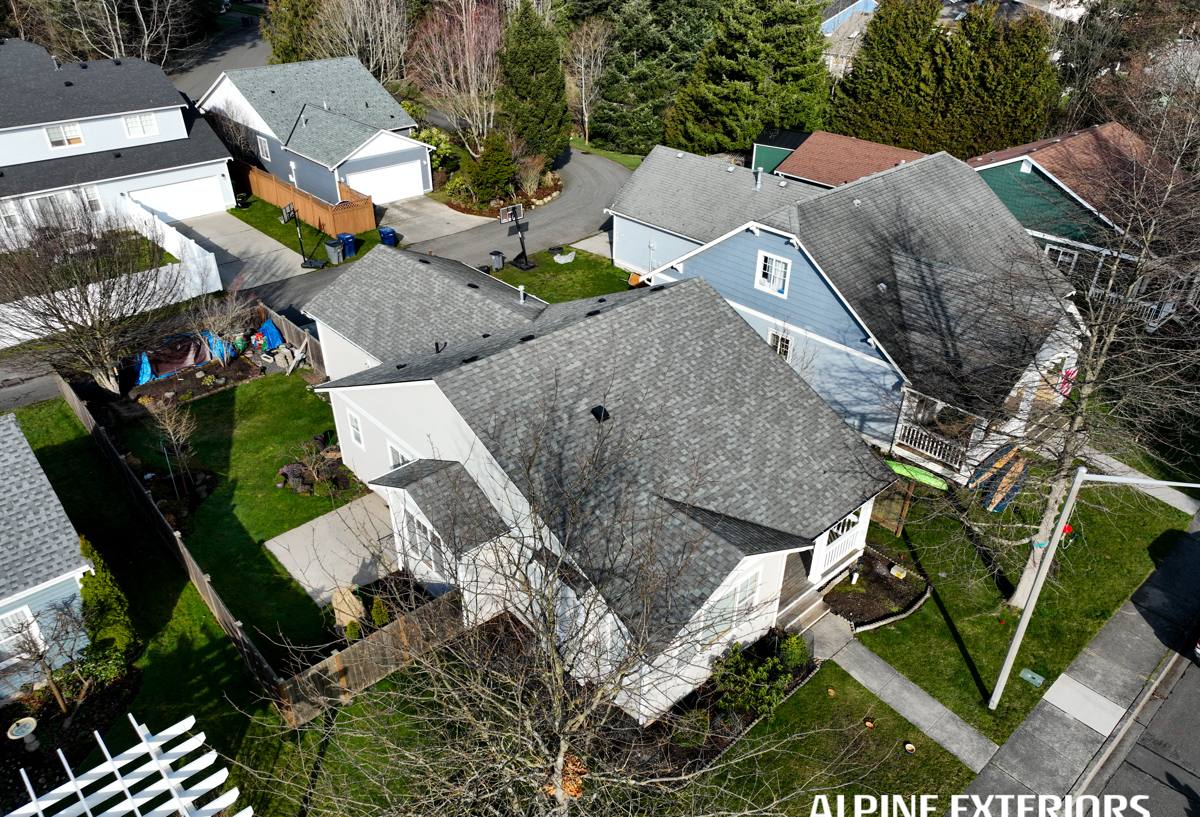
Acme sits far enough from the coast that people assume it's spared the worst of what a Pacific Northwest winter throws at a roof. It isn't. The same marine-influenced weather that soaks Whatcom County moves inland and settles into the low-lying, tree-covered lots that are common around Acme and the rest of the Lynden area. Add in mature conifer and maple cover on most properties out here, and you get the two things that shorten a roof's life faster than anything else: standing moisture and shade. A shingle roof in Acme isn't fighting the same battle as one in a dry, open-plain climate — it's fighting damp, it's fighting moss, and it's fighting long stretches where the roof deck never fully dries out between storms.
That doesn't mean asphalt shingles are the wrong choice here — they're still the most practical, cost-effective roofing material for the vast majority of homes in this area. It means the installation has to account for moisture from the start, not just shed rain on a dry day. A roof that's installed the same way you'd install one in Eastern Washington will underperform here, sometimes badly, within a handful of years.
What This Climate Actually Does to a Shingle Roof
Moss and Organic Growth
Shaded, north-facing slopes and roofs under tree cover hold moisture long after the rest of the roof has dried. That moisture feeds moss and algae, which root into the shingle mat, lift tabs, and hold water against the roof deck long-term. Moss isn't just cosmetic — once it gets a foothold, it works like a sponge sitting directly on your shingles.
Driving Rain and Wind-Driven Water
Storms coming off the Sound don't always drop rain straight down. Wind-driven rain gets pushed up under shingle tabs, into open valleys, and around anything that penetrates the roof — vent pipes, chimneys, skylights. If flashing details and underlayment weren't done right the first time, this is where leaks start, usually years after the roof was installed and often far from where the water actually entered.
Prolonged Damp and Slow Drying
Between the marine air and tree cover, roofs here spend more days damp than dry for a good chunk of the year. That constant moisture cycle accelerates granule loss, softens roof decking where ventilation is poor, and shortens the effective life of a shingle compared to the same product in a drier climate.
What a Correct Job Looks Like Here
A shingle roof built for Acme's conditions isn't just "shingles nailed to plywood." Every layer underneath the shingles matters as much as the shingles themselves.
- Ice-and-water shield or premium synthetic underlayment at eaves, valleys, and around all penetrations — not just the minimum code requirement
- Balanced attic ventilation (intake at the eaves, exhaust at the ridge) so the deck can actually dry out between storms instead of staying damp
- Algae-resistant shingles on shaded or north-facing sections, where moss pressure is highest
- Properly lapped, sealed flashing at every chimney, skylight, vent pipe, and wall intersection
- Closed or properly woven valleys that shed driving rain instead of trapping it
- Starter strip and drip edge at every eave and rake, not just the visible field of the roof
Skip any one of these and the shingles on top can look fine for a few years while the roof underneath is already failing. Most of the leak calls we see on roofs that are "too young to be leaking" trace back to one of these details being shortcut on the original install.
Signs Your Roof Needs a Look
Most roof failures don't happen suddenly — they show warning signs first. Homeowners in Acme should watch for:
- Dark streaking or visible moss/algae growth, especially on shaded slopes
- Granules collecting in gutters or at downspout outlets
- Shingle tabs that look curled, cupped, or lifted at the edges
- Soft spots or noticeable sag when walking the roof (or visible from the ground)
- Water stains on interior ceilings, especially after a heavy storm
- Daylight visible through the attic at the ridge, valleys, or around vent pipes
- Moss growth that's spread from the shaded side to more of the roof each year
Any one of these is worth a real inspection, not a guess. Catching a failing valley or a cracked flashing boot early is a repair. Catching it three winters later is usually a full section of decking replacement.
Choosing the Right Shingle for the Job
Not every asphalt shingle is built the same, and in a climate like this, the difference matters more than it would somewhere drier. Here's how the common options compare for a home in the Acme/Lynden area:
| Shingle Type | Typical Lifespan Here | Moss/Algae Resistance | Best For |
|---|---|---|---|
| Standard 3-tab | 15-20 years | Low unless treated | Budget-conscious jobs on sun-exposed roofs |
| Algae-resistant architectural | 25-30 years | Good — copper/zinc granules resist growth | Most homes in Acme, especially shaded lots |
| Impact-rated (Class 4) | 25-30 years | Good (usually paired with algae resistance) | Homes wanting hail/debris resistance and possible insurance credit |
| Premium/designer laminate | 30+ years | Good | Homes prioritizing appearance and longevity over upfront cost |
For most Acme homes with any real tree cover, we steer people toward an algae-resistant architectural shingle as the practical baseline — the upgrade cost over standard 3-tab is modest relative to the added years of service and the reduced moss maintenance.
Repair or Full Replacement?
Not every roofing problem in Acme calls for a full tear-off. The right call depends on the roof's age, how widespread the damage is, and what's happening underneath the shingles.
| Factor | Points Toward Repair | Points Toward Replacement |
|---|---|---|
| Roof age | Under 12-15 years | Approaching or past expected lifespan |
| Extent of damage | Isolated (one slope, one valley, one flashing point) | Widespread granule loss or curling across multiple slopes |
| Deck condition | Solid, dry decking | Soft spots, rot, or repeated leak history |
| Moss/algae extent | Light, surface-level growth | Heavy growth that's lifted shingles or holds water |
| Underlying install quality | Ventilation and flashing were done correctly originally | Poor ventilation or flashing causing repeat failures |
We'll always tell you honestly which side of that table your roof falls on. A well-installed roof with an isolated leak doesn't need to come off. A roof with widespread moss damage and a history of soft spots usually does — patching it just delays a bigger bill.
How We Handle a Shingle Roofing Job in Acme
- On-site inspection — we walk the roof (not just look from the ground), check the attic for ventilation and moisture issues, and document the actual condition
- Honest scope and estimate — repair vs. replacement, with the reasoning explained, not just a number
- Tear-off and deck check — old material removed, decking inspected and replaced where soft or rotted, not covered over
- Underlayment and flashing first — ice-and-water shield, synthetic underlayment, and all flashing installed before a single shingle goes down
- Ventilation correction — intake and exhaust balanced so the new roof can actually dry out between storms
- Shingle installation — installed to manufacturer spec for nailing pattern and exposure, which is what keeps the warranty valid
- Cleanup and final walkthrough — magnetic sweep for nails, gutters cleared of debris, and a walkthrough so you know exactly what was done
Living With Moss Season: Maintenance That Actually Helps
Even a well-built roof benefits from a little seasonal attention out here. Keeping gutters clear so water doesn't back up under the eaves, trimming back branches that overhang the roof to cut down on shade and debris, and having someone knowledgeable check for early moss growth once a year will add real years to a shingle roof's service life. We don't recommend pressure washing shingles — it strips granules and does more harm than the moss itself. A gentle, low-pressure treatment or manual removal is the safer approach when moss does need addressing.
Why Local Experience Matters for This Job
A roofing crew that mostly works drier, more open parts of the state will default to techniques that don't account for Whatcom County's tree cover and marine-driven weather. A crew that works Acme and the rest of the Lynden area regularly knows which slopes on a given lot orientation hold moss, where wind-driven rain tends to find its way in during a fall storm, and which ventilation setups actually keep decking dry through a wet winter. That's not something you can fully substitute with a generic install checklist — it comes from doing this work, on these kinds of roofs, in this specific climate, year after year.
If you're seeing moss, granule loss, or you just want an honest read on where your roof stands, we're happy to come take a look. The estimate is free, there's no pressure, and you'll get a straight answer about whether you need a repair, a replacement, or nothing at all right now — just fill out the form below to get started.