 Lynden Exterior
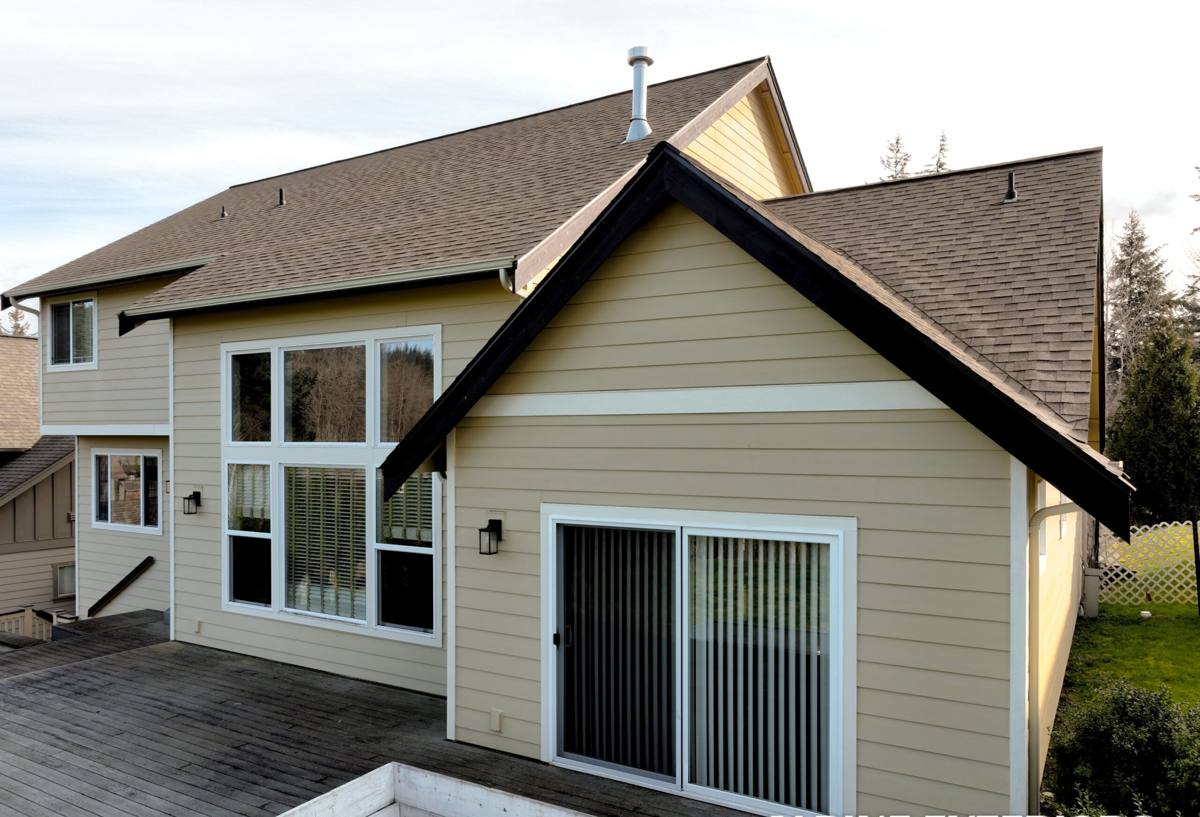
 Siding Installation in Blaine, Handled by a Crew Based Right Down the Road in Lynden
Blaine sits at the far northwest corner of Whatcom County, hard against the water and the Canadian border, and it's a short drive from our home base in Lynden. That short distance matters more than it looks on a map. A siding installation is a multi-day project with a lot of exposed, unfinished wall between the first morning and the final walkthrough, and a crew that can get back on site quickly if the weather turns or a detail needs a second look is doing the homeowner a real favor. We're in Blaine regularly enough that it isn't a special trip for us — it's routine territory, and this page is specifically about what a siding installation involves there, not siding in general.
Lynden Exterior Co installs one siding system: James Hardie fiber cement. We don't offer LP SmartSide, vinyl, Cemplank, Allura, primed spruce, or cedar. This page focuses narrowly on the installation work itself in Blaine — what the local climate demands from it, what a correct job actually involves step by step, and why doing it with a crew that already works this area changes the outcome.
What Blaine's Climate Demands From an Installation
Salt Air and Fastener Choices
Blaine's location on Semiahmoo Bay and Drayton Harbor puts homes there in more direct, sustained contact with salt-laden air than most of inland Whatcom County. That matters most during installation, not after: the fastener type, coating, and spacing chosen on install day determine how long the connection between siding and wall holds up. Corrosion that starts at a fastener head is slow and easy to miss until paint starts lifting or a board starts to work loose.
Driving Rain and the Drainage Plane
Storms coming off the water in Blaine rarely fall straight down. Wind pushes rain sideways into wall assemblies, window flashing, and the joints where roof meets wall, and that sideways load tests an installation in ways calm, straight-down rain never would. The parts of an install that manage this — the weather-resistive barrier, the flashing at every penetration, the drainage plane behind the cladding — are also the parts that are completely invisible once the job is finished. Get them right and a homeowner never thinks about them again. Get them wrong and the first sign is usually staining or softness that shows up a season or two later.
A Long Moss Season and Airflow Behind the Cladding
Mild temperatures and near-constant moisture give Blaine a moss and mildew season that can run close to year-round on shaded or north-facing walls. An installation that leaves the cladding tight against the sheathing, with no path for trapped moisture to dry out, sets a wall up to stay damp longer than it should — which is exactly the condition moss and mildew need. A rain screen gap during installation gives that moisture somewhere to go instead of somewhere to sit.
What a Correct Siding Installation Actually Involves
None of the steps below are unusual or proprietary — they're James Hardie's own published installation requirements. The difference between a siding job that holds up in Blaine for decades and one that starts causing problems within a few wet seasons almost always comes down to whether these steps were followed consistently, including on the parts of the wall nobody will ever see again.
| Installation step | Why it matters in Blaine specifically |
|---|---|
| Sheathing inspection after tear-off | Coastal moisture exposure means hidden rot or soft spots are more common here than in drier inland areas; covering damaged sheathing just hides a growing problem |
| Weather-resistive barrier, properly lapped | Every seam has to shed water downward; wind-driven rain off the water will find any seam that's lapped the wrong way or left short |
| Flashing at windows, doors, and roof-wall transitions | These are the highest-risk points for water intrusion, and Blaine's wind-driven rain tests them harder than a calmer inland site would |
| Rain screen / drainage gap | Gives incidental moisture a path to drain and dry instead of sitting against the wall through a long moss season |
| Fastener type and spacing to Hardie's spec | Corrosion-resistant fasteners, placed correctly, are what keep salt air from becoming a structural issue over time |
| Clearance above grade, decks, and roofing | Keeps the bottom edge of the siding from sitting in standing water or snow, a common early failure point |
| Sealed joints and trim transitions | Open or poorly sealed joints are usually the first place salt-laden moisture works its way behind the cladding |
Our Installation Process for a Blaine Job, Start to Finish
- Inspection and estimate: We look at the existing siding condition, check for signs of trapped moisture, and note how exposure varies across the walls of the specific property — a water-facing wall and a sheltered one often need different attention.
- Tear-off and substrate check: Old siding comes off and we inspect the sheathing before anything new goes up. Anything soft or rotted gets addressed at this stage, not buried under new material.
- Weather barrier and flashing: House wrap and flashing go in with careful attention to lapping and sealing at every seam and penetration, since this is the layer that does the real work of keeping water out.
- Installation to manufacturer spec: Fastener spacing, clearances, field-cutting, and joint treatment follow James Hardie's published requirements as the baseline, not as an upgrade.
- Final walkthrough: We walk the finished job with the homeowner, cover basic care expectations for a coastal property, and confirm the work matches what was estimated.
Why We Install Only James Hardie
We narrowed our siding offering to one product after seeing, on tear-offs and service calls across Whatcom County, which materials actually held up under sustained coastal exposure and which ones struggled a few winters in. A short summary of the reasoning:
- Non-combustible fiber cement core — doesn't feed a fire the way wood-based siding products can
- Factory-applied ColorPlus finish — baked on under controlled conditions, holding color and adhesion longer against salt air and UV than a field-applied paint job
- HZ5 formulation — engineered for regions with heavy moisture exposure and freeze-thaw cycling, which describes coastal Whatcom County well
- Dimensional stability — doesn't swell, cup, or warp the way engineered wood siding can after repeated wetting
- A strong transferable warranty — backed by Hardie when installation follows their spec, which is exactly what we hold ourselves to
This isn't a claim that every other product is bad — vinyl, engineered wood, and painted wood siding all have homeowners who are satisfied with them elsewhere. It's a professional judgment specific to this climate: in a place where salt air and driving rain are close to constant, we'd rather install one system correctly than offer a cheaper option that quietly shifts maintenance risk onto the homeowner down the road.
Why Hiring a Crew That Already Works Blaine Matters for Installation
Installation quality isn't just about following a spec sheet — it's about judgment calls made in the moment: how much extra flashing attention a particular wall orientation deserves, whether today's forecast means pausing before a weather barrier gets exposed overnight, which details are worth the extra half hour because of how this specific town's weather behaves. A crew that installs siding in Blaine regularly has already made those calls dozens of times and knows what actually pays off here versus what's just extra time spent for no real benefit. Being based in Lynden also means that if a warranty question or a maintenance concern comes up years later, it's a call to a crew still working in the area, not a company that has since moved on somewhere else.
What Affects the Cost of a Siding Installation in Blaine
| Cost factor | Why it moves the number |
|---|---|
| Total square footage and number of stories | More wall area and taller walls mean more material and labor time |
| Trim complexity around windows, doors, and rooflines | Detail-heavy elevations take longer to flash and finish correctly |
| Sheathing condition found at tear-off | Repair or replacement of rotted sheathing is priced once it's actually visible, not guessed in advance |
| Exposure and orientation to the water | Water-facing walls often warrant extra flashing and fastener attention, which affects labor time |
| James Hardie product line and color selected | Lap siding, panel systems, and specialty trim carry different material costs |
We walk through these factors specifically during the estimate rather than handing over a flat per-square-foot number with no explanation behind it.
Before You Hire: A Quick Checklist
- Confirm current Washington state contractor licensing and insurance
- Ask what siding product they install and why, in plain terms
- Ask how sheathing repair is handled if rot turns up during tear-off
- Ask about their approach to flashing and the drainage plane, not just the visible finish
- Ask whether they work in Blaine regularly or only occasionally
- Get the installation spec they follow in writing as part of the estimate
If your Blaine home is due for a siding installation, we're glad to come take a look and walk you through what we'd recommend and why. Reach out using the form below for a free, no-pressure estimate.