 Lynden Exterior
 Roofing Built for Abbotsford's Weather, Not Just Any Weather
Abbotsford sits in the Fraser Valley, where damp Pacific air funnels inland and sits against the hills. That combination means long stretches of steady, driving rain, moisture-laden air that carries a faint edge of salt off the coast, and shaded, north-facing roof slopes that never fully dry out between storms. A roof that would hold up fine in a drier inland climate can start failing early here — not from one dramatic storm, but from years of slow, quiet water and moss pressure working into seams, fasteners, and underlayment.
A roof replacement in this area isn't just "put new shingles on." It's a chance to correct whatever let the old roof down in the first place — usually ventilation, flashing, or underlayment that wasn't built for a climate this wet. We've replaced enough roofs around Abbotsford and the rest of the Fraser Valley to know which details actually matter here versus which ones are just upsells.
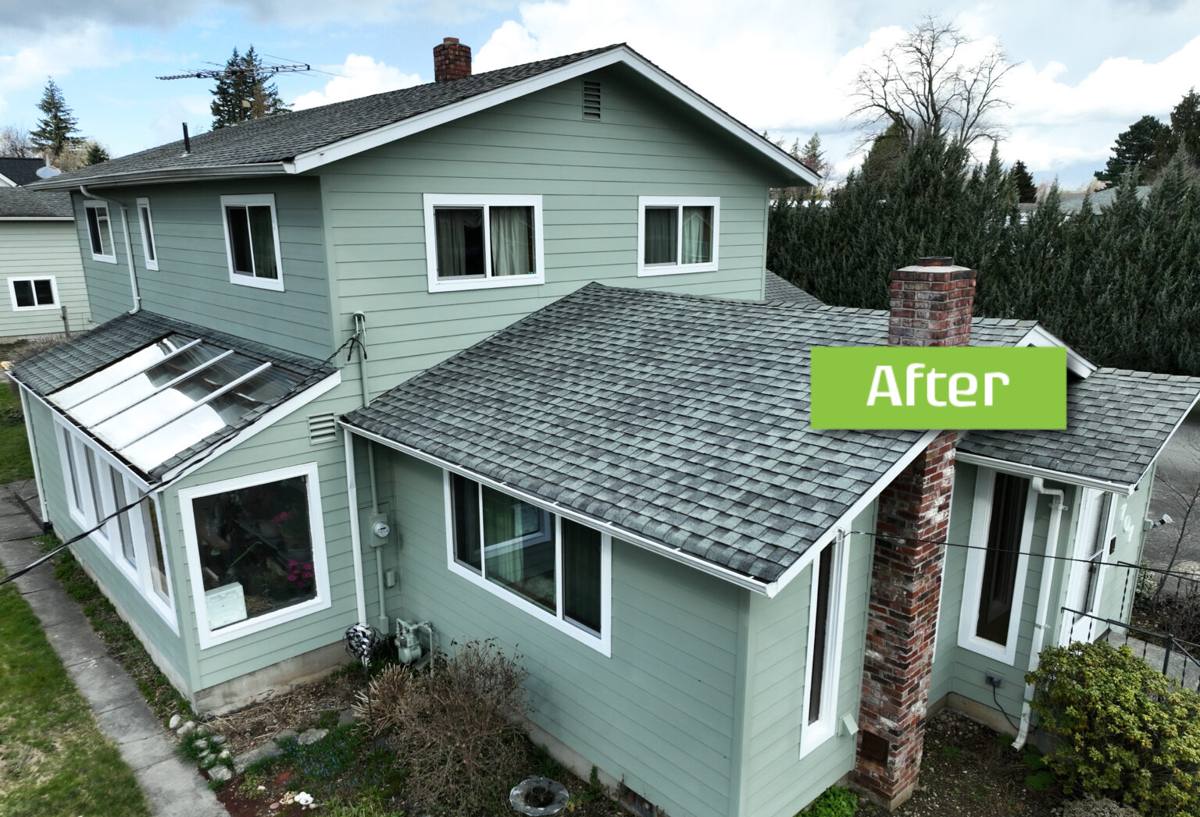
Signs an Abbotsford Roof Has Moved Past Repair
Not every roof problem means a full replacement. But there's a point where patching individual leaks stops making financial sense and starts just delaying the inevitable. Watch for:
- Granules collecting in gutters or at downspout outlets, showing the shingle surface is wearing thin
- Shingles that are cupping, curling at the edges, or cracking when you look closely from the ground
- Moss that keeps coming back within a season or two of cleaning, especially on shaded north and west slopes
- Soft or spongy spots underfoot in the attic, or daylight visible through the roof deck
- Interior ceiling stains that reappear after rain even though a "repair" was made
- A roof that's already had one or two layers of shingles installed over the original — a sign there's limited life left to patch
If you're seeing two or more of these, it's worth having someone look at the whole system rather than chasing leaks one at a time.
What a Correct Roof Replacement Actually Involves
Full Tear-Off, Not a Layover
We remove the existing roofing down to the deck rather than layering new shingles over old ones. Layering traps moisture, hides deck damage, and voids most manufacturer warranties. In a climate that already pushes moisture into every seam, a hidden layer of wet, compressed shingles underneath is one of the fastest ways to shorten a new roof's life.
Deck Inspection and Repair
Once the old roofing is off, the deck gets inspected board by board. Soft, delaminated, or rotted sheathing gets replaced before anything new goes down — this is where a lot of corner-cutting happens on cheaper jobs, and it's also where problems hide longest if it's skipped.
Ice and Water Barrier at Vulnerable Points
Eaves, valleys, and roof-to-wall transitions get a self-adhering waterproof membrane underneath the main underlayment. In a region where wind-driven rain can push water sideways under standard shingles, this barrier at the areas most exposed to that kind of intrusion is not optional.
Flashing Done Properly
Chimneys, skylights, vent pipes, and wall intersections fail more roofs than shingle wear ever does. New step flashing, counter-flashing, and pipe boots go in as part of the job — reused old flashing is one of the most common causes of a leak showing up again within a year or two of a "new" roof.
Balanced Ventilation
Intake at the eaves and exhaust at the ridge, sized to move air through the attic evenly. Without it, moisture gets trapped under the deck from the inside, which accelerates rot and undermines the new roof from below — regardless of how good the shingles on top are.
Choosing a Roofing Material for This Climate
There's no single "best" roofing material — there's a best fit for your roof's pitch, exposure, and how long you plan to own the home. Here's how the common options compare for a wet, moss-prone, moderately salt-influenced climate like Abbotsford's:
| Material | Typical Lifespan | Moss / Moisture Behavior | Maintenance |
|---|---|---|---|
| Asphalt composition shingle | 20–30 years (varies by product tier) | Susceptible to moss on shaded slopes; algae-resistant granules help | Periodic moss/debris removal recommended |
| Standing seam metal | 40–50+ years | Sheds water fast, very little surface for moss to root into | Low; occasional fastener and sealant check |
| Architectural/dimensional shingle | 25–30 years | Better moisture shedding than 3-tab, still needs shaded-slope attention | Similar to standard asphalt |
| Cedar shake | 20–30 years with upkeep | Naturally moisture-tolerant when maintained, but demands active upkeep in wet climates | High — regular treatment and moss control required |
Most Abbotsford homeowners land on architectural asphalt shingle for its balance of cost, appearance, and performance, but we'll walk through the honest trade-offs for your specific roof rather than defaulting to one answer.
How the Replacement Process Works
- On-site inspection and estimate. We look at the deck condition (where visible), ventilation, flashing points, and roof age, then give you a written scope and price — no guesswork pricing over the phone.
- Material selection. We go over shingle or metal options, colors, and warranty tiers so you're choosing based on what fits your home and budget, not just what's in stock.
- Scheduling around the weather. Roof replacement needs a reasonably dry window. We plan the job to minimize exposed-deck time and keep material and equipment staged to move fast once we start.
- Protection of the property. Landscaping, siding, and windows get covered or protected before tear-off begins.
- Tear-off and deck inspection. Old roofing comes off, the deck is checked and repaired as needed, and any damaged sheathing is documented and replaced.
- Underlayment, flashing, and ventilation installation. This is where the roof's actual durability gets decided — done in the sequence outlined above, not shortcuts.
- Roofing installation. Shingles or panels go on to manufacturer specification, which matters for both performance and warranty validity.
- Cleanup and magnetic nail sweep. Debris and loose fasteners are cleared from the yard and driveway before we consider the job done.
- Final walkthrough. We go over the finished roof with you and answer any questions before wrapping up.
What Drives Roof Replacement Cost
We don't publish flat prices because two roofs of the same size can cost very differently to replace. What actually moves the number:
| Factor | Why It Matters |
|---|---|
| Roof size and pitch | Steeper roofs take longer, need more safety setup, and use more material |
| Number of existing layers | Tear-off of multiple old layers adds labor and disposal cost |
| Deck condition | Rotted or soft sheathing found underneath adds repair cost not visible in advance |
| Material choice | Standard asphalt, architectural shingle, and metal carry different material costs |
| Ventilation and flashing changes | Bringing an older system up to proper airflow and flashing standards adds scope but reduces future failures |
| Roof complexity | Valleys, dormers, chimneys, and skylights all add cutting, flashing, and labor time |
The only way to get an accurate number is a real look at your roof — we'd rather give you a firm, honest estimate than a lowball figure that grows once the tear-off starts.
Why It Matters That We Already Work in Abbotsford
Roofing crews that only occasionally cross into the Fraser Valley tend to treat every job like it's in a generic dry climate. We work this region regularly enough to know which slopes on which style of homes hold moss the longest, where wind-driven rain tends to find weak flashing first, and how tight the dry-weather windows actually run here compared to further inland. That local pattern recognition is what keeps a roof replacement from becoming a callback six months later.
It also means straightforward logistics — we're not learning the area on your job, we're not guessing at typical roof styles and pitches in your neighborhood, and we can plan the work around the actual weather patterns Abbotsford sees rather than a generic forecast.
After the Replacement: Keeping It Performing
A well-installed roof still benefits from basic upkeep in a climate this wet. A simple annual routine goes a long way:
- Clear gutters and downspouts before the fall rains start
- Remove overhanging branches that keep shaded slopes damp and feed moss growth
- Have moss treated or gently removed before it builds a mat that holds water against the shingles
- Check attic ventilation isn't blocked by insulation or storage
- Do a visual check after any major windstorm for lifted or missing shingles
- Address small leaks immediately rather than waiting for a bigger sign of trouble
None of this requires a professional visit every time, but a quick annual look — by you or by us — catches small issues before they turn into deck damage.
If your roof is showing its age or you just want an honest read on how much life is left in it, we're happy to take a look. Reach out for a free, no-pressure estimate using the form below.