 Lynden Exterior
 Window Replacement Built for Laurel's Weather
Laurel sits in a stretch of Whatcom County where the weather doesn't do anything halfway. Winters bring long stretches of driving rain that hits west- and south-facing walls at an angle, not straight down. Damp air off the Sound carries salt that settles into anything porous or poorly sealed. And because the sun disappears for weeks at a time, moss and algae get a running start on any surface that stays wet — including window frames, sills, and the trim around them. None of that is unique to any one house. It's just what windows in this part of the county are up against, year after year.
Window replacement here isn't really about swapping old glass for new glass. It's about correcting how a window interacts with water, air, and moisture over the long haul. A window that looks fine from the driveway can still be letting water track behind the trim, rotting the framing it's set into, or fogging between panes because the seal failed years ago. We work on Laurel-area homes regularly enough to know which failure patterns show up here and which shortcuts cause problems two or three winters down the road.
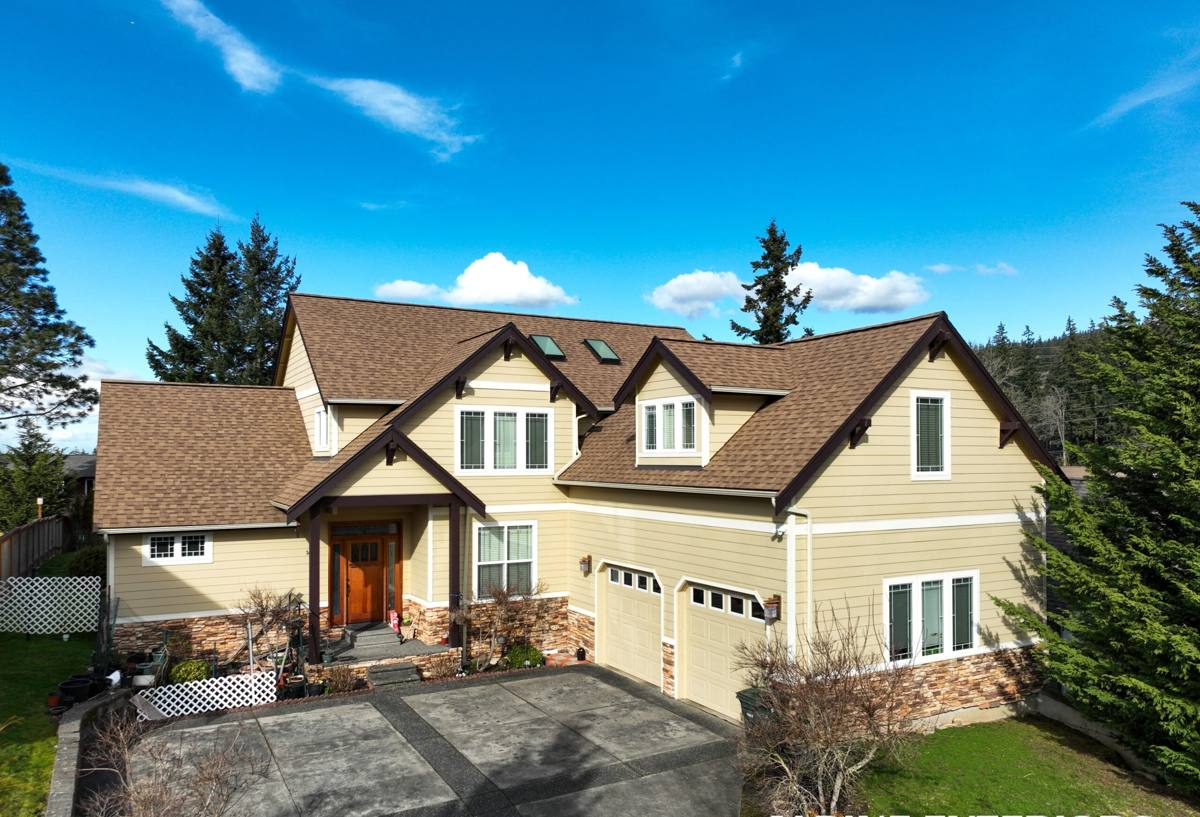
What Whatcom County Weather Does to Windows Over Time
Most window problems we find in this area trace back to one of three things: water intrusion, condensation, or UV and moisture breakdown of the frame material itself.
Driving Rain and Wind-Driven Water
Standard rain falls straight down and mostly sheds off a properly capped window. Driving rain gets pushed sideways by wind, which means it can work its way under trim, around poorly sealed nailing flanges, and into gaps that would never see moisture in a calmer climate. Over years, that slow intrusion rots sheathing and framing long before anyone notices a leak from inside.
Moss, Algae, and Prolonged Dampness
Wood sills and painted trim that stay damp for weeks at a stretch are exactly what moss and algae need to take hold. Once organic growth establishes itself in a joint or a sill, it holds moisture against the surface constantly, which accelerates rot and paint failure even after the weather dries out.
Salt Air and Metal Components
Hardware, screen frames, and some older aluminum window components corrode faster when salt-laden moisture is a regular presence. It's a slower process than rot, but it shows up as stiff locks, pitted hardware, and frames that no longer seal tight against the sash.
Signs a Laurel Home Needs Window Replacement, Not Just Repair
Not every window problem calls for full replacement. But certain signs mean the window itself — not just the caulk or the weatherstripping — has failed.
- Fog or moisture trapped between panes of a double- or triple-pane window (the seal has failed and can't be fixed)
- Soft, spongy, or visibly rotted wood at the sill or lower corners of the frame
- Windows that won't stay open, won't latch, or have warped enough to bind in the frame
- Persistent drafts you can feel by hand along the frame edge on a windy day
- Paint that keeps failing on the same window no matter how often it's redone
- Visible moss, algae, or black staining that returns within a season of cleaning
- A noticeable jump in heating costs with no other explanation
What a Correct Window Replacement Actually Involves
The window unit itself is only part of the job. Most of the long-term performance comes down to how it's installed — and this is where a lot of problems get built into a house without anyone realizing it until years later.
Removing the Old Window Without Hiding Damage
Once the old unit is out, we check the rough opening for rot, soft framing, or water staining before anything new goes in. Installing a new window over damaged framing just seals the problem behind a fresh face — it doesn't fix it.
Flashing and Water Management
Proper flashing directs any water that gets past the exterior finish back out, rather than letting it pool at the sill or track down into the wall cavity. In a climate with sustained driving rain, this step matters more than the brand of window being installed. A premium window with poor flashing will still leak; a modest window with correct flashing usually won't.
Air Sealing and Insulation
The gap between the window frame and the rough opening needs to be sealed and insulated correctly — not overpacked with expanding foam, which can bow the frame, and not left loose, which leaves a direct path for drafts and moisture.
Final Sealant and Trim Detail
The exterior caulk joint and trim work is the last line of defense and the first thing local weather tests. We use sealants rated for exterior exposure and detail corners and joints so water has nowhere to collect.
Choosing a Window Frame Material for This Climate
Frame material affects how a window holds up to years of rain, humidity, and temperature swings. There's no single right answer for every home — it depends on the house's age, style, and how much upkeep an owner wants to take on.
| Frame Material | How It Handles Local Moisture | Maintenance | Typical Fit |
|---|---|---|---|
| Vinyl | Won't rot; handles damp conditions well | Low — occasional cleaning | Most residential replacements, budget-conscious projects |
| Fiberglass | Very stable in wet/dry cycling; resists warping | Low | Homes wanting long-term durability, can cost more upfront |
| Wood (clad or unclad) | Needs consistent maintenance to prevent rot in this climate | High — regular painting/sealing | Older or historic-style homes where appearance matters most |
| Aluminum | Prone to corrosion and condensation without thermal breaks | Moderate | Less common for residential in wet climates today |
We don't push wood-frame replacements for homes in this area unless the owner understands and wants the upkeep involved. It's not that wood windows are a bad product — it's that a wood frame left unmaintained in a climate with this much sustained moisture will fail faster than a vinyl or fiberglass frame in the same spot, and the repainting schedule needed to keep it sound is a real, ongoing cost most owners don't want to sign up for.
Glass Package Matters Too
Beyond the frame, the glass package affects comfort and condensation resistance. Low-E coatings and argon-filled double panes are the standard baseline for this climate. Triple-pane glass adds further insulation value and can help reduce interior condensation on the coldest, dampest days, though it comes at a higher cost and added weight on the frame.
Our Process for Laurel-Area Window Replacement
- On-site assessment. We look at each window's condition, the surrounding framing, and how the house is oriented to prevailing wind and rain before recommending anything.
- Honest scope and options. You get a straight answer on which windows need full replacement now, which can wait, and which frame/glass combination makes sense for your budget and the exposure of that specific wall.
- Accurate measurement and ordering. Windows are measured for the actual opening, not assumed to match a standard size.
- Careful removal and opening inspection. We check for hidden rot or water damage before installing anything new.
- Installation with proper flashing and air sealing. This is the step that determines whether the new window performs for the next twenty-plus years or starts failing in five.
- Finish work and cleanup. Trim, caulk, and site cleanup are part of the job, not an afterthought.
Why a Crew That Already Works Laurel Matters
Window replacement done by a crew unfamiliar with this specific stretch of Whatcom County often looks fine on installation day and starts showing problems once the winter rain sets in. Crews who work Laurel regularly already know which wall orientations take the worst of the driving rain, which older homes in the area tend to have framing issues behind the trim, and how much moss and algae pressure to plan around when detailing sills and sealant joints. That familiarity shows up in fewer callbacks and windows that actually perform the way they're supposed to in year three, not just on install day.
After Installation: Keeping Windows Performing in This Climate
New windows still need occasional attention to get their full lifespan out of them here.
- Rinse sills and frames periodically to keep moss and algae from establishing, especially on shaded or north-facing windows
- Check exterior caulk joints yearly and touch up any that have cracked or pulled away
- Keep gutters and downspouts clear so runoff isn't sheeting directly across window heads
- Operate locks and hardware a few times through the winter so they don't seize from disuse and moisture
If your windows in the Laurel area are drafty, fogged, hard to operate, or just past their working life, we're happy to take a look and give you a straight assessment — no pressure, no upsell. Fill out the form below for a free estimate and we'll walk the house with you.