 Lynden Exterior
 Composite Decking Built for Laurel's Climate, Not Just Its Curb Appeal
Homes in the Laurel area, tucked into the farmland and river-bottom lots that surround Lynden, deal with a different set of conditions than a deck built forty miles inland or two states south. Whatcom County sits under a steady flow of marine air off the Salish Sea, and that air carries a fine haul of salt-tinged moisture even well inland. Combine that with our long wet season, heavy rainfall totals, and shaded lots that stay damp for months at a time, and you get a climate that is genuinely hard on outdoor wood surfaces. A composite deck installed correctly for this environment isn't a luxury upgrade — it's a practical response to what actually happens to decking material here year after year.
This page covers composite decking specifically for Laurel homes: what the local climate does to a deck, what a correct installation involves, how our process works, and why it matters that the crew doing the work already understands this specific corner of Whatcom County.
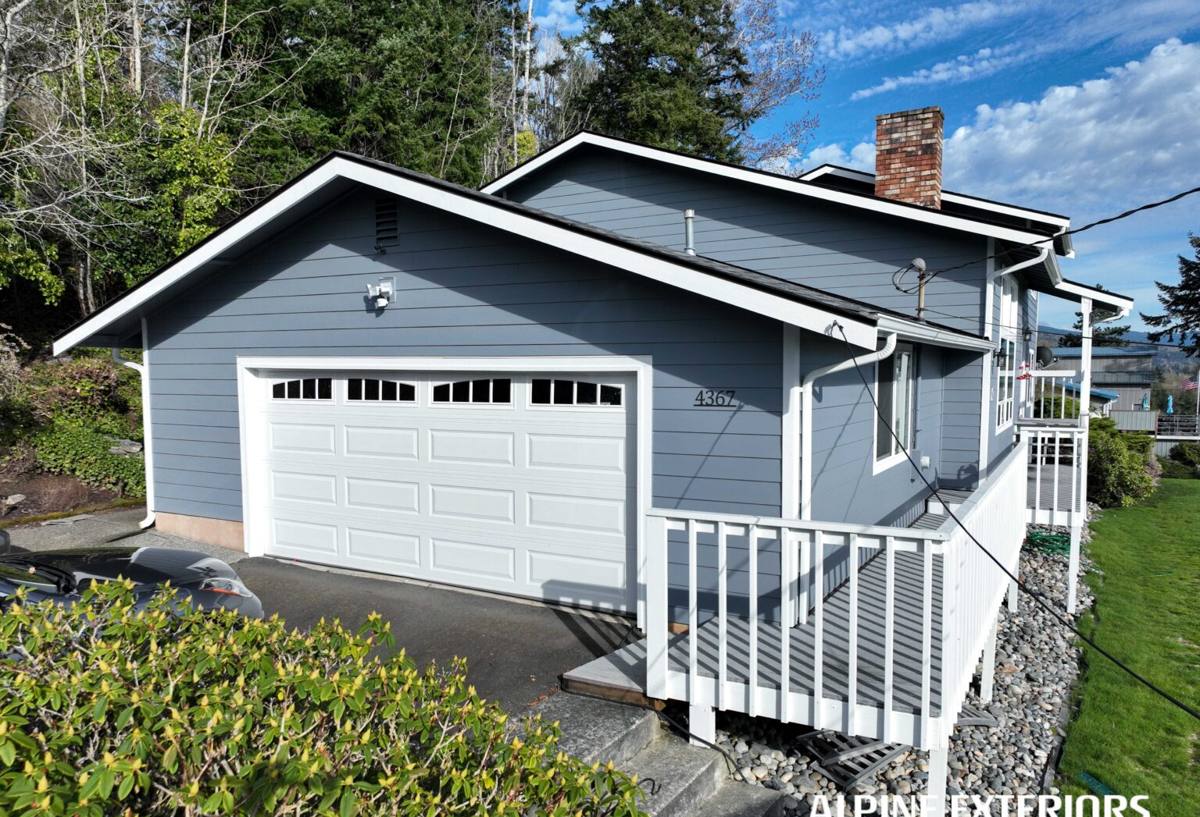
What Whatcom County's Climate Actually Does to a Deck
Homeowners who've lived in the Laurel area for even a few years already know the pattern. It shows up every fall and doesn't let go until late spring.
Moisture that never fully dries out
Whatcom County gets a long stretch of overcast, drizzly weather where surfaces stay damp for days between rain events rather than drying out in an afternoon. Wood decking soaks that moisture up through end grain and fastener holes, swells, and eventually cups, splits, or checks. Shaded and north-facing decks — common on treed rural lots around Laurel — are hit hardest because direct sun never gets a chance to dry them out between storms.
A long, aggressive moss season
Moss and algae need shade, moisture, and time — and this region hands them all three for the better part of the year. On a wood deck, moss doesn't just sit on top; it roots into the grain and holds water against the board, accelerating rot from the surface down. Once moss establishes itself, it comes back faster each season unless the surface is treated or cleaned regularly.
Salt-tinged marine air and metal fasteners
The salt content in Whatcom County's marine air is lower than a true oceanfront property, but it's persistent, and persistent low-grade exposure adds up over a couple of decades. Standard fasteners and connectors that aren't rated for coastal or near-coastal exposure can corrode faster than homeowners expect, which becomes a structural issue long before it becomes a cosmetic one.
Freeze-thaw cycling
Whatcom County winters aren't brutally cold, but we do get enough freeze-thaw swings to matter. Water that's soaked into a wood board and then freezes expands inside the grain, widening existing cracks. Do that every winter for ten or fifteen years and a deck that looked fine at year five can be in rough shape by year fifteen.
Composite vs. Wood vs. PVC for a Laurel-Area Deck
There's no single "best" decking material for every home — it depends on budget, how the deck will be used, and how much upkeep a homeowner actually wants to do. Here's how the three main options hold up against our specific climate factors.
| Factor | Pressure-Treated Wood | Composite | PVC / Capped Polymer |
|---|---|---|---|
| Moisture absorption | High — swells, cups, checks over time | Very low, especially with capped boards | Essentially none |
| Moss and algae resistance | Poor without regular treatment | Good; smooth cap sheds growth better than open wood grain | Good to very good |
| Annual maintenance | Sanding, staining, sealing most years | Occasional wash-down | Occasional wash-down |
| Upfront cost | Lowest | Mid-range | Highest |
| Typical lifespan here | 10–15 years before major repair or replacement | 25–30 years with proper install | 25–30+ years |
| Feel underfoot in wet weather | Can get slick, splintery over time | Textured surface, better wet-weather grip | Textured surface, good wet-weather grip |
For most Laurel-area homeowners, composite hits the right balance: it handles our moisture and moss exposure far better than wood without the top-end cost of full PVC systems. Where a client wants the lowest possible long-term maintenance and budget allows for it, PVC decking is worth discussing — we're happy to walk through both at the estimate.
What a Correct Composite Deck Installation Actually Involves
Composite boards are only as good as what's underneath and around them. A lot of decking problems we get called out to inspect trace back to installation shortcuts, not the decking material itself. In a climate like ours, a few details matter more than they would somewhere drier.
Ledger flashing and waterproofing
Where the deck attaches to the house, proper flashing keeps water from working its way behind siding and into the wall assembly. This is one of the most common failure points we see on older decks, wood or composite, and it's not something to skip to save time.
Joist protection
The framing underneath a composite deck is still typically wood, and it's still exposed to the same moisture load. Wrapping joists and beams in a protective tape barrier keeps water from soaking into the framing through screw holes and cut ends — the framing failing early defeats the purpose of putting low-maintenance decking on top of it.
Proper drainage and airflow
Composite boards need consistent gapping for water to drain through and air to circulate underneath. Tight, moss-shaded, low-clearance decks are exactly the setup that traps moisture against the substructure, so ventilation planning matters more here than on a sunny, open lot.
Fastening system
Hidden fastener clip systems, installed correctly, keep the deck surface free of exposed screw heads that can loosen, corrode, or create moss-catching divots. Fastener hardware should be rated for the exposure this region sees, not just generic exterior-grade.
Picture framing and edge detailing
Cut composite edges need to be capped or trimmed correctly — an exposed cut edge on certain composite products can wick moisture if left unfinished, undermining the low-maintenance benefit the material is supposed to provide.
How Our Process Works
We keep the process straightforward and honest — no pressure, no upsell games, just a clear look at what your deck needs.
- On-site visit to assess your existing deck or build site, drainage patterns, shade exposure, and structural condition
- Honest recommendation on decking tier and railing options based on your budget and how you use the space
- Written estimate with material and labor broken out, so you know what you're paying for
- Permit handling where Whatcom County or the City of Lynden requires it
- Proper substructure work — ledger flashing, joist protection, footings — before a single composite board goes down
- Clean installation with attention to drainage gaps, fastening, and edge finishing
- Final walkthrough so you understand basic care and what to watch for going forward
Maintenance in a Moss-Prone Climate
Composite decking cuts maintenance dramatically compared to wood, but "low-maintenance" doesn't mean "no maintenance" in a climate like ours. A short seasonal routine keeps a composite deck looking good for the long haul.
- Sweep debris and leaf litter off regularly — trapped organic matter under a covering is what feeds moss growth in shaded areas
- Wash the deck surface once or twice a year with a soft-bristle brush and mild soap; avoid high-pressure washing, which can damage the cap layer on some composite products
- Keep gutters and downspouts clear so runoff isn't dumping extra water directly onto or under the deck
- Trim back overhanging branches and brush where possible to let more light and airflow reach shaded sections
- Check railing posts and fastener points once a year for movement, since hardware is usually the first thing to show wear, not the boards themselves
What Affects the Cost of a Composite Deck
Every project is different, and we won't quote a number without seeing the site, but these are the main variables that move the price up or down.
| Cost Factor | Why It Matters |
|---|---|
| Decking tier | Entry-level capped composite costs less than premium or PVC-grade boards; both are reasonable choices depending on budget and goals |
| Deck size and shape | Multiple levels, angles, or curves increase labor and material waste compared to a simple rectangle |
| Substructure condition | A tear-off and rebuild costs more than resurfacing sound existing framing — but skipping needed framing repair costs more later |
| Railing system | Composite, cable, or metal railing options vary significantly in material cost |
| Site access and height | Elevated decks, difficult access, or steep lots add labor time |
| Permitting | Whatcom County and City of Lynden permit and inspection requirements can affect timeline and cost depending on deck height and attachment |
Why Hiring a Crew That Already Works in Laurel Matters
Decking work isn't identical everywhere, and a crew that's spent time on Laurel-area and Lynden properties brings a few practical advantages you don't get from a company driving in from out of the region for a one-off job.
We already know how Whatcom County's permitting process works for residential decks, so there are fewer surprises mid-project. We've seen how shade patterns and drainage behave on the rural, tree-lined lots common around Laurel, which shapes decisions on board spacing, ventilation, and where moss is most likely to become a recurring problem. And because we're local, warranty follow-up and service calls aren't a logistical hassle — we're not disappearing after the final walkthrough.
A composite deck is a long-term investment in how you use your outdoor space. Getting the substructure, drainage, and material choice right the first time matters more here than in a drier climate, because the consequences of cutting corners show up faster.
Get a Straightforward Estimate
If you're considering a new composite deck or replacing an aging wood deck at your Laurel-area home, we're glad to take a look and give you an honest read on what it needs. There's no pressure and no obligation — just a clear estimate based on your property and your goals. Use the form below to request a free estimate.