 Lynden Exterior
 Storm Damage Looks Different in Deming Than It Does in Town
Deming sits closer to the foothills than most of Lynden proper, tucked in along the Nooksack River corridor with heavier tree cover on most lots. That changes what "storm damage" usually means out here. In open parts of Lynden, wind mostly tests the shingles and flashing directly. In Deming, the trees get involved first — limbs come down, needles and debris pack into valleys and gutters, and wind funneling through the river corridor hits roofs at angles that don't match what a standard inspection checklist expects. Add in the driving rain that comes through with most Pacific storm systems and the moss that thrives under shade cover for most of the year, and you've got a roof that's dealing with more variables than a textbook repair job accounts for.
None of this means Deming roofs are worse-built. It means they need someone doing the repair who has actually looked at what wind, water, and shade do to roofs in this specific stretch of Whatcom County — not just a generic storm-damage checklist written for flat, open terrain.
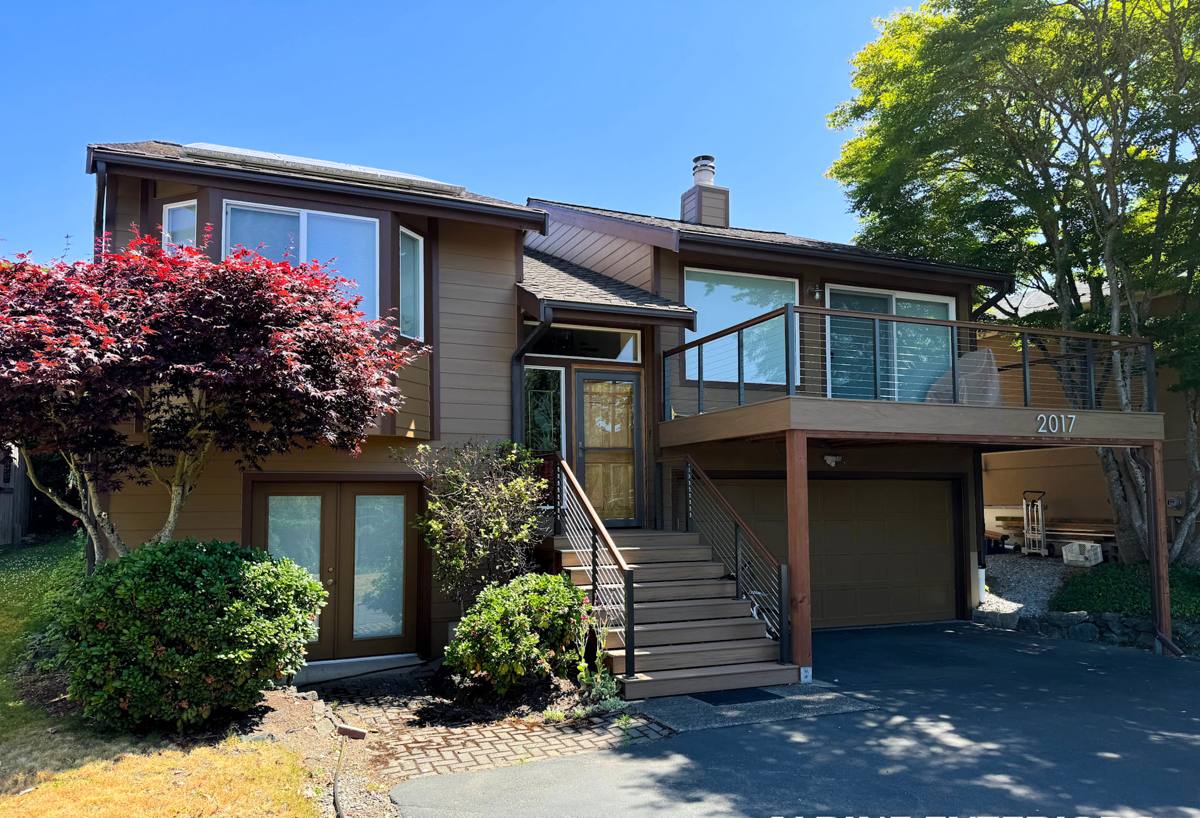
What Actually Counts as Storm Damage
Homeowners often assume storm damage means a missing shingle or a visible hole. In practice, a lot of the damage that costs the most down the line is less obvious.
Wind Damage
Wind doesn't just tear shingles off — it lifts the edges, breaks the seal underneath, and moves on. The shingle can look intact from the ground while the adhesive strip underneath is cracked or separated. Left alone, that seam opens further with every following storm until water gets underneath.
Wind-Driven Rain Intrusion
Driving rain, common with the storm systems that move through this part of Washington, pushes water sideways and upward under laps that were never designed to handle water moving in that direction. This is where flashing around chimneys, vents, and valleys earns its keep — and where a lot of leaks actually originate, even though the visible damage might be a stain on a ceiling nowhere near the roof edge.
Falling Limbs and Debris
With Deming's tree cover, storm damage frequently includes impact from branches, not just wind and water. Even a limb that doesn't puncture the roof deck can crack shingles, dislodge flashing, or knock granules loose in a way that shortens the life of that section of roof.
Moss and Prolonged Dampness
Shaded roof sections in Deming stay damp longer after every storm than roofs in open sun. That extended damp period is exactly what moss needs to establish. Moss isn't just cosmetic — it holds moisture against the shingle surface and works its way under tabs and edges, which is often what turns a small storm-related opening into an active leak months later.
What a Correct Storm Damage Repair Actually Involves
A repair that only replaces the shingles you can see from the ground is a partial repair. Doing it right means checking the layers underneath and the paths water could realistically take, not just patching the visible symptom.
Start With a Full Inspection, Not a Spot Check
Storm damage rarely stays contained to one obvious spot. A proper inspection covers the full roof plane, all flashing points, valleys, and the attic or ceiling underneath the affected area for signs water already got through. Skipping this step is how homeowners end up calling back three months later for a leak that was actually there the whole time.
Match Materials, Don't Improvise
Patch repairs done with mismatched shingles or the wrong underlayment weight create a weak point that's easy to miss visually but performs worse than the surrounding roof. Matching the existing material — or making an honest case for why a small full-slope replacement makes more sense than a patch — is part of doing the job right the first time.
Flashing and Underlayment Come First, Shingles Come Last
Shingles are the part everyone notices, but flashing and underlayment are what actually keep water out. Any storm repair that replaces shingles without checking the flashing and underlayment underneath them is treating the symptom, not the cause.
Repair or Replace? What Actually Drives That Decision
Not every storm-damaged section needs a full roof replacement, and not every "simple" patch is actually a good long-term fix. The honest answer depends on a handful of concrete factors.
| Factor | Leans Toward Repair | Leans Toward Replacement |
|---|---|---|
| Roof age | Under 12–15 years, otherwise in good condition | Nearing or past its expected lifespan |
| Extent of damage | Localized to one slope or section | Spread across multiple slopes or the whole roof |
| Underlying deck condition | Solid, dry decking under the damaged area | Soft spots, rot, or repeated past leaks in the deck |
| Moss and moisture history | First significant moss issue, caught early | Long-term moss growth with granule loss across large areas |
| Prior repairs | First repair needed in several years | This is the third or fourth patch to the same area |
When a roof only needs work in one section, a targeted repair is the honest recommendation — there's no reason to push a full replacement on a roof that doesn't need one. When the damage pattern shows a roof that's been patched repeatedly or is past its realistic service life, we'll say so plainly rather than keep patching something that's going to keep failing.
Our Process, Start to Finish
- Initial call and scheduling. We get basic details about what happened and how soon the area needs to be covered or protected.
- On-site inspection. Full assessment of the damaged area, the surrounding roof, flashing, and any interior signs of water intrusion.
- Written scope and estimate. A clear explanation of what's damaged, what needs to be done, and why — not just a lump-sum number.
- Temporary protection if needed. If there's an active opening, we get it covered before the next rain, even if the full repair is scheduled for later.
- Repair work. Matching materials, correcting flashing and underlayment issues, and addressing the root cause, not just the visible damage.
- Final walkthrough. We show you what was done and what to watch for going forward.
Why a Crew That Already Works Deming Matters
Storm damage repair isn't just a technical skill — it's also about knowing the conditions a specific roof has been living in. A crew that regularly works Deming and the surrounding Lynden area already understands how shade patterns from mature trees affect moss growth on different roof sections, how wind moves through the river corridor during a storm, and which flashing details tend to fail first on roofs built for this microclimate rather than a drier region.
There's also a practical response-time advantage. After a storm, the roofs that need attention fastest are the ones with active leaks or exposed decking. A crew already working in Whatcom County can get out to assess and tarp a Deming property faster than one dispatching from farther away — and that speed is often the difference between a contained repair and a much larger interior damage claim.
After the Storm: What to Do Before We Arrive
What a homeowner does in the first day or two after storm damage affects both the repair and, if it applies, the insurance claim.
- Take photos of visible damage from the ground — do not get on the roof yourself.
- Note the date and, if known, the specific storm event that caused the damage.
- Check the attic or top-floor ceilings for staining, dampness, or a musty smell.
- Move furniture or belongings away from any area showing an active leak.
- Avoid walking on wet or moss-covered roof sections — they're more slippery than they look.
- Call for an inspection promptly; a small opening left through a second or third storm gets worse fast.
If you're filing an insurance claim, keep your own photo documentation and the written scope of work from the repair. Insurance adjusters appreciate a clear, itemized explanation of cause and repair scope, and having that on hand from the start tends to make the claims process move faster.
Reducing the Chances of a Repeat
A storm repair fixes the current problem, but a few ongoing habits reduce how much damage the next storm does.
Moss Management
Given how much of Deming stays shaded, moss control is an ongoing task rather than a one-time fix. Keeping growth in check on shaded slopes reduces the chance that trapped moisture works its way under shingle edges before the next storm even arrives.
Gutter and Debris Clearing
With more overhead tree cover, gutters and valleys collect needles and debris faster here than in open areas. Clogged valleys back water up under shingles during heavy, driving rain — exactly the conditions this area sees regularly.
Tree Trimming Near the Roofline
Branches that overhang or brush against the roof do slow damage even without a storm, and they're the first thing to come down when wind picks up. Keeping limbs trimmed back from the roofline reduces both routine wear and storm risk.
If a recent storm has left your Deming roof with missing shingles, an active leak, or damage you're not sure how to assess, we're glad to take a look. Reach out for a free, no-pressure estimate — the form below gets you on our schedule.