 Lynden Exterior
 Deck Replacement for Deming Homes Near Lynden
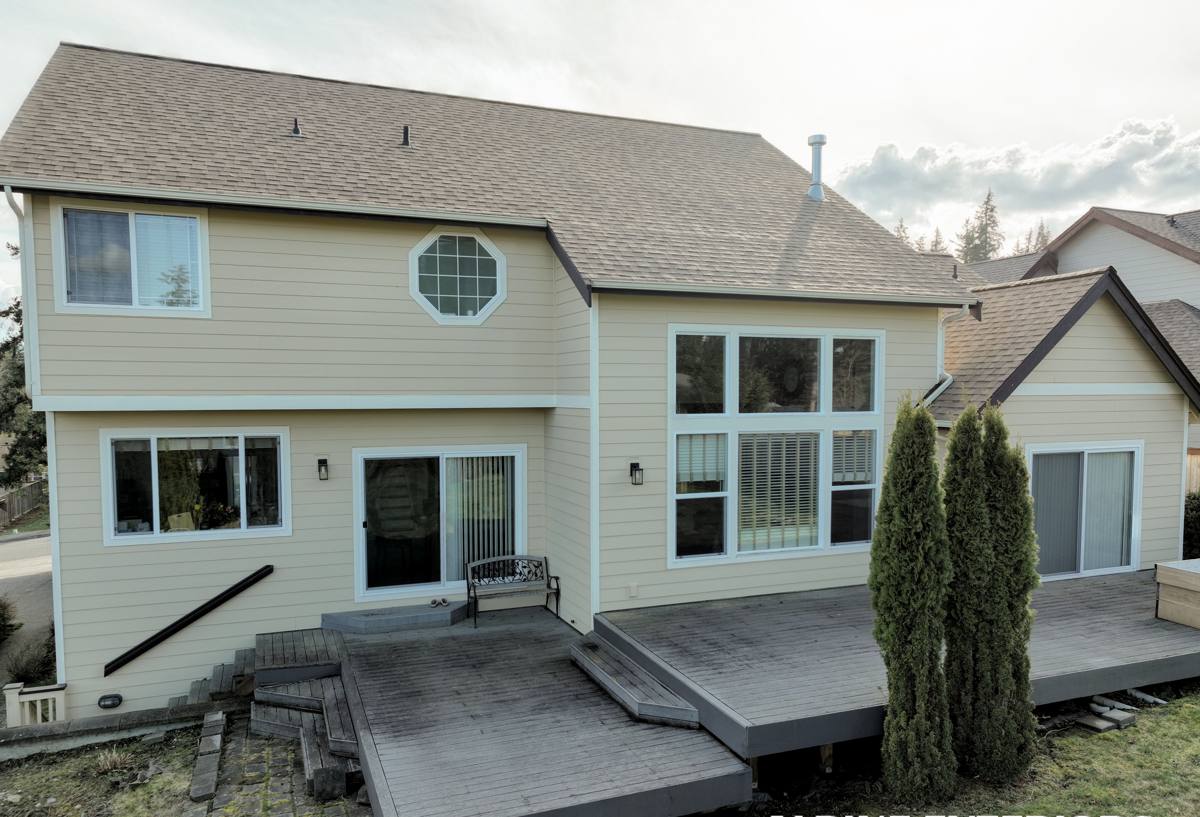
Deming sits back against the foothills east of Lynden, and that location comes with its own version of Whatcom County weather: long stretches of damp shade under fir and cedar cover, cooler temperatures than the valley floor, and moisture that lingers on wood surfaces far longer than it does out in open sun. If you've owned a deck out here for more than a few years, you already know the signs — soft spots near the ledger board, black-green streaking on the boards, fasteners bleeding rust, or a railing post that's started to wiggle. Those aren't cosmetic problems. They're the wood telling you it's past the point where sealing and patching will hold.
This page is about one job, done right, in one area: full deck replacement for homes in and around Deming. Not a repair guide, not a generic "decking materials" overview — the specifics of what a correct replacement looks like when your deck has to survive a Whatcom County wet season year after year.
Why Deming's Climate Is Hard on Decks
Three things work against wood decking out here, and they compound each other:
- Extended moisture exposure. Tree cover and valley shade mean decks in Deming often stay damp longer after rain than decks in more open parts of Lynden. Wood that can't dry out between storms starts to break down from the inside — fiber saturation, fungal growth, and eventual rot.
- A long moss season. Moss and algae thrive in shaded, moist wood. Beyond looking bad, a moss layer holds water against the board surface almost permanently, which is one of the fastest ways to shorten the life of any decking material, treated lumber included.
- Driving rain and wind-blown moisture. Whatcom County storms don't always fall straight down. Wind-driven rain gets up under railings, into end-grain cuts, and behind ledger boards where the deck meets the house — exactly the spots that are hardest to inspect and easiest to ignore until they've failed.
None of that means a deck can't last in Deming. It means the build has to account for drainage, ventilation, and moisture-resistant detailing from the start, not just a nice-looking surface board.
Signs Your Deck Needs Replacement, Not Repair
Not every deck problem calls for a full tear-off. But there's a line where patching stops being worth it. Watch for:
- Soft, spongy decking boards, especially near the house or in shaded corners
- Visible rot or dark staining at the ledger board (where the deck attaches to the house)
- Wobbly railings or posts that move when pushed
- Fasteners that have rusted, popped up, or stripped out of the wood
- Persistent moss or algae that returns within weeks of cleaning
- A substructure (joists, beams, posts) that shows rot when you probe it with a screwdriver
- A deck built before current code that lacks proper flashing, joist hangers, or railing spacing
If the problems are limited to the top boards and the frame underneath is sound, resurfacing can sometimes make sense. Once rot has reached the framing or the ledger connection, replacement is the honest answer — patching a failing structure just delays a bigger problem and adds cost you'll pay twice.
Older Decks and Code
A lot of decks around Deming and Lynden were built decades ago, before current Whatcom County building code addressed things like ledger board flashing, joist hanger requirements, and guard rail spacing. A full replacement is the chance to bring the structure up to current standards — not just swap old boards for new ones on a frame that was never built to today's requirements.
What a Correct Deck Replacement Involves
A deck replacement isn't just pulling up old boards and screwing down new ones. Done properly, it's a sequence:
1. Full Structural Assessment
We check the ledger board attachment, footings, posts, beams, and joists — not just the decking surface. If the substructure is compromised, it gets addressed before anything new goes on top.
2. Demolition and Disposal
Old decking, railings, and any rotted framing come out completely. We haul debris off site — you're not left with a pile of old lumber to deal with.
3. Ledger Flashing and Waterproofing
This is the single most important moisture-control detail on any deck attached to a house, and it's the one that fails most often on older builds. Proper flashing at the ledger keeps water from working its way behind the siding and into the rim joist — a slow leak here can cause damage to the house itself, not just the deck.
4. Framing to Current Code
Joists, beams, and posts sized and spaced per current Whatcom County requirements, with proper joist hangers and fasteners rated for exterior/ground contact use.
5. Decking and Railing Installation
Board selection matters more in a climate like this than in a dry one — spacing for drainage and airflow, correct fastening to avoid trapping moisture, and railing systems that meet current code spacing requirements.
6. Site Cleanup and Final Walkthrough
We walk the finished deck with you, cover care and maintenance expectations for the material you chose, and make sure everything is solid before we call it done.
Decking Material Options for a Shaded, Wet Site
There's no single "best" decking material for every home — it depends on budget, how much maintenance you want to do, and how much sun versus shade your specific spot gets. Here's how the common options actually compare for a Deming-style site:
| Material | Moisture/Moss Resistance | Maintenance | Typical Lifespan |
|---|---|---|---|
| Pressure-treated lumber | Good if properly finished and cleaned regularly; moss can take hold in shade if neglected | Annual cleaning, periodic sealing | 15–20 years with upkeep |
| Cedar | Naturally moisture- and insect-resistant, but still needs finish maintenance in shaded areas | Regular sealing/staining to hold color and resist graying | 15–25 years with upkeep |
| Composite decking | Very good — resists rot and moisture absorption; moss can still grow on the surface if shaded and not cleaned | Occasional washing, no sealing/staining required | 25–30+ years, manufacturer-warrantied |
| PVC decking | Best moisture resistance of common options; non-porous surface | Occasional washing | 25–30+ years, manufacturer-warrantied |
For heavily shaded lots — which describes a fair number of properties around Deming — we lean toward recommending composite or PVC decking to clients who want to minimize the moss-and-moisture maintenance cycle. That's not a knock on wood; a well-maintained cedar or treated deck can look great and last for years. It's simply a matter of how much upkeep you're willing to put in against how much shade and moisture your specific site sees. We'll give you a straight assessment of your lot before you decide, not a sales pitch toward the higher-margin product.
Our Process, Start to Finish
- Free on-site estimate. We look at your existing deck (or the space where a new one will go), assess drainage, sun/shade exposure, and structural condition.
- Written proposal. Material options, scope of work, and a clear price — no vague allowances that turn into surprise change orders.
- Permitting. Deck replacements typically require a permit through Whatcom County; we handle that process as part of the job.
- Demo and build. Old structure removed, new framing and flashing installed, decking and railings completed.
- Final walkthrough. We review the finished work with you and go over maintenance so the deck holds up the way it should.
Why a Crew That Already Works Deming Matters
Building a deck that holds up in a dry climate is a different exercise than building one that holds up under Whatcom County's rain and shade patterns. A crew that works this area regularly already knows which details can't be skipped — ledger flashing, drainage gaps, fastener choice — because they've seen what happens on the decks that skipped them. That's not something you get from a crew that mostly builds in drier parts of the state and treats Deming as just another stop.
We're a Lynden-based crew. We're not driving in from out of the area for one job and moving on — we're working in Whatcom County homes throughout the year, in the same salt air, driving rain, and moss season every other deck out here has to survive.
Deck Replacement Checklist Before You Hire
- Does the estimate include a structural check, not just a materials quote?
- Is ledger board flashing explicitly included in the scope of work?
- Will the framing be brought up to current Whatcom County code, including joist hangers and railing spacing?
- Is the contractor licensed and insured for work in Washington State?
- Does the proposal specify the decking material, fastener type, and railing system by name — not just "composite decking" with no brand or grade?
- Is debris removal and site cleanup included?
- Does the quote include a written warranty on workmanship, separate from the manufacturer's material warranty?
Get a Straight Estimate
If your deck in Deming is showing soft spots, moss that won't quit, or a frame that's past its useful life, we'll come take a look and give you an honest read on whether it needs full replacement or just targeted repair. Reach out through the form below for a free, no-pressure estimate — no obligation, just a clear assessment of what your deck actually needs.