 Lynden Exterior
 Deck Repair Built for Custer's Coastal, Wet Climate
Custer sits close enough to the water that salt-laden air off Birch Bay and the Strait of Georgia reaches decks year-round, while Whatcom County's long wet season keeps wood and hardware damp for months at a stretch. That combination is hard on decks in ways that inland homes never deal with. Fasteners corrode faster, wood stays wet longer between dry spells, and shaded or tree-covered decks grow a steady coat of moss and algae that most homeowners underestimate until it becomes a slip hazard or starts trapping moisture against the boards.
We work on decks throughout the Custer area and see the same failure patterns repeat house after house. This page covers what actually goes wrong with decks out here, what a correct repair involves, and how we approach the job so it holds up through the next few winters, not just the next few months.
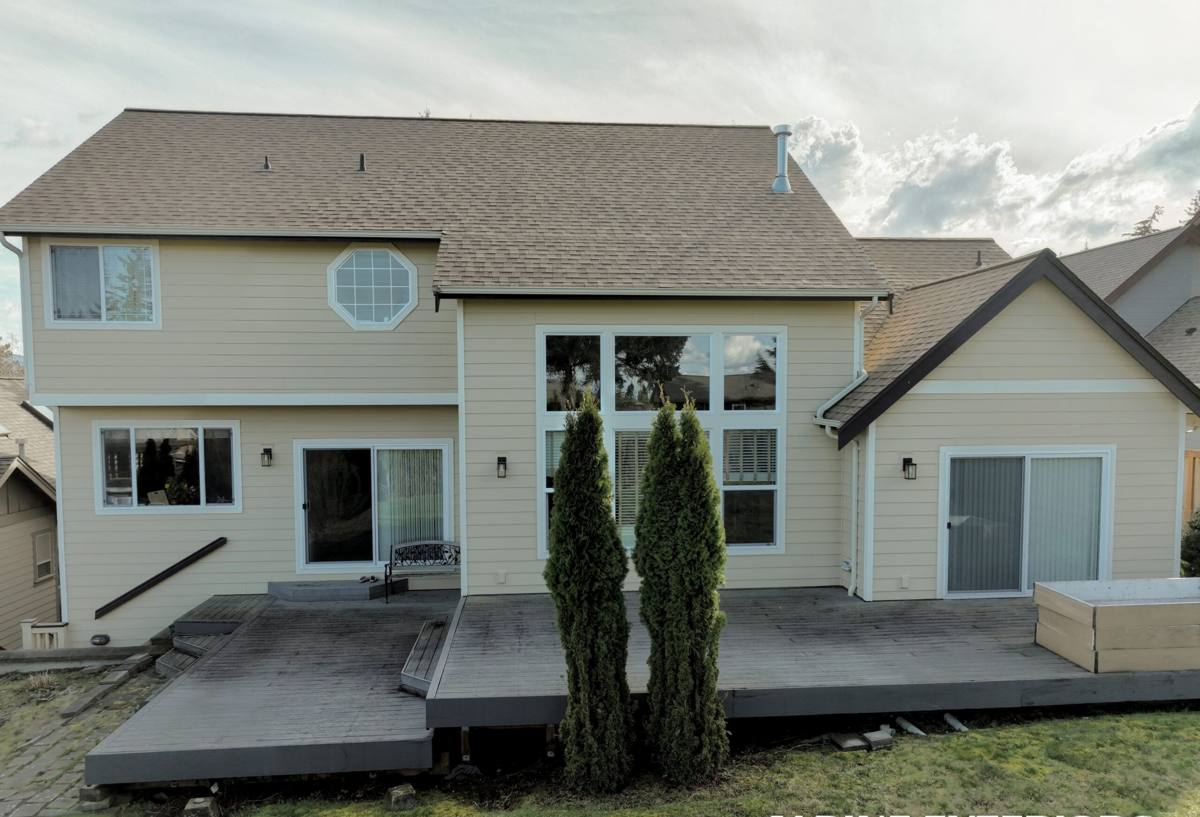
Why Local Decks Fail Faster Than the Manual Says
Every deck material comes with a expected service life on paper. In practice, Custer's climate shortens that timeline for a few specific reasons:
Salt Air and Metal Fasteners
Nails, screws, joist hangers, and structural bolts are usually the first thing to fail on a coastal-adjacent deck, often well before the wood around them shows obvious damage. Salt in the air accelerates corrosion on standard or under-rated hardware, and once a fastener starts rusting it loses holding strength quietly, from the inside, long before you'd notice from above.
Driving Rain and Water Intrusion
Wind-driven rain off the water doesn't just fall straight down — it gets pushed sideways into ledger boards, under flashing, and into end grain and fastener holes that were never designed to shed water from that angle. Over time this drives rot into framing members that are hard to inspect without pulling boards.
Moss, Algae, and Shade
A long moss season means any deck with partial shade, tree cover, or a north-facing exposure will grow organic buildup on the surface and in the gaps between boards. Moss holds moisture against the wood constantly, which is a much worse condition than the occasional soaking a deck gets from rain alone. It also turns decking dangerously slick underfoot, especially on stairs.
Signs Your Custer Deck Needs Repair, Not Just Cleaning
A power wash and a coat of sealant will make a deck look better temporarily, but it won't fix structural problems underneath. Before scheduling a repair, walk your deck and check for these:
- Soft, spongy, or springy spots when you walk across the decking
- Boards that have visibly cupped, split, or pulled away from joists
- Rust streaks running down from screws, nails, or joist hangers
- Gaps or movement where the ledger board meets the house
- Wobble or give in the railing when you lean on it
- Stair stringers that feel loose or uneven underfoot
- Persistent green or black buildup that comes back within weeks of cleaning
- Standing water that doesn't drain within an hour or two after rain
Any one of these on its own might be minor. Several together usually mean water has been getting into the structure for a while, and a cosmetic fix won't address the cause.
What a Correct Deck Repair Actually Involves
A repair that only replaces the boards you can see is a common shortcut, and it's why some decks need the same "fix" again within a couple of years. A repair done right starts underneath, not on top.
Structural Inspection First
Before replacing anything, we check the ledger board attachment, joists, beams, posts, and footings. This is where rot and fastener failure actually start, and it's the part of the deck a homeowner usually can't see from the surface. If the framing is compromised, new decking on top of it is just a cosmetic patch over a structural problem.
Fastener Upgrades, Not Just Replacement
When we replace hardware, we don't default to whatever grade was used originally, especially if the original build wasn't specified for a coastal-adjacent, high-moisture environment. Matching fastener and connector ratings to the actual exposure is one of the most overlooked parts of deck repair, and it's often the difference between a repair that lasts and one that doesn't.
Proper Flashing and Water Management
Ledger flashing, joist tape, and drainage details matter more here than in drier climates. A repair that skips flashing because "it wasn't there before" is repeating the mistake that caused the damage in the first place.
Board-Level Repairs
For decking and railing that's still structurally sound but showing surface damage, we replace individual boards rather than the whole deck where that makes sense, matching spacing and fastening pattern so the repair doesn't stand out or create a new weak point.
Repair vs. Replace: How We Help You Decide
Not every deck problem calls for a full rebuild, and not every deck is worth patching indefinitely. The honest answer depends on a few factors:
| Factor | Leans Toward Repair | Leans Toward Replacement |
|---|---|---|
| Framing condition | Joists and ledger are sound, damage is at the surface | Rot or rust found in structural framing or ledger connection |
| Age of the deck | Under 12-15 years, built to a reasonable spec | Older deck nearing or past typical service life |
| Extent of damage | Isolated boards, stairs, or railing sections | Damage spread across most of the deck surface |
| Fastener condition | Hardware is sound, just cosmetic wear | Widespread rust or fastener pull-out |
| Footings and posts | Stable, properly set, no movement | Undersized, shifting, or showing rot at grade |
We'll tell you plainly which side of that table your deck falls on. If a repair genuinely covers it, we won't push a rebuild you don't need — and if the framing is compromised, we'll explain why patching it would just be spending money on a problem that comes back.
Our Deck Repair Process in Custer
- On-site inspection. We walk the full deck, including underneath where accessible, and check ledger, framing, footings, and fasteners, not just the visible decking.
- Honest scope and estimate. You get a clear picture of what's actually wrong, what needs to be replaced versus repaired, and a straightforward price range before any work starts.
- Structural work first. Any framing, ledger, or footing issues get addressed before cosmetic work, since surface repairs on a weak structure won't hold.
- Hardware matched to exposure. Fasteners and connectors are selected for the deck's actual conditions, factoring in proximity to the water and sun/shade exposure.
- Decking, railing, and stair repair. Board replacement, railing tightening or rebuilding, and stair repair are done to match spacing and fastening of the rest of the deck.
- Final walkthrough. We check for level, secure railings, solid stair treads, and proper drainage before calling the job done.
Dealing With Moss and Algae the Right Way
Cleaning moss off a deck and preventing it from coming back are two different jobs. Pressure washing alone can actually drive moss spores into the wood grain and damage softwood decking if it's done too aggressively. During a repair, we look at why moss is establishing in the first place — usually shade, poor drainage, or gaps between boards that trap debris — and address what we can structurally, such as improving drainage or spacing, alongside the cleaning itself.
For decks with heavy tree cover, which is common around Custer, ongoing moss control has to be part of the maintenance plan, not a one-time fix. We're happy to talk through a realistic maintenance schedule as part of any repair estimate.
Wood vs. Composite: What We Recommend When Repairing
When a repair involves replacing a meaningful amount of decking, it's worth thinking about material, not just matching what's there.
| Consideration | Wood Decking | Composite Decking |
|---|---|---|
| Moisture behavior | Absorbs and releases moisture; needs regular sealing to resist rot | Doesn't absorb water the way wood does; less prone to rot at the board level |
| Moss and algae | Can host growth in the grain, especially in shaded areas | Still grows surface algae in shade, but doesn't trap it in the material itself |
| Maintenance burden | Periodic cleaning, sealing, and spot repair | Occasional cleaning; no sealing required |
| Repair approach | Individual boards are straightforward to replace and blend in | Board replacement is simple, but exact color/finish matching depends on age and manufacturer |
| Upfront cost | Generally lower material cost | Higher material cost, offset by lower long-term maintenance |
Neither option is wrong, and we're not going to push you toward one just because it's easier for us to install. If your existing deck is wood and structurally sound, targeted repair with quality hardware is often the more practical call. If you're already looking at replacing a large section, it's a reasonable point to weigh whether composite makes sense for the long-term maintenance trade-off given how much moss and rain this area sees.
After the Repair: Keeping It From Coming Back
A repair holds up longer with a little seasonal upkeep. Between our visits, we recommend:
- Sweeping debris and fallen leaves off the deck regularly through fall, especially between boards where moisture collects
- Keeping gutters and downspouts clear so runoff isn't draining directly onto or under the deck
- Checking railings and stair treads for movement once or twice a year
- Cleaning moss and algae buildup before it spreads, rather than waiting for it to cover the whole surface
- Re-sealing wood decking on the manufacturer's recommended schedule, not just when it looks dry
- Watching for new rust streaks around fasteners, which usually show up before a board actually fails
Why Hire a Crew That Already Works in Custer
Deck problems here aren't generic — they're shaped by this specific mix of salt air, wind-driven rain, and moss season, and a crew that mainly works drier or inland areas can miss how much that combination accelerates certain failures. We work throughout Lynden and the surrounding Whatcom County communities, including Custer, and we've seen how fast an under-rated fastener or a missing flashing detail turns into a real problem out here.
That local pattern recognition matters when we're inspecting your deck: we know what to check first, what tends to fail early in this climate, and what a repair actually needs to hold up through another wet season. We also show up, give you a straight answer about repair versus replacement, and stand behind the work.
If your deck in Custer is showing soft spots, rust, loose railings, or moss that keeps coming back, we're happy to take a look. Reach out for a free, no-pressure estimate using the form below, and we'll walk the deck with you and tell you honestly what it needs.