 Lynden Exterior
 Why Wiser Lake Homes Wear Out Windows Faster
Homes around Wiser Lake sit in one of the more demanding pockets of Whatcom County for exterior materials. The lake itself adds constant humidity to the air right at the building envelope, and that moisture doesn't sit still — it moves with wind that comes across open water and farmland with nothing to slow it down. Add in the salt-laden marine air that drifts inland across this part of Whatcom County from the Georgia Strait and Salish Sea region, and you've got a slow, steady source of corrosion on hardware, fasteners, and any exposed metal components in a window assembly.
Then there's the moss. Lynden's long, wet stretch from fall through spring keeps north-facing walls and shaded window wells damp for months at a time. Moss and algae don't just grow on roofs — they take hold in window sills, weep holes, and trim joints where standing moisture never fully dries out. Once organic growth gets into a sill pan or a poorly sealed corner, it holds water against wood and framing long after the rain stops.
None of this means Wiser Lake is a bad place to own a home — it's a beautiful spot. It just means the windows have to be chosen and installed with this specific combination of humidity, wind-driven rain, and prolonged moss season in mind, rather than treated like a generic replacement job.
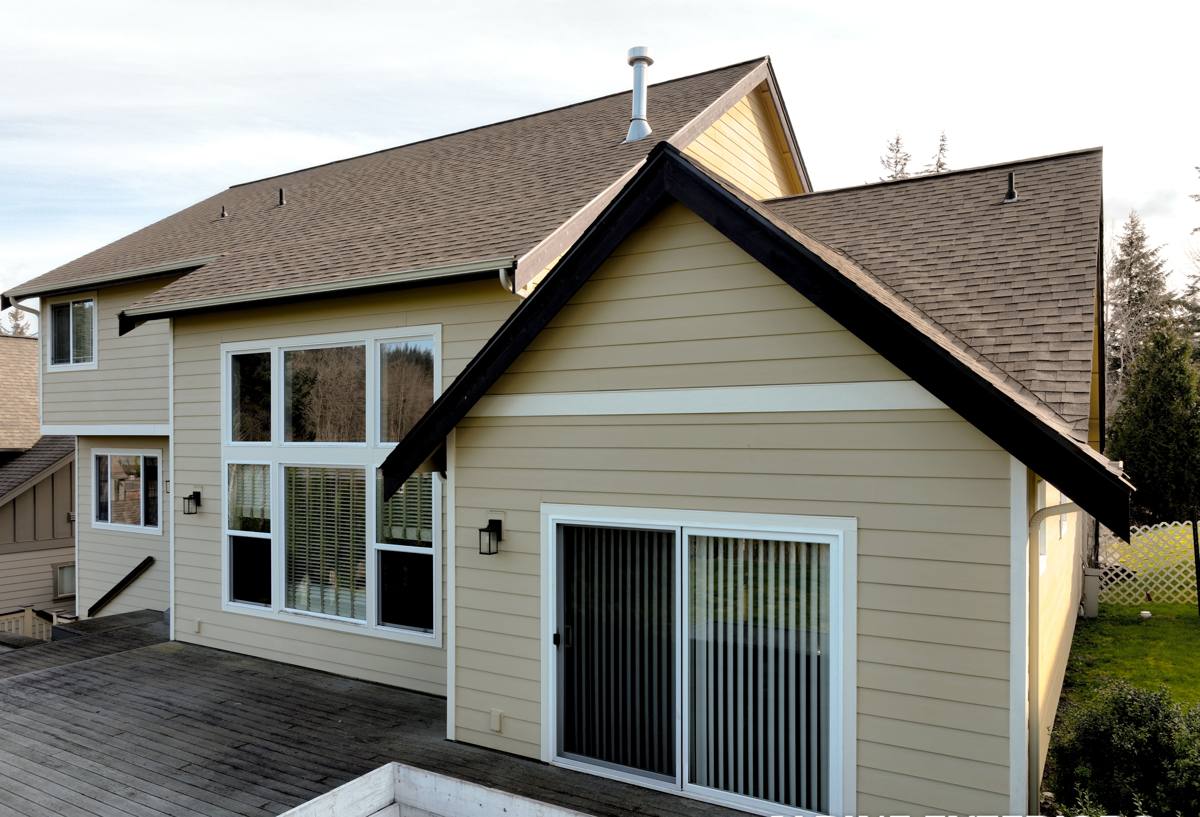
Signs Your Current Windows Are Losing the Fight
What we look for on a first visit
Most homeowners call us after noticing one or two symptoms, not because they've diagnosed a window failure. Here's what those symptoms usually mean:
- Fogging or a hazy film between panes — the seal on a dual-pane unit has failed and moisture is trapped inside the glass
- Soft or discolored wood at the bottom corners of the frame — water has been sitting in the sill longer than it should
- Green or black growth on the sill, trim, or in the weep holes — organic growth holding moisture against the frame
- Drafts you can feel with a hand near the frame on a windy day — the seal around the unit or the flashing behind it has failed
- Difficulty opening, closing, or locking a window that used to operate smoothly — frame swelling or hardware corrosion
- Visible gaps or cracked caulk lines around the exterior trim
Any one of these on its own might just need a repair. Several of them together, especially on windows over 15-20 years old, usually mean it's time to talk replacement rather than patch-and-wait.
What a Correct Custom Window Installation Actually Involves
It's not just the window — it's what's behind it
"Custom" in this context means the window is built to the exact rough opening of your home rather than forced into a stock size, and the installation accounts for how water and wind behave at that specific wall. A correct install includes:
- Removing the old unit and inspecting the rough opening and sill pan for rot, soft framing, or prior water damage before anything new goes in
- Repairing or rebuilding any damaged framing — never installing a new window over a compromised opening
- Installing a proper sloped sill pan so any water that gets past the glass drains outward instead of pooling
- Flashing the opening correctly — building paper or house wrap integrated with flashing tape in the right shingle-lap order so water sheds down and out, not into the wall cavity
- Sealing with the right materials at the right points — not just a bead of exterior caulk around the trim, which fails long before the underlying flashing would if it were done right
- Confirming the unit is level, plumb, and square before final fastening, since a slightly racked frame stresses seals and hardware for the life of the window
Skipping the flashing and sill pan work to save time is the single most common cause of hidden rot we find when we're called out to replace a "failed" window that's really only a few years old.
Choosing a Frame Material for a Lake-Adjacent Property
Matching the material to the environment, not just the budget
There's no single right answer for every home, but the humidity and salt-air exposure around Wiser Lake do narrow the field. Here's how the common options generally compare for this environment:
| Frame Material | Moisture & Humidity Behavior | Maintenance | Typical Fit |
|---|---|---|---|
| Vinyl | Won't rot or corrode; performs well in humid, salt-air conditions | Low — occasional cleaning | Most homes prioritizing value and low upkeep |
| Fiberglass | Very stable in temperature swings and moisture; resists warping | Low | Homes wanting a stronger frame profile or larger openings |
| Wood-clad | Attractive interior wood look, but cladding seams and end grain need careful sealing in wet climates | Higher — requires more diligent sealing and inspection over time | Homeowners set on a specific interior wood aesthetic who understand the upkeep tradeoff |
| Aluminum | Prone to corrosion in salt-influenced air unless well-finished; conducts cold | Moderate to high | Rarely our first recommendation for this specific climate |
We're not against wood-clad or aluminum windows on principle — some homeowners have good reasons to choose them. Our job is to be honest about what each material demands from you over the next 15-20 years in this particular climate, not just what it looks like on install day.
Glass packages worth asking about
Beyond the frame, the glass package matters just as much for a lake-area home. Low-E coatings help manage heat and UV without darkening the room, and argon or double-weatherstripped assemblies help cut down on the condensation that shows up on the interior of older single-pane or poorly sealed windows during Lynden's cold, damp mornings. We'll walk through the options that make sense for your specific exposure — a window facing the lake and prevailing wind doesn't necessarily need the same spec as one on a sheltered side of the house.
Our Process, Start to Finish
What to expect once you call
- On-site assessment — we look at every window in question from both sides, check the current flashing and sill condition where accessible, and talk through what's actually going on rather than assuming every unit needs the same fix
- Honest recommendation — repair versus replace, and which materials fit your home and budget, explained in plain terms
- Custom measurement and ordering — units built to your actual openings, not a generic stock size
- Removal and opening inspection — old windows come out carefully so we can check the framing behind them before anything new goes in
- Proper flashing, sill, and sealing work — the part that determines whether the install lasts
- Final walkthrough — we test operation, check seals, and clean up before we call the job done
Mistakes We Commonly Find From Past Installs
A large share of our Wiser Lake and Lynden-area calls aren't for windows that failed on their own — they're for windows that were never installed correctly to begin with. The most common issues we run into:
- Caulk used as the primary water seal instead of proper flashing behind the trim
- No sloped sill pan, so water that gets past the glass has nowhere to go but into the framing
- House wrap or building paper overlapped in the wrong direction, funneling water into the wall instead of away from it
- Trim reinstalled over rotted framing without addressing the underlying damage
- Stock-size units shimmed heavily to fit an opening they weren't built for, creating uneven stress on the frame
We point these out not to criticize whoever did the original work, but because understanding what went wrong helps homeowners make a better decision the second time around.
Living With Lake-Area Humidity and Moss After Installation
Even a correctly installed window benefits from a little seasonal attention in this climate. A few habits go a long way toward protecting your investment:
- Clear moss and debris from sills and weep holes each fall before the wet season sets in
- Rinse salt film and organic buildup off frames and glass a couple of times a year, especially on sides of the house exposed to prevailing wind off the lake
- Check exterior caulk lines annually for cracking or separation and have them refreshed before they fail
- Keep gutters and downspouts clear so roof runoff isn't sheeting directly down over window heads
None of this is heavy maintenance — it's the kind of seasonal check most homeowners already do for the rest of the exterior. The point is not to skip it just because the windows are new.
Why Local Experience in Wiser Lake and Lynden Matters
A window that performs well in a drier inland climate can still underperform here if it's specified or installed the same way. Crews who work regularly in Whatcom County — and specifically around lake-adjacent properties like Wiser Lake — have already seen how wind-driven rain behaves against these walls, how long moss season really runs here, and which flashing details actually hold up through a full Lynden winter and spring. That's not something you can fully substitute with a generic install checklist written for a different climate.
We're not interested in the fastest install we can do — we're interested in the one that's still sealed tight in fifteen years. That means taking the time to check the opening, do the flashing right, and choose materials that make sense for a home that sits this close to the water and the moisture that comes with it.
Get a Free, No-Pressure Estimate
If your windows around Wiser Lake are fogging, drafting, sticking, or just showing their age, we're happy to take a look and give you an honest read on what they need — repair, replacement, or nothing urgent at all. Fill out the form below to schedule a free estimate; there's no obligation and no pressure, just a straight answer about your home's windows.