 Lynden Exterior
 Building a Deck That Actually Holds Up in Blaine
Blaine sits right on the water, and that changes what a deck has to deal with compared to one built a few miles inland. Salt-laden air off the bay speeds up corrosion on anything metal, driving rain off the Strait finds its way into every gap and seam, and the mild, damp Whatcom County winters mean moss and algae have months to take hold before things dry out again. A deck built with generic, big-box specs might look fine the first year. By year three or four, the fasteners are bleeding rust, the boards are cupping, and there's a green film on every north-facing surface that never quite dries out.
We build and repair decks for homes in Blaine and the surrounding coastal parts of Whatcom County, and this page covers what actually matters for this location specifically — not generic deck-building advice.
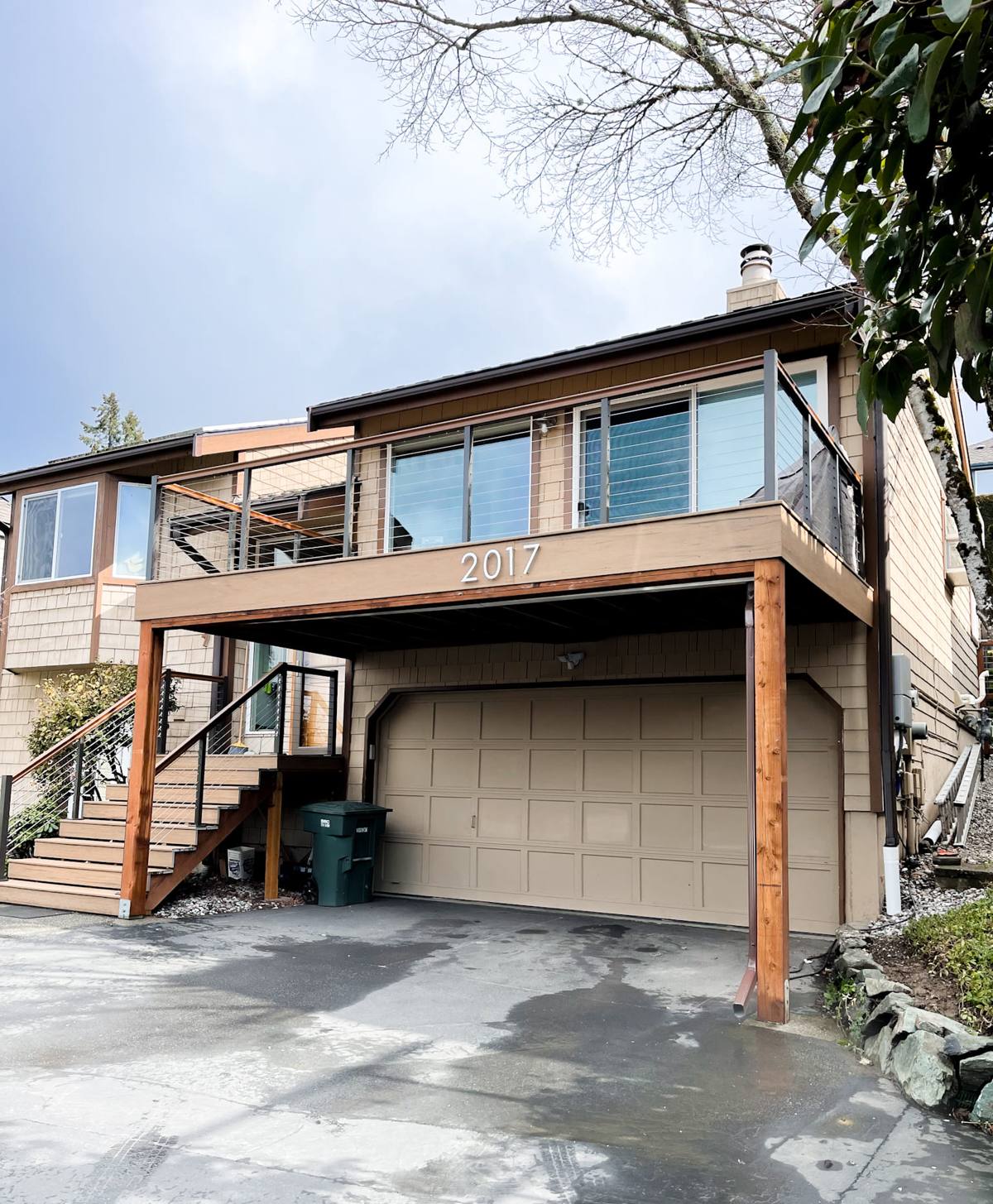
What Coastal Exposure Actually Does to a Deck
Salt Air and Corrosion
Airborne salt doesn't just affect homes right on the shoreline — it travels on the wind and settles on anything exposed, including deck hardware, fasteners, and railing brackets set back from the water. Standard galvanized fasteners and connectors are rated for general outdoor use, not sustained salt exposure. Over time they pit, rust, and eventually stain the wood or fiberglass around them. Once a fastener head starts weeping rust into decking material, that stain is permanent — sanding or cleaning won't fully lift it.
Driving Rain
Wind-driven rain off the water doesn't fall straight down — it gets pushed sideways into ledger boards, stair stringers, and any spot where the deck meets the house. That's where most hidden rot starts, usually behind the siding-to-ledger connection where nobody's looking until there's a soft spot underfoot.
The Long Moss Season
Whatcom County's damp season runs long, and shaded or north-facing deck areas can stay wet for weeks at a stretch. Moss and algae need exactly that kind of sustained moisture, and once established they hold water against the deck surface, making boards slicker and accelerating wear on both wood and composite products.
Decking Material: What Performs Here
There's no single "best" decking material — it depends on budget, maintenance tolerance, and how exposed the deck is. Here's how the common options actually compare for a coastal Whatcom County property.
| Material | Salt Air Behavior | Moss/Algae Resistance | Maintenance | Relative Cost |
|---|---|---|---|---|
| Pressure-treated wood | Good if fasteners are corrosion-rated; wood itself is unaffected by salt | Needs regular cleaning and re-sealing to resist moss | Annual cleaning, re-stain/seal every 2-3 years | Low |
| Cedar | Naturally decay-resistant; still needs corrosion-rated hardware | Moderate — benefits from periodic cleaning | Periodic oiling to maintain color and grain | Mid |
| Composite (capped) | Unaffected by salt itself; use marine-grade fasteners at connections | Better resistance but can still grow algae in shaded, wet spots | Occasional washing, no staining or sealing | Mid-High |
| PVC/cellular decking | Fully inert to salt and moisture | Best moisture shedding of the common options | Lowest — periodic rinse | High |
For homes closer to the water, we lean toward composite or PVC decking paired with stainless or coated fasteners throughout, since the material itself stops being the weak point and the connections become the only thing that needs attention. For homes set back further, quality pressure-treated or cedar with the right hardware is still a solid, budget-conscious choice — it just asks more of the maintenance schedule.
Cost Factors Worth Understanding Before You Get a Quote
| Factor | Why It Moves the Price |
|---|---|
| Height above grade | Taller decks need engineered footings, stairs, and guardrails per code |
| Fastener and hardware grade | Marine-grade or stainless hardware costs more but avoids early corrosion failures |
| Ledger and flashing detail | Proper flashing at the house connection takes more labor but is the single most important rot-prevention step |
| Decking material | Wood, composite, and PVC span a wide cost range, as shown above |
| Site access and slope | Waterfront and hillside lots often need extra excavation, drainage, or crane/hand-carry work |
Framing and Substructure Details That Matter Here
The framing is the part nobody sees once the deck is finished, which is exactly why it's where corners get cut. For a coastal build, we treat a few details as non-negotiable:
- Ledger board flashing that directs water away from the house, not just a bead of caulk behind the ledger
- Joist tape or a comparable protective barrier on top of every joist to stop standing water from soaking into end grain
- Stainless steel or heavy hot-dip galvanized structural connectors rated for coastal/marine exposure, not standard interior-rated hardware
- Proper joist spacing and blocking for whichever decking material is going on top, since composite and PVC products often have different span requirements than wood
- Post bases set above grade and away from standing water, with concrete footings sized for local frost depth and soil conditions
Drainage, Slope, and Keeping Moss Off the Deck
A deck surface that holds water is a deck surface that grows moss. Correct construction builds in a slight slope away from the house so water sheds instead of pooling, and it accounts for airflow underneath the deck so the framing can actually dry out between rain events. On lots with limited underdeck ventilation — common where a deck sits close to grade or against a foundation wall — we look at whether a drainage system or additional venting is worth adding, since trapped moisture under a low deck is one of the more common causes of premature rot in this area.
Board spacing also matters more here than in drier climates. Too tight, and debris and moisture get trapped between boards where moss gets a foothold. Too wide, and the deck feels unfinished and can be uncomfortable underfoot. We set gapping based on the specific material's expansion behavior, since wood, composite, and PVC all move differently with moisture and temperature.
Railings and Hardware: Where Corrosion Shows Up First
Railing posts, baluster brackets, and stair hardware are usually the first place salt-air corrosion becomes visible, because they're fully exposed on all sides and often made of lighter-gauge metal than structural connectors. Aluminum railing systems with a marine-grade finish, or wood/composite railing with stainless fasteners, hold up far better here than standard powder-coated steel systems designed for general residential use. It's a detail that's easy to skip to save a little money up front, and one of the first things that looks bad within a year or two on a coastal property.
Our Process
- On-site assessment — we look at grade, drainage, sun/shade exposure, and how close the deck sits to the water or open wind, since that changes our material and hardware recommendations.
- Design and material selection — we walk through the options above based on your budget and how much maintenance you actually want to do.
- Permitting — decks above certain heights or attached to the home typically require a permit; we handle that process rather than leaving it on the homeowner.
- Construction — proper flashing, corrosion-rated fasteners, and correct drainage slope are built in from the start, not treated as upgrades.
- Final walkthrough — we go over basic care specific to the material installed so you know what upkeep to expect and what's genuinely optional.
Maintenance Checklist for a Blaine Deck
Whatever material you choose, a few habits make a real difference in how long it looks good in this climate:
- Sweep debris off the deck regularly, especially in fall and winter when organic matter feeds moss growth
- Rinse or wash the surface at least once or twice a year, more often on shaded sections
- Check fastener heads and railing hardware annually for early rust or pitting
- Keep gutters and downspouts clear so roof runoff isn't dumping extra water onto the deck
- Re-seal or re-stain wood decking on the schedule appropriate to the product — don't wait until it visibly needs it
- Trim back vegetation that shades the deck and slows drying after rain
Why Local Experience on This Coast Matters
A deck built to a generic spec sheet can pass inspection and still fail early in Blaine's specific conditions. Knowing which fastener grade actually holds up against salt air, how much slope a given lot needs for real drainage, and where moss tends to take hold on a north-facing elevation isn't something you get from a manufacturer's install guide — it comes from building and maintaining decks in this exact environment, season after season. That's the experience we bring to every custom deck project in Blaine and the rest of Whatcom County.
If you're planning a new deck or need an honest look at an aging one, we're happy to come take a look. Fill out the form below for a free, no-pressure estimate.