 Lynden Exterior
 Windows Built for Custer's Weather, Not Just the Showroom
Custer sits in that stretch of Whatcom County close enough to the water that salt-laden air is a real factor, and far enough into the flat farmland that wind has nothing to slow it down before it hits a house. Add in the Pacific Northwest's long wet season and the moss that comes with it, and you get a set of conditions that are harder on windows than most manufacturers' warranty language assumes. A window that performs fine in a dry inland climate can start failing here in five or six years if it wasn't installed with this specific environment in mind.
We're a Lynden-based crew, and Custer is part of our regular service area — not a once-in-a-while trip. That matters more than it sounds like it should, and we'll explain why further down.
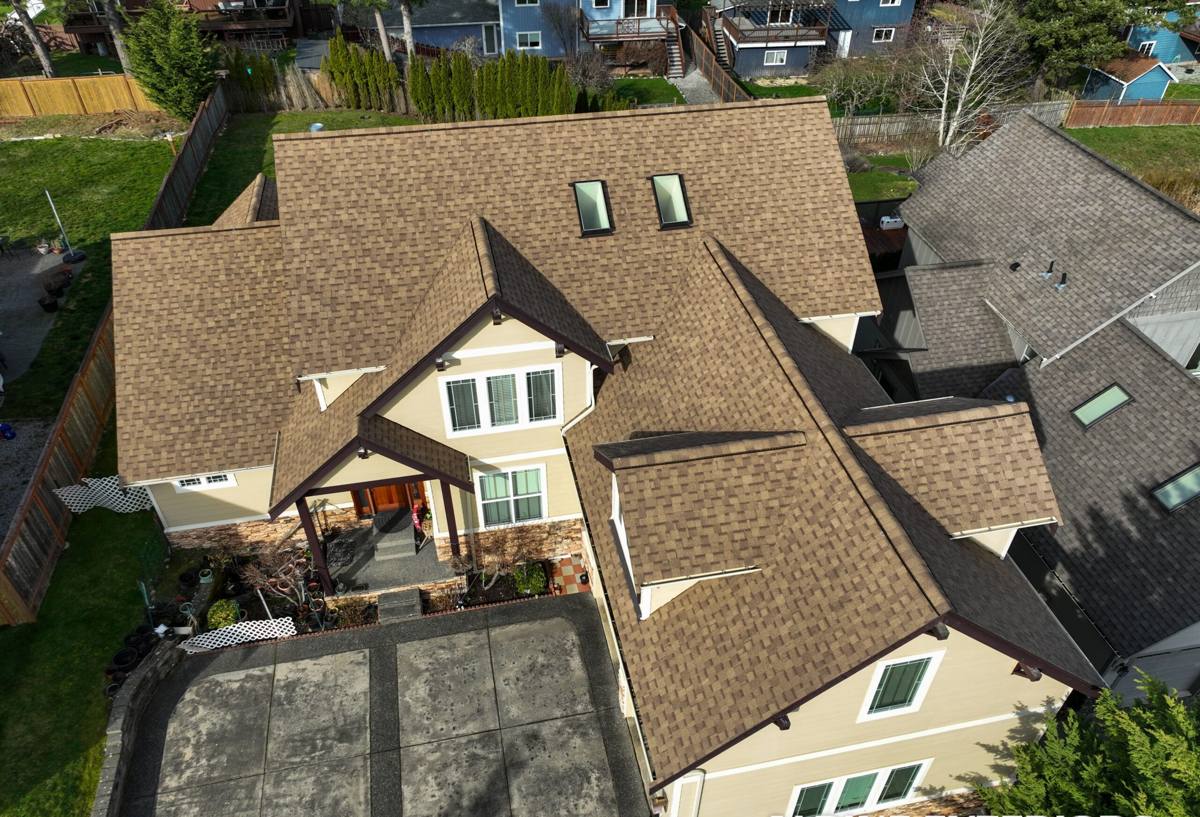
What This Climate Actually Does to a Window Installation
Salt air and hardware corrosion
Homes closer to Semiahmoo Bay and the surrounding coastline take on fine salt particulate in the air, especially during winter storms. That salt settles on window hardware, screen frames, and exposed fasteners. Over time it accelerates corrosion on lower-grade hinges, locks, and cranks, and it can pit unprotected aluminum trim. This isn't a reason to avoid windows near the coast — it's a reason to spec hardware and finishes that are rated for it, and to seal fastener heads properly during install so moisture and salt can't work their way in.
Driving, wind-driven rain
Whatcom County storms often come in sideways rather than straight down. That means rain gets pushed under trim, behind J-channel, and into any gap in the weather barrier that a calmer climate installer might not worry about. Window leaks around here are rarely a flat-roof-style pooling problem — they're almost always wind-driven water finding a horizontal or diagonal path in through a flashing detail that was done "good enough" instead of correct.
Moss and prolonged moisture exposure
The long wet season keeps north-facing walls, shaded trim, and anything under tree cover damp for months at a stretch. Moss doesn't just grow on roofs — it establishes on window sills, exterior trim, and anywhere organic debris collects against wood. Sitting moisture like that breaks down unsealed wood trim and compromises caulking faster than most homeowners expect.
What a Correct Installation Involves
A window installation is only as good as the parts nobody sees once the trim goes back on. For this climate, the details below aren't optional upgrades — they're the baseline for a job that's supposed to last.
- Sill pan flashing under every window opening, so any water that does get past the outer defenses drains back outside instead of into the wall framing.
- Weather-resistive barrier integration — the house wrap has to lap correctly over the flashing at the head, sides, and sill, shingle-style, so water always sheds downward and outward.
- Backer rod and sealant at the exterior trim joint, sized and installed so it can flex with seasonal movement instead of cracking after one winter.
- Proper shimming and squaring so the sash operates correctly and the weatherstripping seals evenly — a slightly racked frame will leak air and water no matter how good the window itself is.
- Insulation in the gap between the frame and rough opening, without overpacking it, which can bow the frame and cause operational problems.
Skipping any one of these doesn't usually show up on install day. It shows up two or three wet seasons later, as a stain on drywall below a window or a soft spot in the sill.
Choosing Window Materials for a Custer Property
There's no single "best" window material — the right call depends on the home's exposure, budget, and how much maintenance the owner wants to take on. Here's how the common options stack up under this region's conditions specifically:
| Material | Salt air / corrosion behavior | Moisture handling | Maintenance |
|---|---|---|---|
| Vinyl | Won't corrode; hardware quality varies by manufacturer | Handles moisture well, no rot risk | Low — occasional cleaning |
| Fiberglass | Excellent — very stable, resists pitting | Very good; dimensionally stable in wet/dry cycles | Low to moderate |
| Aluminum-clad wood | Cladding protects well; interior wood needs care if seals fail | Good if flashing details are correct; wood core is the failure point if water gets in | Higher — finish and seal upkeep |
| Bare aluminum frame | Prone to pitting and corrosion near salt air over time | Poor thermal performance, condensation-prone | Moderate to high |
For most Custer-area homes, we steer clients toward vinyl or fiberglass for the balance of cost, corrosion resistance, and low upkeep. Wood-clad windows are a fine choice for owners who want that look and are committed to keeping finishes maintained, but we're honest that it's a bigger long-term commitment near the coast than it would be further inland.
How We Approach a Custer Window Project
1. On-site assessment
We look at the home's actual exposure — which walls take direct weather, whether there's existing moss or moisture staining, and what condition the current flashing and trim are in before we ever talk product.
2. Measurement and product selection
Exact opening measurements, plus a conversation about material, glass package, and whether the project calls for full-frame replacement or an insert unit.
3. Removal and opening prep
Old units come out carefully so we can inspect the rough opening for hidden rot or prior water damage — this is often where we find problems from a past installation that wasn't done to this standard.
4. Flashing, wrap, and install
Sill pan, house wrap integration, shimming, and fastening, done in the sequence that keeps water moving out, not in.
5. Sealing and trim
Exterior sealant and trim work sized for the joint, plus interior finish work to match the home.
6. Final walkthrough
We operate every window with the homeowner present and check the exterior seal by eye before calling the job done.
What We Commonly Find on Older Custer Homes
A lot of the calls we get in this area aren't first-time installs — they're repairs of a previous job, or replacements of original windows from a build era where flashing standards were looser. The recurring issues we see:
- Sill rot from years of wind-driven rain finding a gap that was never flashed properly
- Single-pane or early dual-pane aluminum-frame windows with pitted, hard-to-operate hardware
- Caulking that was used as the primary water barrier instead of proper flashing — it looks fine until it cracks
- Moss and organic buildup at the sill trapping moisture against the wood
None of these are unusual for the area or a reflection on the homeowner — they're just what this climate does to a window over enough years, especially if the original install cut corners on the parts you can't see afterward.
Why a Crew That Already Works Custer Matters
Installers who mostly work drier, calmer climates sometimes treat flashing and sealant as a formality. A crew that regularly works Custer and the rest of Lynden's surrounding area sees the failure points firsthand — the callbacks, the rot, the corroded hardware — and builds the install around avoiding them from the start. We also know how to time exterior work around this region's weather windows, since a window opening left exposed during the wrong week of a Whatcom County winter can create its own problems.
Being local also means we're not disappearing after the invoice clears. If something needs a look two years down the road, we're still working in the neighborhood.
After Installation: What Keeps Windows Performing
- Rinse salt residue off frames and hardware a few times a year, especially after winter storms
- Keep weep holes clear of debris so water can drain out as designed
- Remove moss or organic buildup from sills and nearby trim before it holds moisture against the surface
- Check exterior caulking annually and touch up any cracked or separated sections before the wet season
- Operate each window through its full range a couple times a year so hardware doesn't seize
What Affects the Cost of a Custer Window Project
| Factor | Why it matters |
|---|---|
| Full-frame vs. insert replacement | Full-frame addresses hidden rot and flashing issues but costs more in labor; inserts are faster but only appropriate if the existing frame and flashing are sound |
| Number and size of openings | Larger and more numerous windows mean more material and labor time |
| Material choice | Vinyl is typically the most budget-friendly; fiberglass and clad-wood cost more upfront |
| Condition of the existing opening | Rot or prior water damage found during removal adds repair work before the new unit goes in |
| Access and height | Second-story or hard-to-reach openings take more time and equipment |
We give a straightforward, itemized estimate once we've actually seen the openings — not a phone-quote guess — because the condition behind the old trim matters as much as the window itself.
Get a Straight Answer for Your Custer Property
If you're dealing with a drafty window, a soft spot at a sill, or you're just planning ahead before the next wet season sets in, we're happy to take a look and give you an honest read on what your home actually needs. Fill out the form below for a free, no-pressure estimate — we'll walk the property, answer your questions, and tell you plainly what we'd recommend and why.