 Lynden Exterior
 Custer's Climate Is Harder on Siding Than Most Homeowners Realize
Custer sits close enough to the Strait of Georgia and Birch Bay that salt-laden air is a regular part of the weather, not an occasional event. Combine that with the driving, wind-blown rain that rolls through Whatcom County most of the year, and you have two forces working against exterior siding at the same time: corrosion and moisture intrusion. Add a moss season that can stretch from late fall through spring in the shaded, tree-lined lots common around Custer and Lynden, and you get a third slow-motion problem — organic growth that holds moisture against the wall longer than it should ever sit.
None of this is unique to one house. It's the baseline condition for exterior materials anywhere in this part of Whatcom County. The difference between siding that looks good at year 20 and siding that's delaminating, staining, or rotting at year 8 almost always comes down to two things: what material was installed, and whether it was installed correctly for this climate. This page covers both, specifically for siding installation work in Custer.
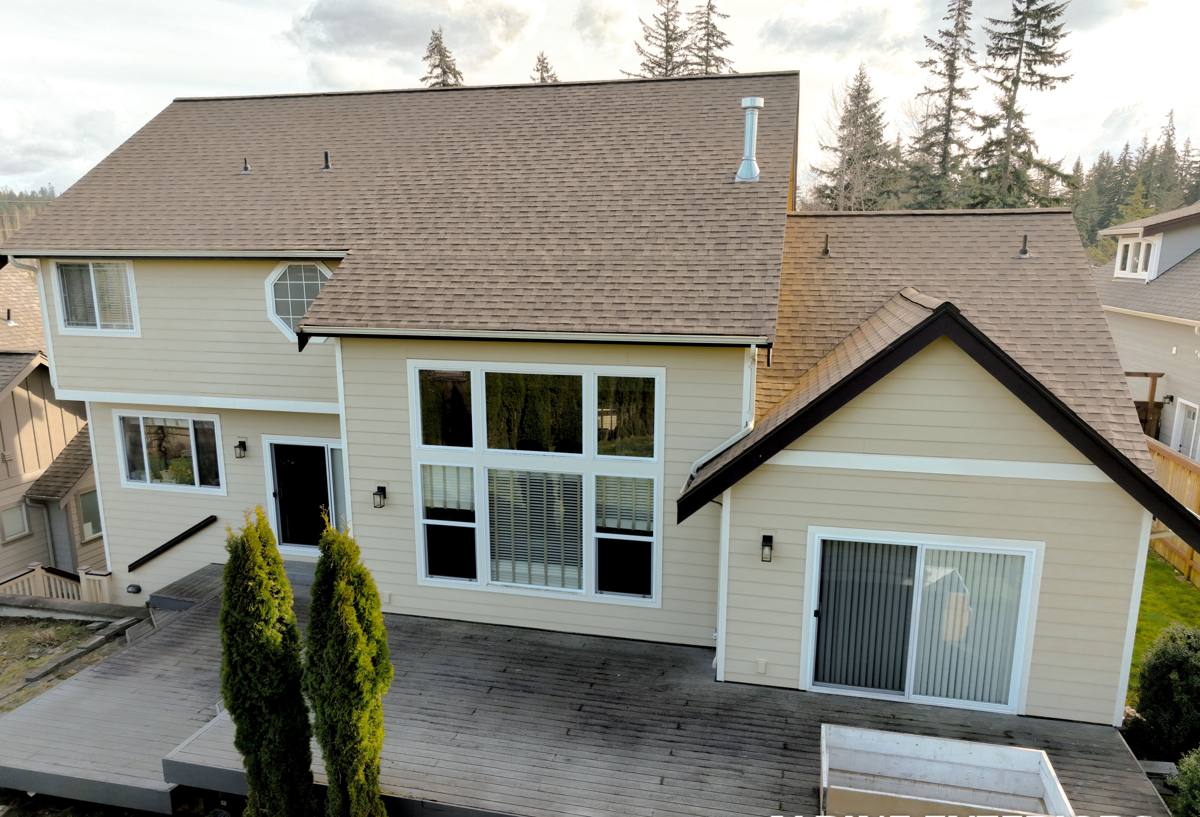
What Salt Air, Rain, and Moss Actually Do to a Wall
Salt air
Airborne salt accelerates corrosion on any exposed metal — fasteners, flashing, trim edges — and it can leave a fine residue on siding surfaces that holds moisture longer than clean rainwater would. Materials that rely on paint film or a coating to protect a wood or wood-composite core are the most vulnerable, because once that film is compromised the substrate is exposed directly to salt-carrying moisture.
Driving rain
Rain that comes in sideways, rather than straight down, tests every horizontal joint, seam, and penetration on a wall — window and door trim, hose bibs, light fixtures, deck ledgers. A siding system depends on correct lap, flashing, and a drainage plane behind it to handle this. Cosmetic caulking is not a substitute for that drainage plane, and driving rain is exactly the condition that exposes the difference.
Long moss season
Moss and algae need shade, moisture, and time — Custer's tree cover and damp shoulder seasons provide all three. On siding that can absorb or trap moisture, sustained moss growth keeps the surface wet for weeks at a stretch, which is a slow but steady path to rot, swelling, or coating failure depending on the material underneath it.
Why We Install James Hardie Fiber Cement — And Nothing Else
Lynden Exterior Co. installs James Hardie fiber cement siding exclusively. We don't install vinyl, LP SmartSide, Cemplank, Allura, primed spruce, or cedar. That's not a marketing position — it's a standard we hold because of what we see on wall inspections and tear-offs across Whatcom County, and because fiber cement's material properties line up with the specific stresses Custer homes face.
- Non-combustible core: James Hardie siding is made from cement, sand, and cellulose fiber — it doesn't provide fuel to a fire the way wood-based products can.
- Engineered for moisture, not just coated against it: the fiber cement substrate itself doesn't swell, delaminate, or absorb water the way wood-composite panels can when a seam or coating fails.
- ColorPlus factory finish: the color is baked on in a controlled factory process rather than field-applied, which gives a more consistent, fade-resistant, and touch-up-resistant finish than job-site painting.
- Climate-engineered HZ product lines: Hardie manufactures regional HZ5 and HZ10 formulations specifically tuned for different moisture and freeze conditions across the country, rather than one generic product for every climate.
- A warranty structure built around the factory finish and the substrate together, which matters more in a climate that stresses both.
We're not going to tell a homeowner that every alternative product is a bad choice everywhere — vinyl and engineered wood sidings have legitimate uses and price points. What we will say plainly is that after years of installation and repair work in this specific climate, we've standardized on the one material system that we're confident holds up to salt air, driving rain, and a long moss season without the maintenance burden or moisture risk the alternatives carry here.
What a Correct Siding Installation Involves
The material is only half the equation. A James Hardie installation done to spec — versus one done to "looks fine from the street" — is the difference that actually determines how the wall performs in 10 or 20 years. Correct installation in this climate means:
A working drainage plane
Housewrap or building paper installed correctly, lapped shingle-style so water sheds outward and down, not into the wall assembly.
A rainscreen gap where conditions call for it
A small air gap behind the siding lets any moisture that does get past the cladding drain and dry out, instead of sitting against the sheathing — especially valuable on shaded, north-facing, or heavily rain-exposed elevations common around Custer.
Correct flashing at every penetration
Windows, doors, hose bibs, light fixtures, and deck ledgers are where driving rain finds its way in. Flashing has to be layered correctly with the drainage plane, not just caulked over.
Manufacturer-specified fastening and clearances
James Hardie publishes exact fastener spacing, gapping, and ground/roof clearance requirements. Skipping these doesn't void the installation's appearance right away — it shows up as premature edge swelling, cracking, or warranty denial years later.
Factory-finished ColorPlus caulk and touch-up matched to the system
Using the wrong sealant or paint on ColorPlus siding can void the finish warranty and cause visible mismatch over time.
Our Installation Process
- On-site assessment: we walk the exterior, check current siding and sheathing condition, note problem elevations (shaded sides, low-clearance areas, existing moss or moisture staining), and measure.
- Tear-off and sheathing inspection: once old siding is off, we inspect the sheathing and framing underneath for rot or existing water damage before anything new goes on — this is the point where hidden problems get caught, not hidden.
- Drainage plane and flashing installation: housewrap, flashing at every penetration, and a rainscreen gap where the elevation calls for it.
- James Hardie panel or lap installation: installed to manufacturer fastening, gapping, and clearance specifications for our HZ climate zone.
- Trim, caulking, and finish detailing: using products compatible with the ColorPlus finish system.
- Final walkthrough: we review the completed work with the homeowner before calling the job done.
Signs a Custer Home Needs Siding Attention Now
- Persistent moss or algae streaking that returns within a season of cleaning
- Soft or spongy spots when you press on the siding, especially near the bottom courses
- Visible gaps, warping, or cupping at panel edges
- Paint that's chalking, peeling, or needing repainting more often than every few years
- Rust staining running down from fasteners or trim
- Rising heating or cooling costs with no other clear explanation, which can point to a compromised wall assembly
Cost Factors for Siding Installation in Custer
Every home is different, but the line items that actually move the price are consistent. We give exact numbers only after an on-site estimate — general ranges below are for planning purposes.
| Factor | Why It Matters Here |
|---|---|
| Tear-off vs. install over existing wall | Tear-off adds labor but lets us inspect and correct sheathing/drainage issues that are common on older, rain-exposed homes |
| Panel vs. lap profile | Different labor and material costs; also affects appearance and how the drainage plane is detailed |
| Number of penetrations (windows, doors, fixtures) | Each one needs correct flashing — more penetrations mean more detail work, which matters most in driving-rain conditions |
| Elevation exposure | Shaded, north-facing, or wind-exposed walls often need extra rainscreen or drainage attention due to moss and moisture load |
| Sheathing/rot repair discovered during tear-off | Common on homes with prior moisture intrusion; addressed before new siding goes on, not after |
| Trim and finish level | ColorPlus color selection and trim detailing affect material cost but not long-term durability |
Living With James Hardie Siding in a Salt-Air, High-Moss Climate
Correctly installed fiber cement siding is low-maintenance, not no-maintenance. In Custer's conditions, a simple annual rinse to knock down early moss or salt residue buildup — before it establishes and holds moisture — goes a long way toward preserving the ColorPlus finish and keeping the wall dry. Avoid pressure washing directly into seams or under panel edges, since that can force water past the drainage plane rather than off the surface. Keep gutters and downspouts clear so runoff isn't concentrating extra water at specific wall sections, and keep an eye on caulking around trim and penetrations over the years, refreshing it with a compatible product when it starts to crack or pull away.
What to Look For in a Custer Siding Contractor
Siding installation is largely invisible once it's done — the drainage plane, flashing, and fastening are all hidden behind the finished wall. That makes the contractor's process more important than almost any other factor, since a homeowner can't verify the hidden work after the fact without tearing it back open.
- Ask specifically how they handle the drainage plane and rainscreen detailing, not just "do you use housewrap"
- Ask whether they follow James Hardie's published fastening and clearance specs, and whether they're a certified Hardie installer
- Ask how they handle sheathing repair if rot is found during tear-off, and how that's priced
- Ask for their approach to flashing at windows, doors, and other penetrations — this is where most rain intrusion problems originate
- Confirm they're licensed, bonded, and insured to work in Washington
- Ask whether they've worked specifically in Custer, Lynden, or similar Whatcom County coastal-exposure areas — climate-specific experience shows up in the details
If your Custer home's siding is showing moss, staining, soft spots, or just isn't holding up the way it should against the rain and salt air out here, we'd be glad to take a look. Fill out the form below for a free, no-pressure estimate — we'll walk the exterior with you and give you a straight answer on what your home actually needs.