 Lynden Exterior
 Composite Decking for Sumas Homes
Sumas sits at the edge of Whatcom County, close enough to the border and the Nooksack lowlands that its weather runs damp for most of the year. Homeowners here tend to know their yards better than most — where water pools after a storm, which corner of the property stays shaded and green longer than it should, how fast a wood surface turns slick once the fall rains settle in. Composite decking has become the go-to option for exactly this kind of climate, because it doesn't absorb water the way solid wood does and it doesn't need refinishing every year or two just to stay presentable.
That said, "composite" isn't one product — it's a category, and the difference between a deck that looks good for fifteen years and one that starts showing problems in three usually comes down to the board choice, the framing underneath, and whether the installer actually built in the drainage and airflow a wet climate demands. This page is about doing that correctly for a Sumas property, not about composite decking in general.
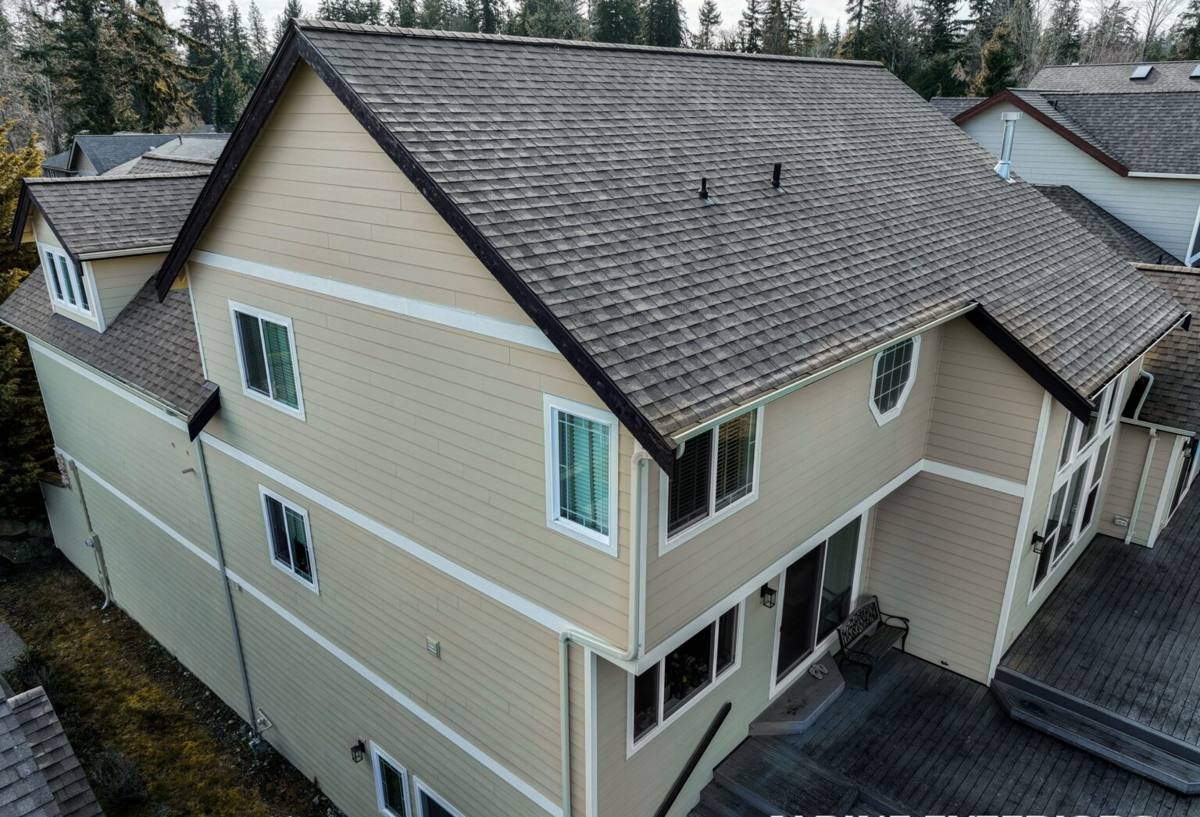
What a Long Wet Season Does to a Deck
Whatcom County doesn't get hard freezes as often as the interior of the state, but it gets a lot of moisture, and moisture that lingers is what actually damages a deck — not any single storm. Driving rain gets under railings and around post bases. Shaded areas near siding or fencing stay damp long after the rest of the yard has dried out, which is exactly where moss and algae take hold. And when a cold snap does hit a saturated deck surface, whatever water is trapped in the wrong place can freeze, expand, and work loose fasteners or crack finishes over a few seasons.
None of that is unique to Sumas, but it's a bigger factor here than it would be somewhere drier. A deck built without enough gap between boards, without ventilation underneath, or with the wrong flashing at the ledger board will hold water in ways that shorten its life regardless of what the boards themselves are made of.
The Specific Problems We See
- Moss and green algae film building up on boards that stay shaded most of the day
- Standing water at low spots where boards weren't sloped or spaced correctly
- Fastener corrosion or loosening where hidden clips weren't rated for exterior moisture exposure
- Mildew staining at the base of railing posts and around housing where splashback collects
- Substructure rot hidden under decking that was installed without a ventilation gap
What a Correct Composite Deck Installation Involves
A composite deck is only as good as what's underneath it. The boards themselves resist rot, but the frame, fasteners, and flashing still need to be built for a wet climate.
Framing and Ledger Attachment
If the deck attaches to the house, the ledger board connection needs proper flashing to keep water from tracking behind the siding and into the wall assembly — this is one of the most common failure points on older decks we're asked to repair or replace. Joists should be spaced to the manufacturer's spec for composite (often tighter than typical wood spacing), and any joist that will sit under a picture-frame border or diagonal board pattern needs additional blocking.
Ventilation and Drainage Underneath
Composite boards don't rot, but the framing under them can if air can't move and water can't escape. We build in a consistent air gap between the ground or a lower structure and the deck frame, and we make sure grading or gravel below the deck actually sheds water instead of holding it.
Fasteners and Hardware
Hidden fastener clip systems give the cleanest look and avoid the screw-hole pooling that shows up on face-screwed boards over time, but they have to be matched to the specific board profile and rated for the moisture exposure. Mixing generic hardware with a name-brand board is one of the more common corner-cutting shortcuts we see, and it's usually the first thing to fail.
Board Spacing
Composite expands and contracts with temperature and moisture more than most homeowners expect. Correct gapping between boards isn't just for drainage — it's what keeps the deck from buckling or gapping unevenly a few years in.
Choosing the Right Composite Board
Not all composite decking behaves the same way in a wet, shaded climate. The biggest distinction is whether the board is fully capped (a protective polymer shell wrapped around a wood-plastic core) or uncapped (the composite material exposed on all sides).
| Board Type | Moisture Behavior | Maintenance | Best Fit |
|---|---|---|---|
| Capped composite | Shell resists moisture absorption and staining | Occasional wash; no sealing or staining needed | Shaded, damp, or moss-prone areas of the yard |
| Uncapped composite | Can absorb some moisture at cut edges and surface over time | Periodic cleaning; more prone to surface mildew in shade | Sunnier, better-ventilated spots |
| PVC (cellular) decking | No wood content; essentially moisture-proof | Lowest maintenance; wash as needed | Full-shade or ground-level installs with poor airflow |
For most Sumas properties — especially decks with any tree cover, north-facing exposure, or proximity to fences and outbuildings that block sun and airflow — we lean toward capped composite or PVC on the shaded portions of a deck. It costs more up front than uncapped material, but it's the difference between a wash-down twice a year and a board that's holding onto a green film no matter how often it's cleaned.
Our Process
We start with an on-site look at the actual conditions — sun exposure through the day, drainage patterns in the yard, and the condition of any existing structure if this is a replacement. From there:
- Assess the substructure — footings, ledger connection, and joist condition, replacing or reinforcing anything that won't hold up under a new deck
- Plan drainage and ventilation — grading, gravel, and airflow gaps sized for the site, not a generic template
- Select board and hardware together — matched fastener systems rated for the specific composite product, not mixed-and-matched hardware
- Install with correct spacing and flashing — including ledger flashing and picture-frame blocking where the design calls for it
- Final walkthrough — railing, stair, and edge details checked before we call the job done
Living With a Composite Deck in a Moss Climate
Composite decking cuts maintenance drastically compared to wood, but "low maintenance" isn't "no maintenance" in a climate this wet. A simple seasonal routine keeps a composite deck looking like new instead of slowly losing the fight to moss.
- Sweep leaves and debris off the deck regularly in fall — trapped organic matter is what feeds moss and algae growth
- Rinse or lightly scrub shaded areas a couple of times a year, even if sunny sections look fine
- Keep gutters and downspouts near the deck clear so runoff isn't dumping directly onto boards or railings
- Check that furniture and planters aren't sitting directly on boards long-term without airflow underneath
- Confirm drainage gaps between boards stay clear of compacted debris, especially at board ends
What Affects the Cost
| Factor | Why It Matters |
|---|---|
| Board type (capped vs. uncapped vs. PVC) | Capped and PVC products cost more per square foot but need far less upkeep in shaded, damp spots |
| Substructure condition | Reinforcing or replacing an old frame adds cost but is not optional if the existing structure is compromised |
| Drainage and grading work | Sites with poor natural drainage need more prep before decking goes down |
| Railing and stair complexity | Multi-level decks, custom railings, and stairs add labor beyond flat square footage |
| Fastener and hardware system | Matched hidden-fastener systems cost more than face-screwing but hold up better over time |
We give a firm number after seeing the site, not a phone-quote guess — the drainage and framing work underneath is often what separates a fair estimate from one that misses real conditions.
Why Local Experience in Sumas Matters
A contractor who mostly works drier inland climates or bigger metro suburbs isn't necessarily thinking about moss, shade patterns, or how a property drains after a week of steady rain — because it isn't the daily reality of their job sites. Working consistently around Lynden and the smaller Whatcom County communities near it, including Sumas, means we're used to designing for that reality by default: enough ventilation under the deck, the right board for the shaded side of the yard, flashing details that hold up through a full wet season, not just the summer months. It's a small set of decisions, but they're the ones that decide whether a composite deck still looks good in year eight or is already fighting moss by year three.
If you're weighing composite decking for a home in Sumas, we're happy to take a look at your yard, talk through board options for your specific sun and shade conditions, and give you a straightforward, no-pressure estimate — just fill out the form below.