 Lynden Exterior
 Siding Replacement Is a Different Job in Blaine Than Almost Anywhere Else in the County
Blaine sits at the northern tip of Whatcom County, close enough to Semiahmoo Bay and Drayton Harbor that salt air is a daily condition for most homes in town, not an occasional inconvenience. Pair that with driving rain that comes ashore sideways off the water during winter storm systems, and a moss season that barely takes a break most years, and you get a climate that wears through exterior siding faster and less evenly than it does twenty miles inland. We're based in Lynden and work Blaine regularly, and this page is specifically about siding replacement for Blaine homes — full re-siding, not spot repair — what drives the decision to replace rather than patch, what the job actually involves, and what it costs to do right.
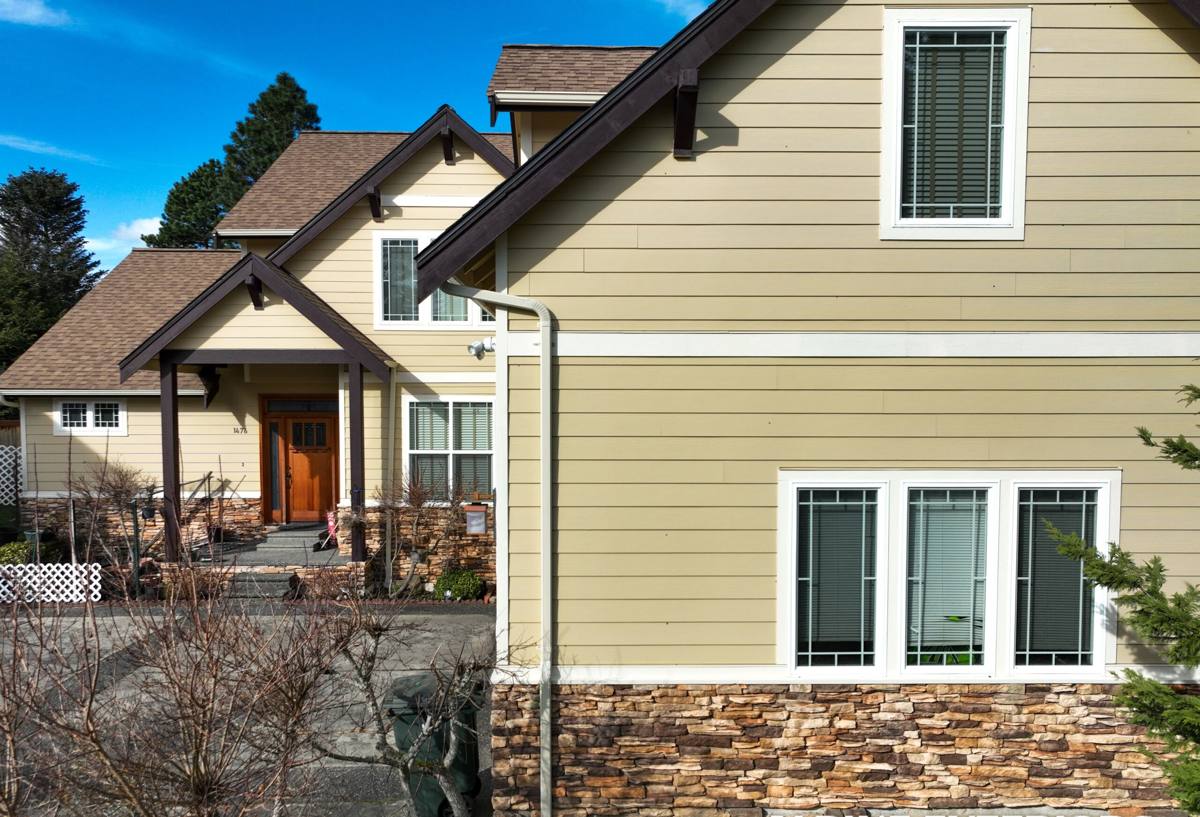
We install James Hardie fiber cement exclusively. That's a professional standard we hold to across every replacement we do in this town, and it shapes every recommendation in this page.
Signs a Blaine Home Needs Full Replacement, Not a Repair
Not every siding problem calls for tearing the whole exterior off. A cracked board, a loose section around a hose bib, or storm damage limited to one wall can often be repaired or partially replaced without touching the rest of the house. Full replacement becomes the right call when the damage is widespread, when it points to a moisture problem behind the siding rather than just on the surface, or when the existing material has simply reached the end of its service life. In a coastal town like Blaine, that tipping point tends to arrive sooner than it would further inland, because salt air and wind-driven rain don't give a marginal siding job much room to age gracefully.
| Situation | Repair Usually Makes Sense | Full Replacement Usually Makes Sense |
|---|---|---|
| Damage location | Limited to one section, wall, or a few boards | Spread across multiple walls or the whole exterior |
| Underlying cause | Isolated impact damage, a single failed board | Moisture behind the siding, failing house wrap, or widespread rot |
| Material age and condition | Newer siding, matching material still available | Original siding at or past expected service life, discontinued profile or color |
| Softness or sponginess when pressed | None found in surrounding areas | Present in multiple spots, especially low on walls or near trim |
| Moss and staining pattern | Surface-level, cleans off and stays off | Recurs quickly, tied to soft or discolored substrate underneath |
A few specific warning signs are worth checking directly on a Blaine home before deciding which path makes sense:
- Siding that feels soft or spongy when pressed, particularly along the bottom courses or around window and door trim
- Moss or dark staining that comes back within weeks of cleaning, rather than months
- Visible warping, cupping, or separation at seams and butt joints
- Paint that's peeling or bubbling in patches rather than just fading evenly
- Rising utility bills alongside drafts or temperature swings that suggest the wall assembly itself, not just the siding surface, is compromised
- Siding that's original to a home built more than a couple of decades ago, especially on walls that face the water or stay shaded most of the day
Why Full Tear-Off Beats Installing Over Existing Siding
One shortcut some contractors offer is installing new siding directly over the old material instead of tearing it off first. It's faster and cheaper on the front end, and in a dry, low-moisture climate it can sometimes be a defensible option. In Blaine, we don't recommend it, and on most jobs we won't do it. Covering old siding also covers up whatever condition that siding is hiding — soft sheathing, trapped moisture, or house wrap that's already failed. In a town where wind-driven rain and salt air are constant pressures, sealing that condition behind a new layer doesn't fix it, it just delays when it becomes visible again, usually after the damage has spread further.
A full tear-off also lets us do the two things that actually determine how long the new siding lasts: inspect and repair the sheathing underneath, and install a correct, continuous water-resistive barrier and drainage plane before anything new goes up. Neither of those steps is possible without removing what's already there. It's more disruptive and it costs more upfront, but it's the difference between a replacement that resets the clock on the whole wall assembly and one that just puts a new face on an old problem.
What Happens During a Blaine Siding Replacement
Inspection and Scope
Every replacement starts with a walk of the property, looking at how exposure varies across the house — which walls face open water and take the brunt of wind-driven rain, which stay shaded and hold moisture longest, and where existing moss, staining, or soft spots suggest damage that isn't visible yet from the ground. That inspection sets the real scope, rather than a flat per-square-foot number that assumes every wall is in the same condition.
Tear-Off and Disposal
Old siding, and any trim or flashing being replaced along with it, comes off down to the sheathing. This is also the point where hidden problems surface: soft sheathing, past water intrusion, or house wrap that's torn, gapped, or improperly lapped. We'd rather find that now than have it found by the next contractor in ten years.
Sheathing and Substrate Repair
Any sheathing that's soft, delaminated, or water-damaged gets cut out and replaced before anything new goes on the wall. Skipping this step is one of the most common ways a siding replacement fails early — new siding installed over compromised sheathing is only as good as what it's fastened to.
Water-Resistive Barrier and Drainage
A new house wrap or water-resistive barrier goes on next, lapped correctly at every seam and penetration so wind-driven rain has nowhere to track behind it. On most Blaine homes we also build in a drainage gap behind the siding, so any moisture that does get past the outer surface has a path to drain and evaporate instead of sitting against the wall.
James Hardie Installation
New fiber cement siding goes up to Hardie's published spec: correct fastener type and spacing, proper clearance above grade, roofline, and decks, sealed field-cut edges, and flashing integrated at every window, door, and penetration. This is the step that gets rushed on lower-quality jobs, and it's the one that matters most for how the siding performs over the next several decades in a climate like Blaine's.
Cleanup and Walkthrough
The job wraps with site cleanup, disposal of old material, and a walkthrough so you can see the finished work and ask questions before we consider it done.
Timeline and What to Expect During the Project
A full siding replacement is disruptive by nature — there's noise, there are materials staged in the yard or driveway, and for a stretch of the project the walls of your home are genuinely open to the weather overnight, which is one more reason the timing and sequencing of the work matters. Whatcom County's wettest, windiest stretch generally runs late fall through winter, and Blaine's exposed coastal position makes that stretch harder on both an open wall and a working crew than it is further inland. Spring and summer tend to offer the most stable conditions for tear-off and installation, since fiber cement, house wrap, and fresh cut edges all perform better going on under dry conditions rather than between storm systems. Project length depends mainly on the size of the home, how much trim and detail work is involved, and what tear-off uncovers — a straightforward re-side runs faster than one where hidden sheathing repair adds unplanned time.
Cost Factors for a Blaine Siding Replacement
Every home is different, and we don't put a real number on a project without walking it first, but the main drivers behind a replacement estimate are fairly consistent:
| Cost Factor | Why It Matters |
|---|---|
| Home size and wall area | More square footage means more material and labor, the largest single driver of overall cost |
| Tear-off and disposal | Full removal of old siding, trim, and disposal fees add cost compared to covering over existing material — and are why we don't skip this step |
| Sheathing and substrate repair | Hidden damage found during tear-off, more common on Blaine homes with a history of water exposure, adds material and labor once uncovered |
| Trim and detail complexity | Homes with more windows, corners, and architectural detail take more labor time to flash and finish correctly |
| Siding profile and finish | Lap, panel, and shingle-style profiles, along with ColorPlus finish options, carry different material costs |
| Site access and exposure | Water-facing walls and harder-to-access sides of the home can add setup and safety time |
Two houses of similar size on the same Blaine street can end up with meaningfully different scopes once tear-off starts, which is why we're cautious about estimates given without ever walking the property.
Why Hire a Crew That Already Works Blaine
A siding replacement done right depends on decisions that a spec sheet can't make for you — where extra flashing attention actually pays off, which walls on a given lot stay wet longest through the winter, and how much drainage detail a shaded, north-facing side needs compared to one that gets full sun and wind off the water. A crew that works this coastline regularly has already made those calls on other Blaine homes and knows where the climate actually bites, rather than applying a generic approach and hoping it holds. We install one siding system, James Hardie fiber cement, because we've seen what does and doesn't hold up here, and we'd rather stand fully behind a correct, full-tear-off replacement than offer a faster shortcut that shifts risk onto the homeowner a few winters down the road.
Get a Free, No-Pressure Estimate
If your Blaine home has siding that's showing its age, or you're not sure whether repair or full replacement is the right call, we're glad to take a look and give you a straightforward, honest assessment. Reach out using the form below to schedule a free estimate — no pressure, no upsell script.