 Lynden Exterior
 Why Blaine's Coastal Climate Is Tough on Windows
Blaine sits right on the water in northern Whatcom County, and that location shapes almost everything about how windows perform there. The marine air carries salt that settles on hardware, tracks, and exterior trim year-round. Add in driving rain that comes in sideways during winter storms, and you've got a climate that finds every weak point in a window assembly — the seal that's just slightly off, the flashing that was never lapped correctly, the frame material that wasn't built to shrug off moisture and salt exposure.
Then there's moss season, which in this part of Washington isn't really a season so much as most of the year. Shaded sills, north-facing exposures, and anywhere air doesn't move well will grow moss and algae if given the chance. On windows, that shows up as green film on sills and tracks, staining on frames, and — if water is getting where it shouldn't — softening wood or swelling vinyl over time.
None of this means Blaine homes need exotic products. It means the basics — glazing, frame material, and installation detail — have to actually be done right, because this climate has no tolerance for shortcuts.
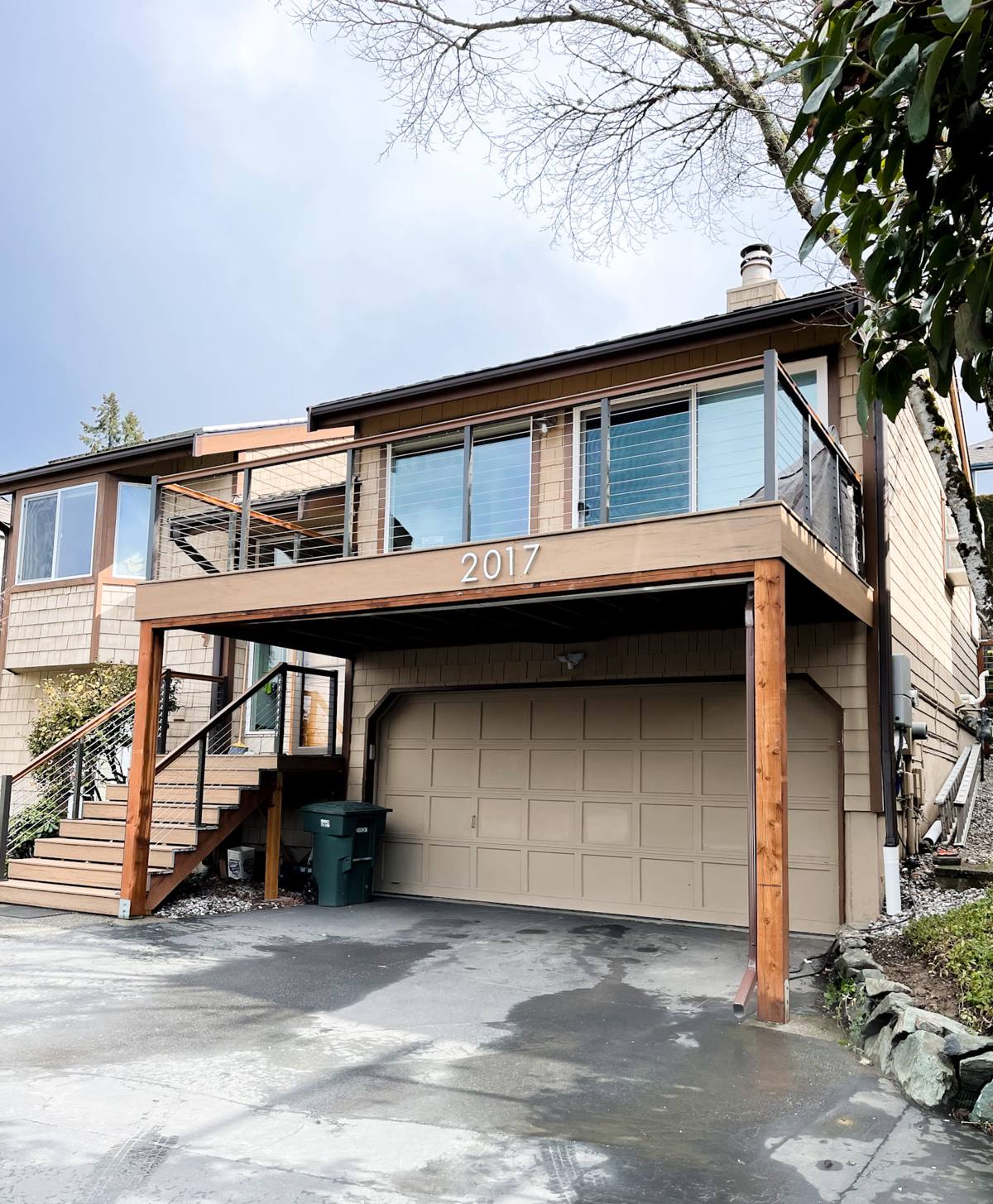
What "Energy-Efficient" Really Means for a Blaine Home
Energy efficiency gets marketed as a single number, but for a home this close to the water it's really three things working together: keeping conditioned air in, keeping wind-driven moisture out, and holding up physically over years of salt exposure.
Glazing and Coatings
Most Blaine homes do well with dual-pane glass using a low-E coating and an argon gas fill — this region's climate is more about damp and drafty than brutally cold, so the priority is cutting radiant heat loss and condensation risk rather than chasing the highest possible R-value. Triple-pane can make sense in specific situations (north-facing rooms, homes very exposed to wind), but it's not automatically the right call for every project, and we'll tell you honestly when it isn't worth the added cost.
Frame Material
Frame choice matters more here than in drier inland areas, because salt air accelerates corrosion on hardware and can degrade some coatings faster than the manufacturer's inland-tested lifespan would suggest. We'll walk through what that means for your specific home later in this page.
Weatherstripping and Seals
A window can have great glass and still perform poorly if the weatherstripping compresses unevenly or the corner seals weren't manufactured to spec. Wind-driven rain will find that gap. This is one of the reasons we source from manufacturers with a track record in Pacific Northwest coastal conditions rather than the cheapest available unit.
Signs Your Current Windows Are Costing You Money
Homeowners in Blaine usually come to us after noticing one or more of these:
- Noticeable drafts near the frame, especially during windstorms off the water
- Condensation or fogging between the panes — a sign the seal has failed and the insulating gas is gone
- Moss, algae, or dark staining building up on sills faster than you can keep up with cleaning
- Wood frames that are soft, discolored, or hard to close due to swelling
- Vinyl frames that have become brittle, chalky, or visibly pitted
- Heating bills that keep climbing even though nothing else in the home has changed
Any one of these on its own might just mean a repair. Several together usually mean the window has reached the end of its useful life and is actively working against your energy bill.
What a Correct Installation Actually Involves
A window replacement is not just swapping an old unit for a new one of the same size. In a climate that gets this much wind-driven rain, the installation details matter as much as the product itself.
Removal and Inspection
When we pull the old window, we check the surrounding framing and sheathing for rot or moisture damage. This is common on coastal homes where a marginal seal has let water in slowly over years. Any damaged material gets addressed before the new window goes in — installing a good window into a compromised opening just hides the problem.
Flashing and Moisture Management
This is the step that separates a durable installation from one that fails in five years. Proper flashing integrates with the home's weather-resistive barrier so that any water that does get past the window sheds down and out, rather than behind the siding. In a driving-rain climate like Blaine's, this detail is not optional — it's the difference between a window that lasts decades and one that causes hidden damage you won't see until it's expensive.
Fit, Seal, and Finish
We shim and level the unit so it operates smoothly and the reveal is even, use low-expansion foam rather than overfilling with caulk, and seal the exterior perimeter with a product rated for this climate. Interior air sealing and trim work finish the job so the window performs the way it's rated to, not just the way it looks.
Choosing the Right Frame Material for a Coastal Home
There's no single "best" frame material for every home — it depends on your budget, your home's style, and how much maintenance you want to take on. Here's how the common options actually compare for a salt-air, high-moisture environment like Blaine's:
| Frame Material | Salt Air / Moisture Resistance | Maintenance | Typical Cost Range |
|---|---|---|---|
| Vinyl | Good — won't rot or corrode, but lower-grade vinyl can become brittle over time near the water | Low — occasional cleaning | Lower |
| Fiberglass | Very good — dimensionally stable, resists warping and corrosion | Low | Mid to upper |
| Wood (unclad) | Requires diligent upkeep — attractive but vulnerable to moisture if finish isn't maintained | High — regular painting/sealing | Mid to upper |
| Wood with aluminum or fiberglass cladding | Good — cladding protects the wood from the elements | Moderate | Upper |
For most Blaine homes, we lean toward vinyl or fiberglass for straightforward efficiency and low upkeep, and clad-wood when a homeowner wants the interior warmth of real wood without the exterior maintenance burden. We won't push a product that's a poor fit for how exposed your home's elevation is to weather — that's a conversation we have on-site, specific to your house.
Our Process, Start to Finish
1. On-Site Assessment
We look at your existing windows, note which elevations take the most weather, and check for any signs of moisture damage already present. This tells us what your home actually needs, not just what's easiest to sell.
2. Product Selection
We walk through frame material, glazing, and hardware options based on your budget and your home's exposure — explaining trade-offs honestly rather than upselling.
3. Measurement and Ordering
Precise measurements matter for a tight, correctly sealed fit. We order to spec rather than working with stock sizes that force compromises during install.
4. Installation
Old units come out, framing is inspected and repaired if needed, flashing and moisture barriers are integrated correctly, and the new window is set, sealed, and finished.
5. Walkthrough and Cleanup
We test operation on every window, clean up the job site, and walk through the work with you before we consider the job done.
Why Hiring a Crew That Already Works in Blaine Matters
Installation quality is only half the equation — the other half is understanding the specific conditions a home in this part of Whatcom County actually faces. A crew that mostly works drier, inland areas may not think twice about a flashing detail that's genuinely important here, or may not recognize early moss and moisture staining as the warning sign it is.
Working regularly in Blaine and the surrounding Lynden area means we're familiar with the local permitting process, we know how to schedule around this region's weather windows, and we've seen firsthand how different frame materials and installation approaches hold up — or don't — a few years down the road on homes exposed to this much salt air and rain. That's knowledge you can't get from a product spec sheet.
Keeping Your Windows Performing Between Now and Your Next Replacement
Even the best window needs some basic upkeep in this climate, especially with moss season lasting much of the year. A little regular attention goes a long way:
- Clear moss and debris from sills and tracks before it holds moisture against the frame
- Keep weep holes (the small drainage openings along the bottom of the frame) clear so water can escape
- Rinse salt residue off frames and hardware periodically, especially after storms
- Lubricate hinges, locks, and rollers on operable windows to prevent corrosion-related sticking
- Check exterior caulking and sealant annually for cracking or gaps
- Watch for condensation between panes — it means the seal has failed and the unit needs attention
If you're noticing drafts, rising energy bills, or windows that just aren't holding up the way they should, we're happy to take a look and give you an honest assessment — no pressure, no obligation. Fill out the form below and we'll set up a free estimate for your Blaine home.