 Lynden Exterior
 Windows Take a Different Kind of Beating in Blaine
Blaine sits close enough to the water that salt air is part of daily life, not an occasional nuisance. Combine that with Whatcom County's driving winter rain and a moss season that can stretch from October into May, and you've got three separate stresses working on a window at the same time: corrosion, water intrusion, and constant damp shade. A window that's rated fine for a dry inland climate can still underperform here if it wasn't installed with this specific combination in mind.
Most of what we get called out for in Blaine isn't a bad window — it's a window that was installed without accounting for wind-driven rain hitting the wall at an angle, or hardware that wasn't built to shrug off salt-laden air year after year. Custom work matters here because so many Blaine homes have openings that don't match a stock size, older framing that's settled or shifted slightly, or trim details that a one-size approach just won't respect.
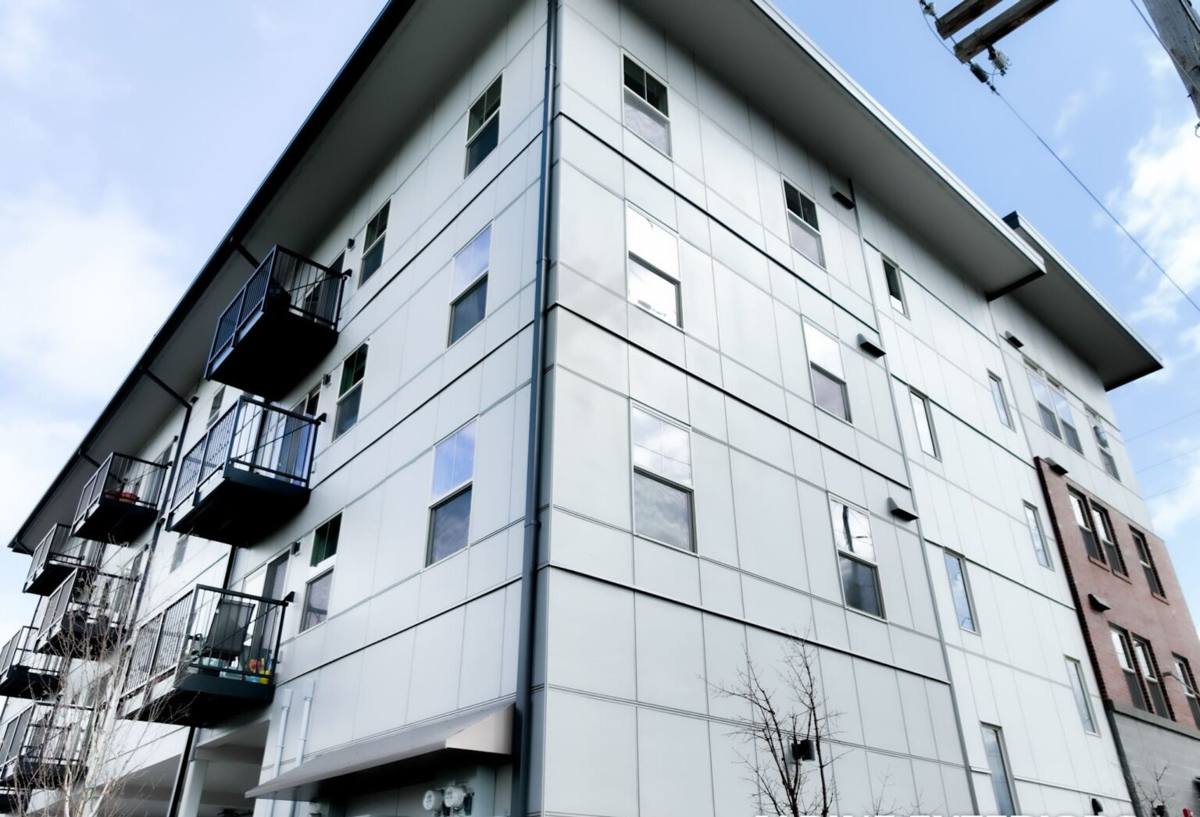
What "Custom" Actually Means for a Blaine Home
Custom doesn't mean expensive for its own sake. It means the window is built to fit your actual opening, your actual wall assembly, and your actual exposure — not a generic size that gets shimmed and caulked into submission. On a lot of the older homes we see in this area, openings have moved a little over the decades. Forcing a stock window into an opening that's a half-inch out of square is exactly how leaks start.
Where We Typically Do Custom Work
- Replacement windows in openings that are out-of-square, non-standard sized, or original to a home built before modern window sizing was standardized
- Coastal-facing walls that need upgraded flashing and drainage detailing regardless of window brand
- Additions or remodels where the new opening has to match sightlines with existing windows
- Bay, bow, or specialty shapes where off-the-shelf sizing simply doesn't exist
- Homes where trim, siding, or masonry openings limit what size or style will actually fit cleanly
What It Doesn't Mean
Custom sizing doesn't mean custom performance standards. Whatever size or shape we build to, the window still needs to meet the same water-management and air-sealing detailing every window in this climate requires. We don't treat custom shapes as an excuse to skip flashing steps — if anything, non-standard openings need more attention there, not less.
Materials That Actually Hold Up Near the Water
There's no single "best" window material — every option is a set of trade-offs, and those trade-offs shift once salt air and constant moisture enter the picture. Here's how the common choices stack up for a property like yours in Blaine.
| Material | Salt Air Behavior | Moisture/Moss Season Behavior | Maintenance |
|---|---|---|---|
| Vinyl | Doesn't corrode; won't pit or oxidize | Handles constant damp well; no refinishing needed | Low — occasional cleaning |
| Fiberglass | Very stable, resists corrosion, holds paint well over time | Dimensionally stable in wet/dry cycling | Low to moderate |
| Aluminum-clad wood | Cladding protects wood, but hardware and seams need monitoring in salt exposure | Good if flashing and seals are maintained; wood core is the risk point if a seal fails | Moderate — seal checks matter |
| Bare wood | Vulnerable — coatings break down faster near salt air | Prone to moisture absorption and rot if maintenance lapses | High — regular refinishing required |
We're honest with Blaine homeowners about this: bare wood can still be the right call for a historic home where appearance matters most, but we tell people upfront what the maintenance commitment looks like in this climate. Our job is to give you the real trade-off, not steer you toward whatever's easiest for us to install.
Hardware and Glass: The Details That Matter More Here
Two things get skipped by installers who don't work this coastline regularly: corrosion-resistant hardware and glass packages matched to wind exposure. Standard steel fasteners and hinges can start showing rust within a couple of seasons in salt air; stainless or coated hardware costs a little more upfront and avoids that entirely. On the glass side, a Low-E coating with the right gas fill cuts down on condensation buildup — which matters when moss season means long stretches of low light and high humidity pressing against the glass from outside.
We also pay attention to weep hole placement and sizing. Every window needs a way to drain water that gets past the outer seal, and in a climate with this much sustained rain, undersized or blocked weep paths are one of the most common reasons a technically fine window still develops interior moisture problems.
Moss Season and What It Does to a Window Installation
Moss itself doesn't grow on glass or vinyl, but the conditions that grow moss — shade, damp, slow-drying surfaces — are hard on window sills, trim, and the caulk lines around a window. Sills that don't shed water fast enough stay wet longer, which accelerates any weak point in the sealant or trim. We angle sills and detail flashing specifically to keep water moving off the window rather than sitting on it, because in Blaine that damp period isn't a few weeks a year — it's most of the year.
This is also why we're careful about caulk and sealant choice and placement. The wrong sealant in the wrong spot can trap moisture behind it instead of keeping it out, which turns a small gap into a hidden rot problem you won't see until trim starts failing.
Our Installation Process
The process itself isn't dramatically different from window replacement anywhere — the difference is in what we pay extra attention to at each step, given the exposure.
- On-site measurement and assessment — we check the opening for square, check existing flashing and sheathing condition, and note wind/rain exposure on that specific wall.
- Custom order — windows are built to the actual opening dimensions, not rounded to the nearest stock size.
- Opening prep — old window removal, inspection of framing and sheathing for hidden moisture damage before anything new goes in.
- Flashing and drainage detailing — this is where coastal-aware installation earns its keep; proper flashing integration with the water-resistive barrier is non-negotiable.
- Window set and fasten — shimmed level, plumb, and square, with corrosion-resistant fasteners.
- Insulation and air-sealing — gaps filled correctly, not overpacked, which can bow frames.
- Exterior trim and sealant — sealed with attention to weep paths and sill drainage.
- Walkthrough — operation check, lock function, and a look at the finished exterior detailing with you.
What to Have Ready Before Install Day
- Clear access to the work area, inside and out, including moving furniture or window treatments
- Any HOA approval paperwork if your property requires it
- A note of any past leak or moisture issues at that opening, even minor ones
- Pets secured away from open work areas during install
- Questions written down — we'd rather answer them before we start than after
What Drives the Cost
Custom windows have a wider price range than off-the-shelf replacements, and it's worth understanding why before you compare quotes.
| Factor | Why It Moves the Price |
|---|---|
| Opening size and shape | Non-standard or large openings require full custom fabrication |
| Material | Vinyl is typically the most budget-friendly; fiberglass and clad-wood cost more upfront |
| Glass package | Upgraded Low-E coatings and gas fills add cost but reduce condensation and energy loss |
| Hardware grade | Corrosion-resistant hardware costs more but matters more here than inland |
| Flashing/drainage complexity | Coastal-grade detailing takes more labor time than a standard inland install |
| Number of openings | Per-window cost usually drops as the total project scope increases |
We give straightforward, itemized estimates so you can see what you're paying for at each step — not a single lump number that hides where the money's going.
Why It Matters That We Already Work in Blaine
A crew that installs windows all over the state, with Blaine as an occasional stop, doesn't build the same instinct for this exposure as a crew that's out here regularly. Knowing which walls in this area take the worst of the wind-driven rain, which older homes tend to have settled openings, and how aggressively salt air actually affects a given hardware finish isn't something you learn from a spec sheet — it's something you learn from doing the work here repeatedly.
Being a local Lynden-based crew also means we're not disappearing after the install. If a question comes up six months or two years later — a sticky sash, a seal that needs a look — we're a short drive away, not a call center routing you to whoever's available.
Maintaining Your Windows in This Climate
Even a correctly installed window benefits from a little seasonal attention out here.
- Rinse salt residue off exterior frames and glass periodically, especially after storms
- Clear debris and moss buildup from sills and weep holes so drainage paths stay open
- Check exterior caulk lines once a year for cracking or separation, particularly after the wettest months
- Operate every window a few times a year, even ones you rarely open, so hardware doesn't seize
- Watch for condensation between panes — that's a seal failure, not a cleaning issue, and worth addressing early
If you're weighing a window project on a Blaine property, we're glad to come take a look, walk the exposure with you, and give a straightforward, no-pressure estimate — just fill out the form below and we'll get in touch.