 Lynden Exterior
 Birch Bay sits right on the water, and that changes what a window has to survive here compared to homes a few miles inland. Salt-laden air off the strait, wind-driven rain that hits window walls sideways during winter storms, and a damp, mossy season that can run most of the year all put steady pressure on frames, seals, and hardware. When a homeowner asks us about energy-efficient windows in this neighborhood, the conversation usually starts with heating bills — but the exposure here means it can't stop there.
An energy-efficient window is really two things working together: glass and frame technology that actually reduces heat loss, and an installation that keeps that performance intact through years of coastal weather. Get either half wrong and the other stops mattering. A high-performance window installed with a rushed seal will draft and eventually leak. A well-sealed but outdated window will still cost more to heat than it should. We treat both halves as one job, not two separate decisions.
What Old or Underperforming Windows Actually Cost You
Heat loss through a window happens a few different ways, and they don't all show up on a utility bill the same way. Single-pane glass and older double-pane units lose heat directly through the glass. Failed seals — the kind that show up as fog or haze between panes — mean the insulating gas or air gap has escaped and the unit is now performing closer to a single pane than a true double pane. Gaps around the frame from age, settling, or a poor original install let conditioned air escape and outside air in, regardless of how good the glass itself is. Aluminum frames without a thermal break conduct cold straight through the metal into the room.
In a marine climate like Birch Bay's, drafts do more than raise the heating bill. Air moving through a gap around a window frame carries damp, salty outside air with it, which keeps humidity elevated right at the point where it's most likely to condense — on the glass, the frame, and the sill. Over time that moisture is what actually damages a window opening, more than the cold air itself.
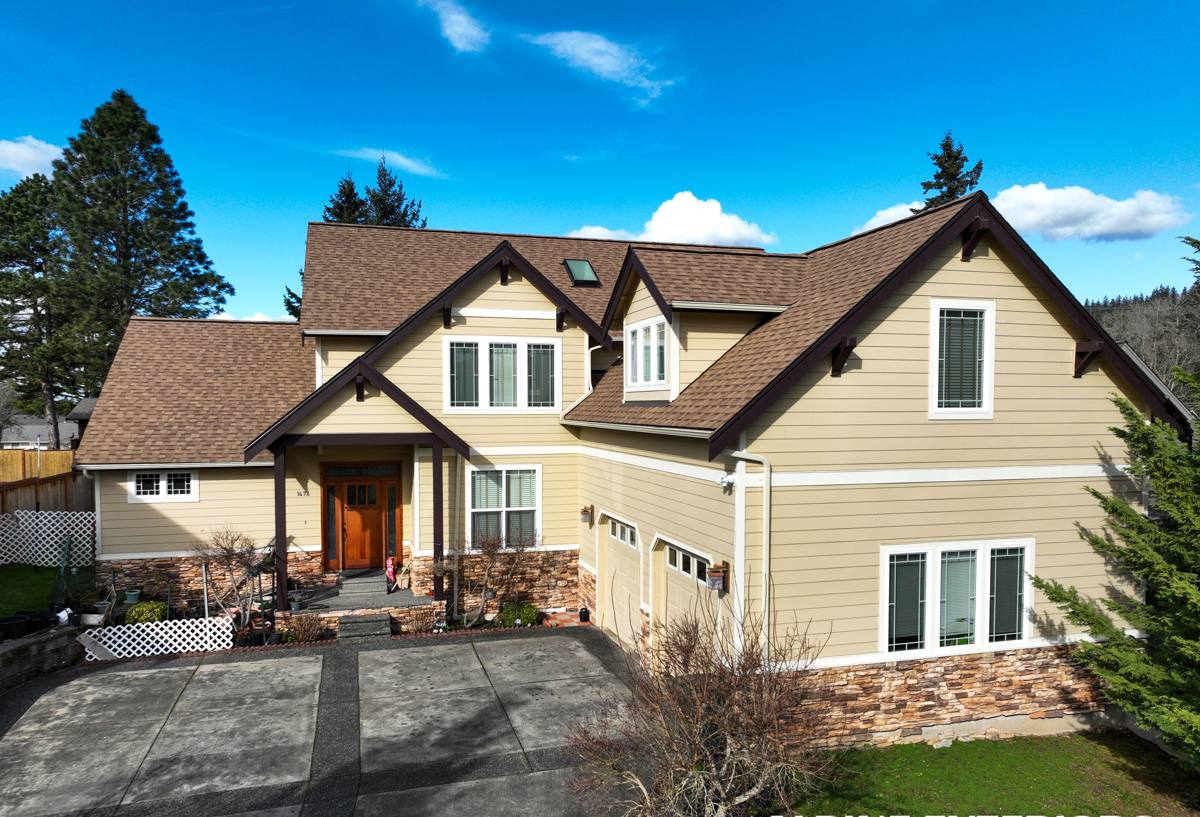
The Birch Bay Climate Factor
Being this close to the water puts real demands on a window that manufacturer installation guidance, written for an average inland climate, doesn't fully account for. Salt-laden air accelerates corrosion on hardware, fasteners, and lower-grade frame components faster than a drier setting inland. Wind-driven rain during winter storms pushes water sideways into places gravity alone would never test — window flashing, corner seals, and sill details all take a harder hit here than they would somewhere calmer. And the long, damp, mossy season common to this stretch of Whatcom County means a marginal detail doesn't get a real chance to dry out and reset between storms the way it might somewhere with a longer dry summer stretch.
Where the Risk Actually Lives
The glass itself is rarely the first thing to fail on a decent window. It's usually the smaller components — weep holes that let water drain back out instead of pooling, corner seals where two frame pieces meet, and the glazing gasket that holds the sealed glass unit in the sash. Those spots take extra time to get right, and they're also the spots a rushed installation is most likely to shortcut. South- and west-facing units also see more sun exposure, which breaks down sealant and gaskets faster over the years than shaded elevations.
What Actually Makes a Window Energy-Efficient
Modern energy-efficient windows lean on a handful of specific technologies rather than one single feature. A low-e coating on the glass reflects heat back while still letting visible light through, so the room doesn't lose its natural light to get the efficiency benefit. The space between panes on a double- or triple-pane unit is typically filled with an inert gas like argon, which insulates better than plain air. A warm-edge spacer at the perimeter of the glass unit reduces heat transfer at the edge, where standard metal spacers used to be a weak point. And the frame material itself matters — vinyl and fiberglass both insulate significantly better than uncoated aluminum.
Reading the Label
Every code-compliant window carries an NFRC label with two numbers worth understanding: U-factor, which measures how much heat moves through the whole window (lower is better), and SHGC, or solar heat gain coefficient, which measures how much solar heat passes through the glass. In a heating-dominated climate like Whatcom County's, U-factor generally matters more across the board, but SHGC becomes relevant on windows that get direct afternoon sun, where a higher SHGC can mean unwanted heat gain in summer. We'll walk through what those numbers actually mean for your specific window openings and their orientation rather than quoting a generic rule.
Frame Material Trade-Offs in This Climate
Frame material affects both energy performance and how well a window holds up to salt air and constant moisture. None of the options below is wrong for every situation — the right call depends on the specific opening, its sun and rain exposure, and your budget.
| Factor | Vinyl | Fiberglass | Wood / Wood-Clad |
|---|---|---|---|
| Thermal performance | Good — multi-chambered frames insulate well | Very good, with low expansion and contraction | Good on the wood itself; depends on cladding and construction |
| Salt air / moisture resistance | Strong — doesn't corrode or rot | Strong — stable and low-maintenance | Weaker on exposed elevations unless cladding and finish are properly maintained |
| Maintenance | Low — occasional cleaning | Low | Higher — exterior finish and joints need regular upkeep near the water |
| Typical cost | Lower | Mid to higher | Higher, especially for quality clad units |
| Best fit here | Straightforward replacements, budget-conscious projects | Larger openings, harder-working weather-facing walls | Interior wood look with a properly protected, low-maintenance exterior |
We lead with vinyl or fiberglass on weather-facing openings in Birch Bay because they hold up to salt air and moisture with less ongoing upkeep than an exposed wood exterior finish. Wood-clad units can still be the right choice when the interior look matters most and the exterior cladding and detailing are done correctly — it's a real trade-off worth discussing against your specific window, not a one-size answer.
What a Correct Installation Involves
Air Sealing and Insulating the Gap
The narrow gap between a new window frame and the rough opening has to be sealed and insulated correctly, not just caulked over on the outside and called done. Low-expansion foam or backer rod and sealant, applied correctly around the full perimeter, keeps conditioned air in and stops that gap from becoming a path for drafts or moisture later.
Flashing for Driving Rain
Given how directly Birch Bay takes wind-driven rain off the water, flashing sequence matters as much as the window itself. A sill pan at the bottom of the opening, integrated correctly with the house wrap or building paper above and below it, directs any water that gets past the window back outward instead of into the wall cavity. Skipping or rushing this step is one of the most common causes of hidden rot behind a window that looks fine from the outside.
Hardware and Fasteners for a Marine Environment
Standard fasteners and hardware corrode faster in salt-laden air than they would inland. Using corrosion-resistant fasteners and hardware on Birch Bay installs is a small line item that prevents a much bigger problem — a rusted fastener that fails years down the line can compromise the seal around it long before the window itself shows any obvious wear.
Our Process, Start to Finish
- On-site assessment — we look at each opening's condition, exposure, and existing frame material before recommending anything
- Honest recommendation — frame material, glass package, and U-factor/SHGC targets suited to that specific opening's sun and rain exposure
- Measuring and ordering — precise field measurements, with a realistic timeline for the units to arrive
- Removal and opening prep — the old unit comes out carefully, and we check the sheathing and existing flashing underneath for hidden moisture damage before anything new goes in
- Installation, air sealing, and flashing — set, shimmed, sealed, and flashed in a sequence built for this climate's wind-driven rain
- Trim and finish — exterior trim integrated to match the surrounding siding cleanly
Signs Your Current Windows Are Already Underperforming
- Fog, haze, or visible moisture trapped between panes — a sign of failed seals
- A noticeable draft near the frame edge on windy days, even with the window fully closed and locked
- Glass that feels cold to the touch while the heat is running, more than you'd expect
- A frame or sash that's become difficult to open, close, or lock due to warping or swelling
- Soft, discolored, or moss-covered trim and sill material around the window
- Visible rust or corrosion on hinges, locks, or other hardware
- Heating bills that have crept up without another clear explanation
Why a Local Birch Bay Crew Matters
Manufacturer installation instructions are written for average conditions in a moderate climate, and Birch Bay doesn't offer average conditions. Salt air, driving rain, and a long wet season all stack the deck against a shortcut installation more than they would somewhere calmer. A crew that has actually flashed windows against this specific stretch of coastline knows which steps in the manufacturer's guidance are non-negotiable here, and where a little extra time on sealant, flashing lap, or fastener choice pays off even when it wouldn't matter as much a few miles inland.
What to Ask Before Hiring
- Ask how they sequence flashing for a window wall that faces wind-driven rain directly
- Ask what fastener and hardware materials they use in coastal, salt-air conditions
- Confirm current Washington contractor licensing and insurance
- Get a written scope of work, including which glass package and frame material is being installed and why
- Ask how labor and the window unit itself are each covered under warranty, since they're often separate
If your Birch Bay home has windows that draft, fog between the panes, or just cost more to heat than they should, it's worth having someone look at the actual openings before you start comparing quotes. We offer free, no-pressure estimates for energy-efficient window projects in Birch Bay and the surrounding area — use the form below to get a time on the schedule.