 Lynden Exterior
 Why Birch Bay Decks Wear Out Faster Than Inland Decks
Birch Bay sits right on the water, and that changes what a deck has to survive. A deck built the same way forty miles inland in Whatcom County will hold up differently than one facing open water and marine air year-round. The combination that does the most damage out here is simple: salt-laden air, driving rain that comes in sideways off the water, and a moss season that runs longer than most homeowners realize.
None of these on their own would be a big deal. Together, they speed up corrosion, trap moisture in places it shouldn't sit, and turn a small maintenance item into a structural repair if it goes unnoticed for a season or two. We've worked on enough decks in this area to know the pattern, and it's rarely one dramatic failure — it's a handful of small, predictable problems that compound.
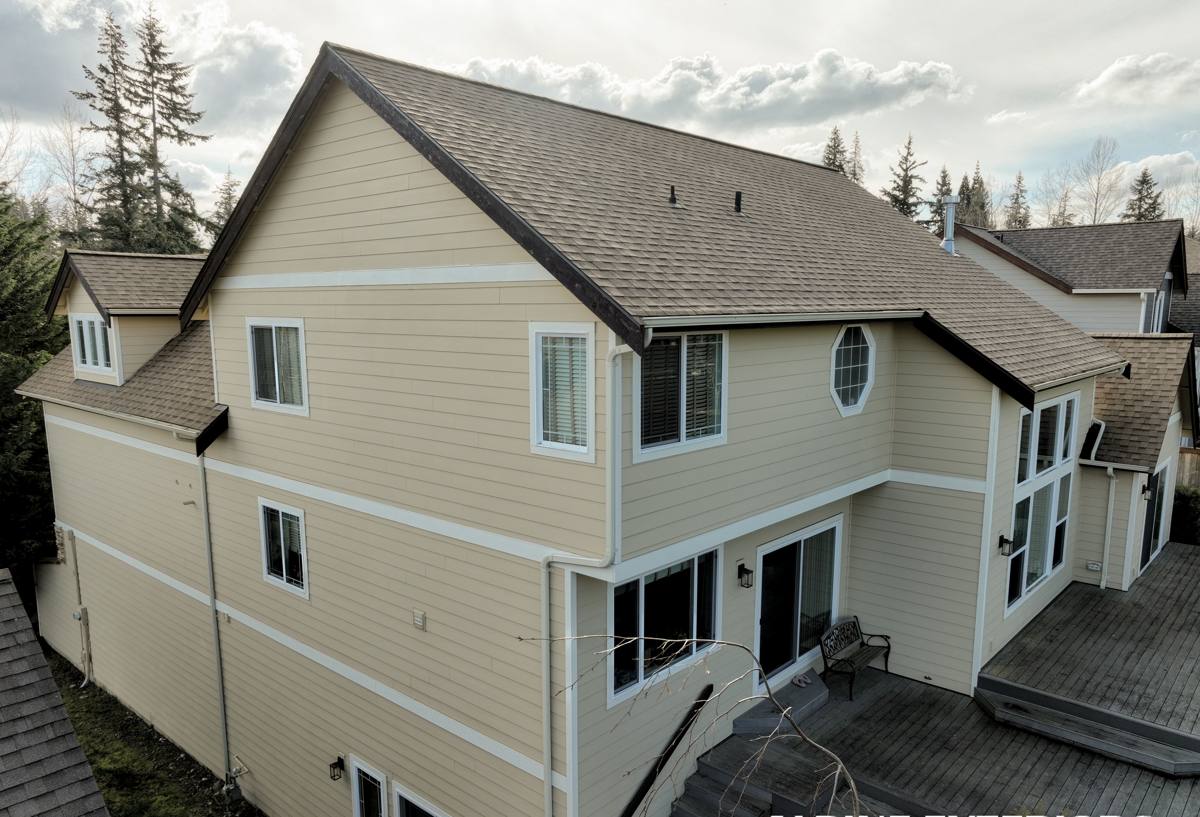
What Salt Air, Rain, and Moss Actually Do to a Deck
Salt Air and Metal Fasteners
Salt in the air accelerates corrosion on anything metal — nails, screws, joist hangers, bolts, and post bases. Standard galvanized fasteners that would last decades in a drier, inland yard can start showing rust streaks and pitting much sooner near the water. Once a fastener corrodes, it loses holding strength long before it looks obviously broken, which is why a deck can feel "solid" underfoot right up until it isn't.
Driving Rain and Water Intrusion
Wind-driven rain doesn't just fall on a deck — it gets pushed under railings, behind fascia boards, and into any gap where flashing was skipped or installed incorrectly. The ledger board (where the deck attaches to the house) and the rim joist underneath it are the two spots we check first, because that's where water intrusion causes the most expensive damage if it's been happening quietly behind the decking.
Moss and Trapped Moisture
Whatcom County's moss season runs long, and Birch Bay's damp, shaded, and coastal conditions keep decking surfaces wet for extended stretches. Moss holds moisture directly against the wood or composite surface, which slows drying time and, on real wood decking, feeds rot in the boards themselves. It also makes stairs and walking surfaces genuinely slippery — this is as much a safety issue as a maintenance one.
The Deck Problems We See Most Often in Birch Bay
- Rot at the ledger board connection — usually from missing or failed flashing where the deck meets the house.
- Corroded joist hangers and fasteners — hardware that's rusted enough to lose grip strength, even if the wood around it still looks fine.
- Soft or spongy decking boards — often concentrated in shaded areas or spots where moss has been left to grow.
- Post base rot — where a support post meets a concrete footing and moisture has been wicking upward.
- Railing and stair post movement — loose connections from corroded lag bolts, which is a safety issue, not just cosmetic.
- Surface graying and moss staining — cosmetic on the surface, but worth checking as an early warning sign of deeper moisture problems.
What a Correct Repair Actually Involves
Start With an Honest Structural Assessment
Before we talk about boards or railings, we check the parts of the deck you can't see from the top: the ledger connection, the joists, the beam, and the posts. A deck can have brand-new-looking decking boards on top of a compromised frame underneath — that's a common setup in coastal areas where the surface gets attention but the structure doesn't.
Fix the Cause, Not Just the Symptom
Replacing a rotted board without fixing the flashing or drainage issue that caused it just buys you a year or two before the same spot fails again. Correct repair means identifying why water got where it shouldn't have been, and closing that path — proper flashing at the ledger, correcting board spacing for drainage, or re-grading the deck surface so water sheds instead of pooling.
Match Hardware to the Environment
In a marine environment like Birch Bay, standard galvanized fasteners are a false economy. We use stainless steel or heavy-duty coated fasteners rated for coastal exposure wherever corrosion risk is highest — connections at the ledger, joist hangers, and any hardware that's difficult to inspect or replace later.
Repair vs. Replacement — How We Make That Call
Not every deck problem means starting over, and not every deck is worth patching. The table below covers the factors that usually decide it.
| Factor | Leans Toward Repair | Leans Toward Replacement |
|---|---|---|
| Frame condition | Ledger, joists, and beams are structurally sound | Rot or corrosion found in multiple structural members |
| Age of the deck | Under 10-15 years, built to a reasonable standard | Older deck nearing the end of its practical service life |
| Extent of damage | Isolated to a few boards, one post, or one connection | Widespread soft spots, moss damage, or hardware corrosion |
| Code compliance | Railings, stair rise/run, and footings meet current standards | Original build predates current safety and code requirements |
| Cost comparison | Repair cost is clearly a fraction of full replacement | Repair costs start approaching a large share of new-build cost |
Most of the Birch Bay decks we're called out for fall into the repair category — the frame is fine, but the surface, hardware, or a specific connection point needs attention. We'll tell you honestly if we think replacement makes more sense, but we don't default to it just because it's a bigger job.
How Our Deck Repair Process Works
- On-site inspection — we walk the deck, check underneath it where possible, and test suspect boards, posts, and connections by hand.
- Written scope and estimate — you get a clear explanation of what's failing, why, and what fixing it correctly involves, with pricing broken down by area of concern.
- Repair the structure first — any framing, ledger, or hardware issues get addressed before cosmetic work starts.
- Address the moisture path — flashing, drainage gaps, and grading get corrected so the same failure doesn't recur.
- Replace or refinish surfaces — decking boards, railings, and stairs are repaired or replaced with materials suited to coastal exposure.
- Final walkthrough — we go over what was done and what to keep an eye on going forward.
Materials We Use in a Marine Climate — and Why
Fasteners and Hardware
We size fastener and hardware choice to the exposure level of each connection. Coastal-rated stainless or heavy-coated fasteners cost more up front than standard galvanized hardware, but the difference in corrosion resistance matters most exactly where you can't easily check on it later — buried in a ledger connection or under decking boards.
Decking Material Trade-offs
Real wood decking looks great and can perform well in Birch Bay's climate, but it needs more consistent upkeep — cleaning, sealing, and moss removal — to hold up against the moisture load. Composite decking generally handles moisture and moss better with less maintenance, though it comes at a higher material cost and still needs a properly built, well-drained frame underneath to perform as intended. Neither option is automatically "better" — it depends on how much upkeep you want to take on versus pay for up front, and we'll walk through that trade-off honestly for your specific deck.
Flashing and Waterproofing Details
The ledger flashing is one of the least visible parts of a deck and one of the most important. We install it so water is directed away from the house structure rather than trapped behind the decking, which is the single biggest factor in how long a ledger connection lasts in a wet, coastal climate.
A Maintenance Checklist for Salt Air and Moss Season
Between repairs, a little regular attention goes a long way in this climate. Homeowners in Birch Bay should plan on:
- Clearing moss and debris from decking boards and stairs at least once, ideally twice, during the wet season.
- Checking railings and stair posts by hand for looseness a couple of times a year.
- Looking underneath the deck (where accessible) for staining, soft wood, or rust streaks near hardware.
- Keeping gutters and downspouts clear so roof runoff isn't draining onto or near the deck structure.
- Watching for standing water on the deck surface after rain — a sign that boards have shifted or drainage has changed.
- Having a professional check the ledger and frame every few years, even if the surface looks fine.
Why Local Experience in Birch Bay Matters
A contractor who mostly works dry, inland jobs will often spec a deck repair the same way regardless of location — same hardware, same flashing approach, same materials. That's not wrong everywhere, but it's not right for a shoreline community like Birch Bay. Working regularly in this part of Whatcom County means we already know which connections fail first here, which fastener grade is worth the extra cost, and which shortcuts show up as callbacks two winters later.
We work throughout the Lynden and greater Whatcom County area, and Birch Bay's coastal conditions are simply part of how we plan every repair out here — from the hardware we spec to how we handle drainage and flashing.
If you've noticed soft spots, rust staining, moss buildup, or a railing that's started to feel loose, it's worth having it looked at before next season's rain gets into it. We're happy to come take a look and give you a straightforward, no-pressure estimate — just fill out the form below to get started.