 Lynden Exterior
 Window Replacement for Aldergrove Homes: Built for This Climate, Not a Generic One
Aldergrove sits in a stretch of the Pacific Northwest where the weather doesn't do anything extreme, but it also never really lets up. Homes here don't fail because of one big storm — they fail slowly, from year after year of damp air, wind-driven rain, and shade that never quite dries out. Windows take more of that abuse than almost any other part of the exterior, because every window is a hole in the wall with moving parts, seals, and a frame that has to hold up against water finding its way in from every direction.
Lynden Exterior Co is based just south of the border in Whatcom County, and Aldergrove is close enough to our home turf that we treat it the same way we treat our Washington neighborhoods — same attention to flashing details, same materials logic, same crew doing the work. This page is specifically about window replacement for Aldergrove properties: what the local climate demands, what a correct installation actually involves, and how we run the job from first look to final walkthrough.
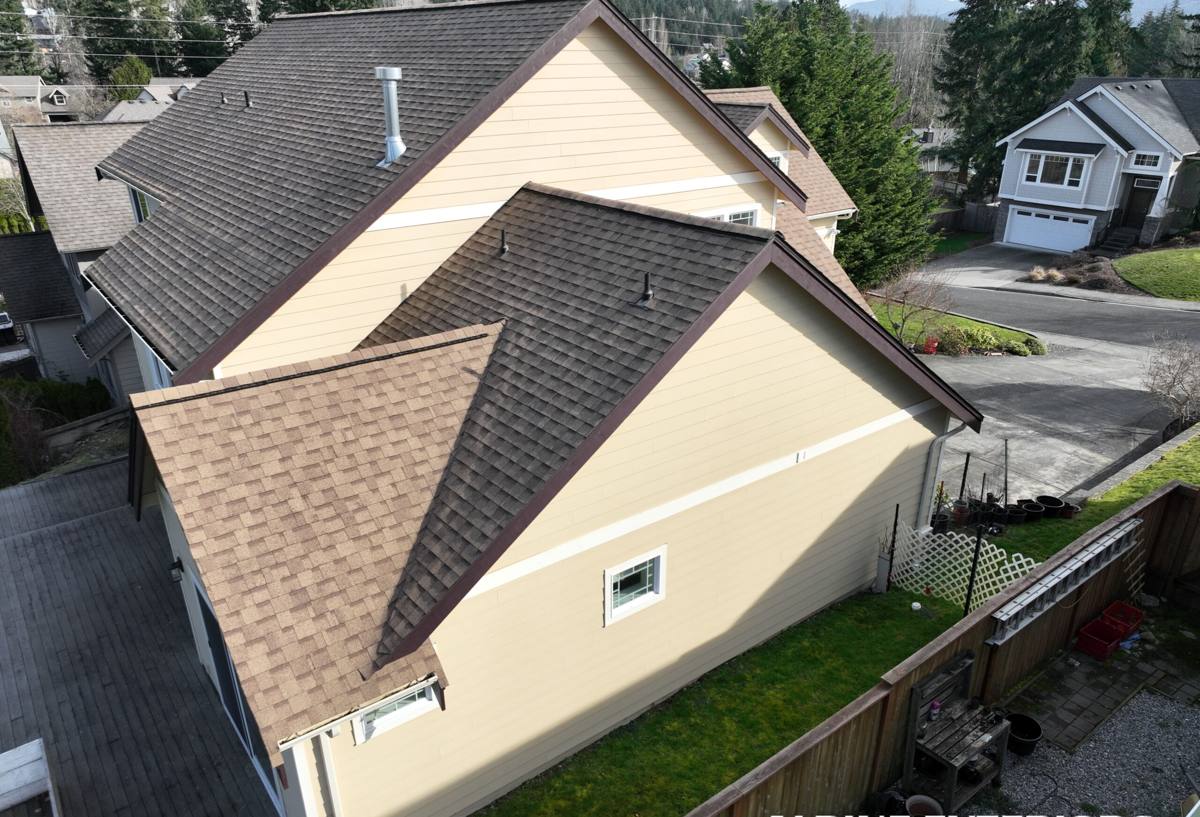
What the Regional Climate Actually Does to Windows
Salt Air and Slow Corrosion
Proximity to the Salish Sea and the broader coastal air mass means homes in this region get a steady, low-grade dose of salt-laden moisture, even well inland. On windows, that shows up as pitting and corrosion on aluminum frames and hardware, chalky finishes on vinyl that's aged past its coating life, and fasteners that rust from the inside out long before the glass itself fails. It's rarely dramatic — it's a frame that looks fine from the driveway but is compromised at the corners and around the hardware.
Driving Rain and Wind-Driven Water
This isn't a region of straight-down rain. Storms come in sideways off the water, and that matters enormously for windows because most water intrusion problems aren't about the glass — they're about wind pushing water sideways and upward, past seals and flashing that were only ever designed to shed water falling straight down. A window that's watertight in a light shower can still leak in a wind-driven event if the flashing detail underneath it is wrong.
The Long Moss Season
Moss doesn't just grow on roofs here. In shaded corners, on north-facing walls, and around window trim that stays damp longer than it should, moss and algae take hold on sills, trim boards, and even into gaps in failed caulking. Once moss establishes itself against a window frame, it holds moisture against the material around the clock, which accelerates wood rot and speeds up the breakdown of sealants — turning a small cosmetic issue into a structural one over a couple of seasons.
How to Tell a Window Actually Needs Replacing (Not Just Recaulking)
Not every window problem calls for full replacement. But in this climate, certain signs mean the frame or seal system has already failed and patching won't hold.
- Fogging or a visible film between panes — the seal on the insulated glass unit has failed and moisture is trapped for good
- Soft or spongy wood at the sill or lower frame corners when pressed
- Persistent moss or dark staining at the frame edges that comes back after cleaning
- Visible daylight or a noticeable draft around the sash when the window is closed and locked
- Difficulty opening, closing, or locking that's worsened over the past year or two
- Paint or finish that's bubbling or peeling specifically around the window opening, not the wall generally
- Noticeably higher heating bills in a room with older single- or double-pane windows
If you're seeing one or two of these, it's worth a look before winter. If you're seeing several on the same window, replacement is almost always the more honest answer than another round of caulk and paint.
What a Correct Window Replacement Job Actually Involves
The window unit itself is maybe half the job. The other half — the part that determines whether the installation lasts fifteen years or fails in three — is everything that happens around it.
Removal Without Hidden Damage
Pulling the old window out is the first chance to find out what's really going on in the wall. Rotted sheathing, saturated insulation, or old flashing that was never installed correctly often only becomes visible once the old unit is out. A proper installer stops and addresses that before setting the new window, rather than sealing a new window over a problem that's still there.
Sill Pan and Flashing
Given how much wind-driven rain this area sees, the sill pan and flashing sequence around a window matters more here than in drier climates. Water that gets past the exterior trim needs somewhere to go besides into the wall cavity — a correctly built sill pan and properly lapped flashing (integrated with the house wrap or building paper, not just caulked over the top of it) is what actually keeps a wall dry over time, not the caulk bead people usually assume is doing the work.
Sealing and Insulation
Gaps around the new frame need to be insulated (typically with low-expansion foam rated for windows, not general-purpose foam that can bow the frame) and sealed with an exterior-grade sealant suited to the siding material. Skipping this step or rushing it is one of the most common causes of drafts and moisture problems in an otherwise good window.
Trim and Finish Detail
Exterior trim gets reinstalled or replaced, primed and painted or capped depending on the material, with attention to the same shaded, damp-prone areas where moss and rot take hold first. A finish detail that sheds water cleanly away from the frame is worth more long-term than one that just looks tidy on install day.
Choosing Windows for This Climate
Material choice matters more here than in a dry, mild climate, because every material has a different relationship with sustained moisture, salt air, and cold snaps.
| Frame Material | How It Handles This Climate | Maintenance | Typical Lifespan |
|---|---|---|---|
| Vinyl | Good moisture resistance, no corrosion risk, reasonably good insulator | Low — occasional cleaning | 20–30 years |
| Fiberglass | Excellent stability in temperature swings, strong resistance to moisture and salt air | Low | 30–40+ years |
| Wood | Best look, but needs a well-maintained exterior clad or finish to resist rot in a damp climate | High — regular painting/sealing | Varies widely with upkeep |
| Aluminum | Prone to corrosion and pitting in salt-influenced air over time; poor insulator unless thermally broken | Moderate | 15–25 years in this climate |
We don't push one brand or one material on every job. What we do push is matching the material to the exposure of that specific wall — a north-facing wall that stays shaded and damp most of the year is a different decision than a sheltered, sun-exposed wall on the same house.
What Drives the Cost of a Window Replacement Project
| Factor | Why It Matters |
|---|---|
| Number and size of windows | Larger openings and more units mean more material and labor |
| Frame material chosen | Fiberglass and higher-end vinyl cost more upfront than basic vinyl or aluminum |
| Condition behind the old window | Rot, rebuilding the sill pan, or replacing sheathing adds time and material |
| Trim and exterior finish work | New trim, capping, or repainting around the opening adds to the scope |
| Access and window height | Second-story or hard-to-reach windows take more time and equipment |
We give straightforward, itemized estimates so you can see exactly what's driving the number — not a flat per-window price that hides whether hidden repairs were actually accounted for.
Our Process for Aldergrove Projects
- Assessment: We look at each window individually — frame condition, sill and flashing, and how that specific wall's exposure to sun, shade, and wind-driven rain affects it.
- Recommendation: We walk through material and product options suited to that window's exposure, with honest trade-offs on cost, maintenance, and lifespan.
- Written estimate: Itemized, so hidden-condition repairs (like sill or sheathing rot) are called out separately, not buried.
- Removal and inspection: Old units come out carefully, and we stop to address anything found behind them before moving forward.
- Installation: Sill pan, flashing integration, insulation, and sealing done in the correct order — not shortcuts to save an hour.
- Trim and finish: Exterior trim reinstalled or replaced and finished to shed water away from the frame.
- Final walkthrough: Every window operated, checked, and reviewed with you before we consider the job done.
Why Hiring a Crew That Already Works This Area Matters
Window replacement done wrong doesn't usually show up as a problem on day one — it shows up two winters later as a soft spot at the sill or a draft that wasn't there before. A crew that regularly works in Whatcom County and the immediately surrounding area, including communities like Aldergrove, has already seen how this specific climate treats different frame materials, flashing approaches, and trim details over years, not just on paper. That's the difference between a window that's sealed for a dry day and one that's actually built for the wind-driven rain and moss season this region gets every single year.
If your Aldergrove home has windows showing any of the signs above, or you're just planning ahead for a remodel, we're happy to take a look and give you a straightforward, no-pressure estimate — use the form below to get started.