 Lynden Exterior
 Roofing in a Border-Country Climate
Aldergrove sits in that stretch of country where the Pacific's influence reaches well inland — damp air, long grey stretches of rain, and just enough salt carried on the wind to matter over the life of a roof. Add in the short, intense burst of summer heat that dries everything out fast, and an asphalt shingle roof here works through a wider range of conditions than most people realize. It isn't one big storm that wears a roof out. It's the accumulation: months of standing moisture, freeze-thaw cycles in the shoulder seasons, and moss that never really stops growing because it never fully dries out.
Homes in this corridor — whether on the Lynden side of the line or across in Aldergrove — deal with the same weather pattern. That matters more than people expect when picking a roofing crew, because a shingle roof built for a drier climate, or installed by someone who doesn't account for how long this region stays wet, tends to show problems years before it should.
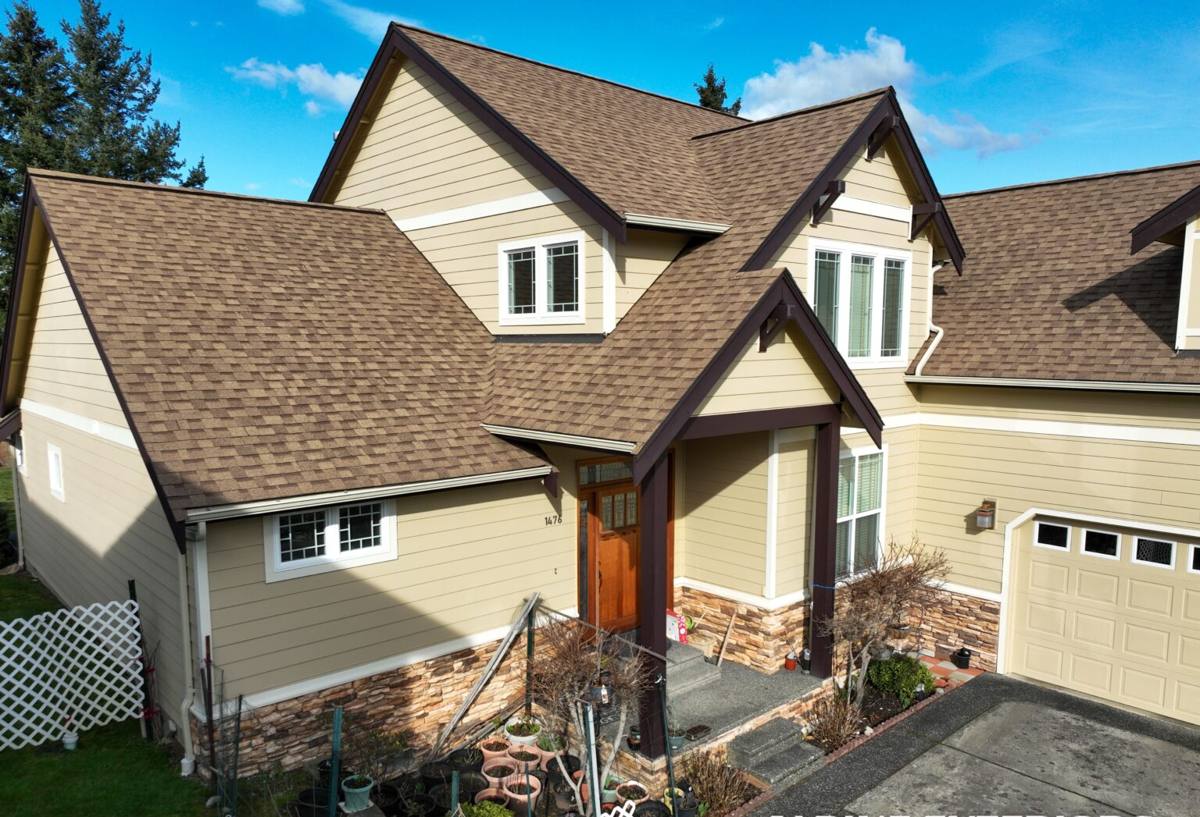
What This Climate Actually Does to a Roof
Driving Rain
Rain here doesn't always fall straight down. Wind off the Fraser Valley and the Georgia Strait pushes it sideways during storms, which means it can work up under shingle edges, around flashing, and into any gap that a fair-weather installation might get away with elsewhere. Every seam, nail pattern, and flashing detail has to assume the rain is coming in at an angle, not just from above.
Moss Season
Moss needs shade, moisture, and time — and this area supplies all three for a good chunk of the year. Moss holds water against the shingle surface, works its way under tabs as it grows, and lifts granules loose as it's scraped or pressure-washed off. A roof that isn't detailed to shed water and dry out between rains will grow moss faster than one that is, regardless of the shingle brand.
Salt Air
Even well inland, marine air carries fine salt that settles on roofing metal — flashing, vents, nail heads, gutter hardware. Over years, that accelerates corrosion on lower-grade fasteners and exposed metal. It's a slow process, not a dramatic one, which is exactly why it gets overlooked until a flashing detail fails.
Freeze-Thaw and Temperature Swings
Winters here aren't brutally cold, but they do dip below freezing often enough, right after or during wet stretches, to matter. Water that's soaked into an underlayment lap or a poorly sealed nail hole can freeze, expand, and open that spot up further. It's a slow, repeating cycle rather than a single event, and it's part of why installation detail matters more here than in a drier climate.
What a Correctly Installed Shingle Roof Includes
A shingle roof is a system, not a single product. Every layer has a job, and skipping or shortcutting one shows up as a leak, premature moss, or a shortened lifespan.
| Layer | Job It Does | Why It Matters Here |
|---|---|---|
| Deck inspection/repair | Solid, dry nailing surface | Soft or delaminated sheathing under old leaks is common in a wet climate and has to be caught before new shingles go down |
| Ice and water shield | Self-sealing membrane at eaves, valleys, and penetrations | Backs up the shingles where wind-driven rain and ice damming are most likely to force water backward |
| Synthetic underlayment | Secondary water barrier across the whole deck | Holds up better than old felt paper under long exposure and repeated wet-dry cycles |
| Flashing (step, valley, drip edge) | Directs water away from transitions and edges | Corrosion-resistant metal matters given the salt content in the air |
| Shingles | Primary weather surface | Algae-resistant granules and a proper nailing pattern reduce moss uptake and blow-off risk |
| Ventilation (intake and exhaust) | Moves air through the attic | Keeps the underside of the deck dry, which slows rot and helps shingles last their full rated life |
How We Approach an Aldergrove Roofing Job
1. Inspection First
We start on the roof and in the attic, not just with a drive-by look. That means checking the deck for soft spots, looking at existing ventilation, checking flashing at every chimney, wall, and valley, and noting how much moss and granule loss has already happened. This tells us whether a roof needs a full tear-off or whether targeted repair is honestly the better call.
2. Tear-Off and Deck Check
We don't recommend layering new shingles over old ones. Tearing off gives us a clean look at the deck itself, which is the only way to catch rot or soft sheathing before it's buried under a new roof for another 20-plus years.
3. Underlayment and Flashing Detail
This is where a wet climate roof earns its keep. Ice and water shield goes down at eaves, valleys, and any penetration — skylights, vents, chimneys — with new flashing where the old flashing is worn, undersized, or corroded rather than reused just to save a step.
4. Ventilation Check
If intake and exhaust aren't balanced, moisture gets trapped in the attic no matter how good the shingles are. We adjust or add ventilation as part of the job when the existing setup isn't doing its job, rather than treating it as a separate upsell.
5. Shingle Installation
Nailing pattern, exposure, and starter course all follow manufacturer spec, not a shortcut version of it — this is what keeps shingles wind-rated and keeps the warranty valid.
6. Cleanup and Walkthrough
Magnetic sweep for nails, haul-away of old material, and a walkthrough so you know what was done and what to watch for going forward.
Shingle Options for This Climate
Most homes in this area use a 3-tab or architectural (laminate) asphalt shingle. The right choice depends on budget, how long you plan to stay in the home, and how much you want to fight moss.
| Type | Typical Lifespan | Moss/Moisture Behavior | Best Fit |
|---|---|---|---|
| 3-tab shingle | 15-20 years | Flatter profile sheds water fine but shows algae streaking sooner without AR granules | Budget-conscious re-roofs, rental properties |
| Architectural/laminate | 25-30+ years | Thicker, layered profile drains better and holds up longer under constant moisture | Most owner-occupied homes in this climate |
| Impact-resistant/premium laminate | 30+ years | Heaviest construction, best long-term moss and wind resistance | Homes prioritizing longevity over upfront cost |
Almost every quality shingle line now offers algae-resistant (AR) granules, usually copper- or zinc-infused. In a climate with a moss season this long, we consider AR granules close to mandatory rather than optional — the cost difference is small relative to what a moss-covered roof costs to clean and maintain over time.
Cost Factors Worth Understanding
We don't post fixed prices online because roof cost depends on real variables, not guesswork. The main ones:
| Factor | Effect on Cost |
|---|---|
| Roof size and number of stories | More area and steeper access raise labor time |
| Roof pitch and complexity | Multiple valleys, dormers, and chimneys add flashing and cutting time |
| Deck condition | Any sheathing replacement is priced separately from the roofing itself |
| Shingle tier chosen | 3-tab, standard laminate, and premium laminate carry different material costs |
| Ventilation work needed | Adding or correcting intake/exhaust vents adds modest cost but protects the whole system |
| Tear-off layers | Removing multiple old layers takes longer than a single-layer tear-off |
We walk every roof and give a written estimate based on what's actually there, not a phone-quote guess.
Maintenance That Actually Extends a Shingle Roof's Life
In a climate like this, maintenance isn't optional if you want a roof to reach its full rated lifespan. A short, honest checklist:
- Keep gutters and valleys clear so water doesn't back up under the shingle edge
- Have moss treated or gently removed before it builds a mat — don't wait until it's thick and green
- Trim back overhanging branches to cut down on shade and debris buildup
- Check attic ventilation isn't blocked by insulation at the eaves
- After any major windstorm, look for lifted or missing shingles and loose flashing
- Get a professional inspection every few years, not just after a visible leak shows up
Pressure washing shingles is not on that list on purpose — high-pressure washing strips protective granules and shortens shingle life. Soft treatment methods are the safer route for moss control.
Signs a Roof Needs Attention
- Granules collecting in gutters or at downspout outlets
- Shingles that look cupped, curled, or cracked
- Dark streaking or thick moss growth across large sections
- Daylight visible through the attic roof deck
- Stains on interior ceilings, especially near valleys or chimneys
- Missing or lifted shingles after a windstorm
Any one of these on its own might not mean an emergency, but a few together are worth a professional look before the next wet season starts.
Why a Crew That Already Works This Corridor Matters
Aldergrove and Lynden sit close enough together that they share weather, share moss pressure, and share the same basic roofing challenges — but they're also on opposite sides of an international border, which means different jurisdictions, different permitting processes, and different code requirements depending on which side a home is on. A crew that regularly works this corridor understands that distinction going in, handles the paperwork that applies to your specific location, and doesn't treat a border-area home as an afterthought or a special case tacked onto a standard route.
There's also a practical side: familiarity with how weather moves through this specific stretch of the valley, what kind of moss and algae pressure is normal here versus further inland, and what installation details hold up best given the exposure a given roof actually gets. That's the kind of knowledge that comes from doing the work here repeatedly, not from a general roofing checklist.
Workmanship and Materials
We stand behind our installation work, and manufacturer warranties on materials apply on top of that when shingles, underlayment, and flashing are installed to spec. We'll walk through what's covered by us and what's covered by the manufacturer before work starts, so there's no confusion later if a question ever comes up.
If your roof is showing moss, granule loss, or you just want an honest read on how much life it has left, we're glad to take a look. Fill out the form below for a free, no-pressure estimate — we'll tell you what we actually see, not just what sells a job.