 Lynden Exterior
 Roofing in Acme Comes With Its Own Set of Problems
Acme sits east of Lynden in the wooded, river-valley country that runs toward the foothills of Mount Baker. It's a different environment than the open farmland closer to town. Homes here tend to sit under more tree cover, closer to the South Fork Nooksack drainage, with less direct sun and more standing shade for a good chunk of the year. That combination — shade, dampness, and organic debris from the trees overhead — is exactly what shortens the life of a roof that isn't built for it.
Add in the rest of what Whatcom County throws at a roof — long stretches of driving rain off the marine air that moves in from Puget Sound, freeze-thaw cycles in the winter, and a moss season that can run most of the year in shaded spots — and you've got a climate that punishes roofing materials that only look good on paper. Metal roofing, installed correctly, handles this combination better than almost anything else on the market. Installed poorly, it fails in the same ways any roof fails: leaks at the penetrations, corrosion where water sits, and moss creeping in wherever debris collects.
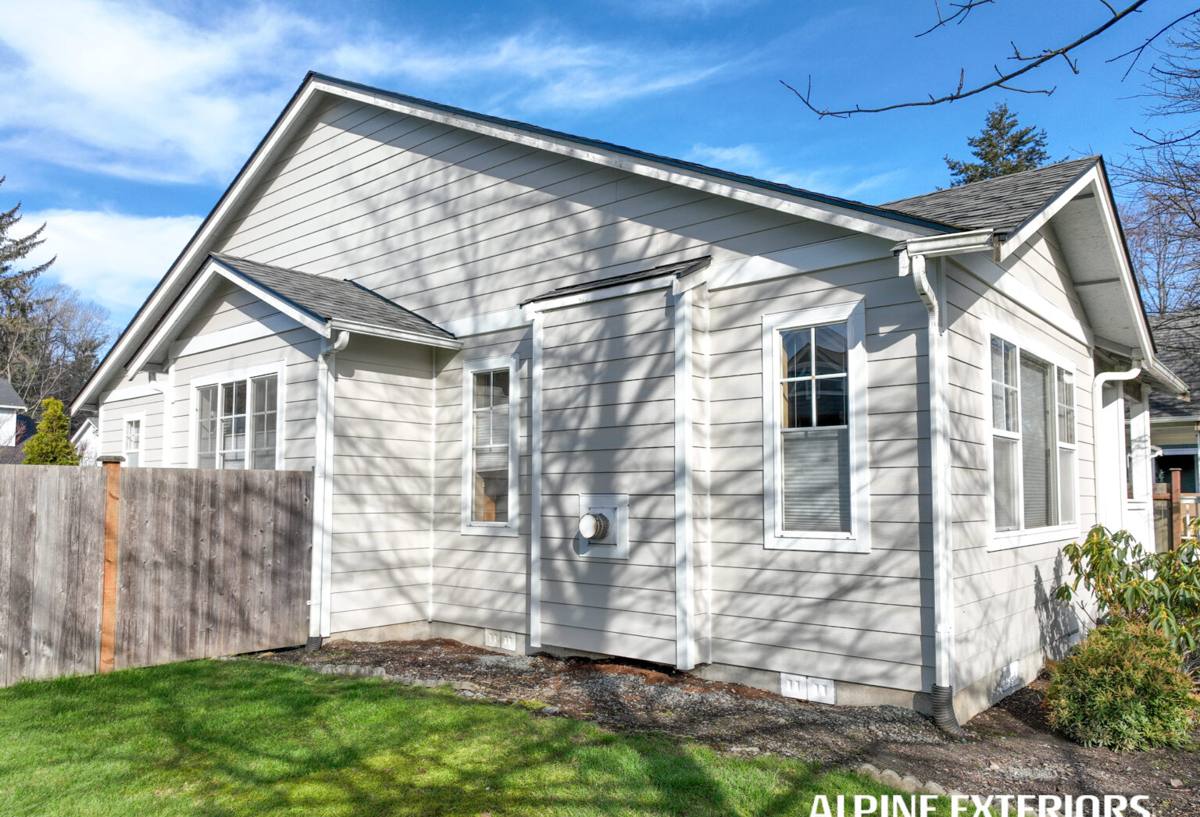
What Driving Rain, Moss, and Damp Shade Actually Do to a Roof
It helps to understand the mechanism, not just the symptom.
Driving Rain
Wind-driven rain doesn't just fall straight down — it gets pushed sideways and upward under laps, around flashing, and into any gap that a calmer climate would never test. A roofing system that relies on gravity alone to shed water will eventually leak in this kind of weather. It needs mechanically sealed or interlocking seams, and flashing detailed to handle water moving in more than one direction.
Moss and Organic Growth
Moss needs three things to take hold: moisture, shade, and a surface it can grip. Acme's tree cover supplies the first two in abundance. Rough or porous roofing surfaces give moss the third. Once moss establishes itself, it holds water against the roof surface, works into laps and fastener holes, and accelerates whatever decay process the underlying material is prone to.
Marine Air and Corrosion
Whatcom County's proximity to Puget Sound means the air carries a fine amount of salt, even well inland. On uncoated or poorly coated metal, that translates to accelerated oxidation over time, especially at cut edges, fastener heads, and anywhere the protective coating has been scratched or worn through.
None of these are exotic problems. They're the same forces that affect every roof in this part of the county. The difference is how much a given material and installation resist them.
Why Metal Roofing Fits This Climate
Metal roofing addresses the three problems above directly, when it's the right product installed the right way:
- Sheds water fast. A steep, slick metal surface gives rain less time to sit or find a way in, which matters when storms roll through sideways.
- Resists moss better than most surfaces. Smooth metal panels give moss spores less to grip than a textured shingle surface, and the naturally faster runoff keeps the surface drier between rain events.
- Handles decades of freeze-thaw and moisture cycling without the granule loss, cracking, or curling that eventually catches up with asphalt shingles in a climate this wet.
- Coated correctly, it resists corrosion from the marine air that reaches this far inland, as long as the coating system and fastener hardware are matched to the environment.
That said, metal roofing is not automatically the right call for every home or every budget, and it's not maintenance-free. It's a material that rewards a correct installation and punishes a shortcut one — more so than some other roofing types, because the failure points (seams, fasteners, flashing) are fewer but less forgiving.
Comparing Metal Roofing Options
Not all metal roofing is the same product wearing different colors. The type matters for how it performs against moss, driving rain, and long-term corrosion.
| Type | How It Handles Water | Moss Resistance | Typical Lifespan | Best Fit |
|---|---|---|---|---|
| Standing seam (concealed fastener) | Excellent — interlocking seams with no exposed fastener penetrations | Very good, smooth panel surface | 40-60+ years | Homes with heavy tree cover or exposure to driving rain |
| Exposed-fastener metal panel | Good, but fasteners are potential leak points over time as gaskets age | Good | 25-40 years | Budget-conscious projects, outbuildings, secondary structures |
| Stone-coated steel | Good — profile mimics shingle or tile drainage patterns | Fair — textured coating gives moss more to grip than smooth panel | 30-50 years | Homeowners wanting a traditional look with metal's durability |
For a shaded, damp property like the ones common around Acme, we generally steer clients toward standing seam or another concealed-fastener system. Fewer exposed penetrations means fewer places for water to work its way in over the life of the roof, and the smoother surface holds up better against years of moss pressure. We'll still walk you through all the options honestly — sometimes a stone-coated or exposed-fastener panel is the right fit for the structure or the budget, and we'll tell you when that's the case.
What a Correct Installation Actually Involves
Metal roofing is unforgiving of shortcuts. A rushed or under-detailed install can look fine for a year or two and then leak in exactly the spots this climate is hardest on. Here's what we make sure happens on every job.
Underlayment and Ice-and-Water Protection
Metal panels are only as good as what's underneath them. We install a synthetic underlayment rated for the panel type, with self-adhered ice-and-water membrane at eaves, valleys, and any low-slope transitions — the exact areas where driving rain and ice dams put the most pressure on a roof.
Fastening and Panel Layout
Panels are laid out to minimize seams running against the prevailing wind and weather direction, and fastened with hardware rated to resist corrosion from marine air — not generic fasteners that will rust and stain the panel faster than the panel itself wears out.
Flashing and Penetrations
Every chimney, vent pipe, skylight, and wall transition is a place water wants to get in. We custom-fit flashing at every penetration rather than relying on universal boots or caulk to do the work — caulk is a maintenance item, not a waterproofing strategy.
Ventilation
A metal roof over a poorly ventilated attic traps moisture underneath the panels instead of shedding it off top. We check and correct intake and exhaust ventilation as part of the job, not as an afterthought, since trapped moisture causes problems metal roofing is otherwise built to prevent.
How Our Process Works, Start to Finish
1. On-Site Assessment
We walk the roof, check the decking condition, look at existing flashing and ventilation, and talk through what the tree cover and exposure on your specific lot mean for material choice. This is where we tell you honestly if metal is the right call or if another approach makes more sense.
2. A Clear, Written Estimate
You get a straightforward scope of work and price — what panel type, what underlayment, what flashing details, and why — before any work starts. No surprise change orders for things we should have caught during the assessment.
3. Installation
We protect landscaping and gutters, tear off and dispose of the old roofing, address any decking issues found underneath, and install the new system to the details above. We keep the site as clean as a working roof job allows, day to day, not just at the end.
4. Final Walkthrough and Cleanup
Before we consider the job done, we walk the roof and the property with you, check flashing and trim details up close, and do a full magnetic sweep for stray fasteners and debris around the home.
Maintaining a Metal Roof in a Moss-Prone Area
Metal roofing needs less maintenance than shingles, but "less" isn't "none," especially with the tree cover common around Acme. A simple annual routine keeps small issues from becoming roof-replacement issues:
- Clear leaves, needles, and branch debris from valleys and gutter lines at least once a year, more often on heavily wooded lots
- Keep overhanging branches trimmed back to reduce shade, debris, and moss pressure on the roof surface
- Check gutters and downspouts for clogs before the fall rains arrive
- Look for any moss or algae staining starting at valleys or panel edges and address it early with a gentle, non-pressure cleaning approach
- Have flashing and sealant points inspected every few years, particularly around chimneys and roof penetrations
- Avoid foot traffic on the roof beyond what's needed for maintenance — panel coatings can scuff, which opens the door to corrosion
Why It Matters to Hire a Crew That Already Works Out Here
Acme isn't downtown Lynden, and it isn't Bellingham. It's a smaller, more rural corner of Whatcom County, and roofing here means accounting for tree cover, longer driveways, septic and well systems that need to be protected during work, and a moisture pattern that's a bit different from the open, wind-exposed farmland closer to the valley floor. A crew that's worked this area before knows to plan for that before the trucks show up, not after.
It also matters because metal roofing is a specialized trade within roofing. Getting a standing seam roof to actually perform for 40-plus years in a wet, shaded climate takes experience with the material — panel handling, seam detailing, and flashing work that doesn't forgive guesswork the way some other roofing systems do. We'd rather walk you through exactly what your roof needs and why than sell you a product that isn't the right fit for your property.
If you're weighing a metal roof for a home in or around Acme, we're glad to come take a look, walk the roof with you, and give you a straightforward, no-pressure estimate — including an honest answer if metal isn't the best fit for your situation. Use the form below to get started.