 Lynden Exterior
 Abbotsford sits in the Fraser Valley, a short drive north of the border from our shop in Lynden, and the climate here does not forgive sloppy window work. Salt-tinged air moving in off the Strait, long stretches of driving rain, and a moss season that can run half the year all put steady pressure on window frames, sills, and the flashing details around them. A window that is not sealed and flashed correctly in this climate does not fail dramatically — it fails slowly, one damp winter at a time, until someone finds soft trim or a stained wall and wonders why.
We install windows in Abbotsford as an extension of the work we do throughout Whatcom County and the surrounding border area. Same crew, same materials standards, same attention to the water-management details that matter most in a wet coastal climate. This page covers what that looks like in practice — what local homes typically need, what a correct installation actually involves, and how we run the job from estimate to final walkthrough.
What Abbotsford's Climate Does to Windows
The Fraser Valley gets a lot of the same weather patterns we see in Lynden — wet Pacific systems, wind-driven rain off and on for months at a time, and enough humidity to keep moss and mildew active well past what drier climates would call "the rainy season." Add proximity to the coast and you get a low but real dose of salt in the air, which speeds up corrosion on hardware, fasteners, and untreated metal components.
None of that is exotic. It is just relentless. The failures we see in older or poorly installed windows in this region tend to follow a pattern:
- Wood or composite sills that stay damp long enough to soften, especially on north- and west-facing walls that dry slowly
- Moss and organic buildup around exterior trim, holding moisture against the frame instead of shedding it
- Corroded balance hardware or fasteners in older aluminum or steel-reinforced frames
- Failed seals letting wind-driven rain track behind the trim during storms, showing up later as interior staining
- Condensation between panes signaling a broken seal in an aging double-pane unit
A correct installation does not eliminate weather. It manages it — directing water away from the wall assembly instead of letting it find a way in.
Why "Good Enough" Installs Don't Hold Up Here
A window that would perform fine in a dry inland climate can underperform badly in Abbotsford if the installer treats flashing and sealing as an afterthought. The window unit itself is often not the weak point — the flashing, the sill pan, the sealant joints, and how the window ties into the building's water-resistive barrier are what actually determine whether a home stays dry through a wet Fraser Valley winter.
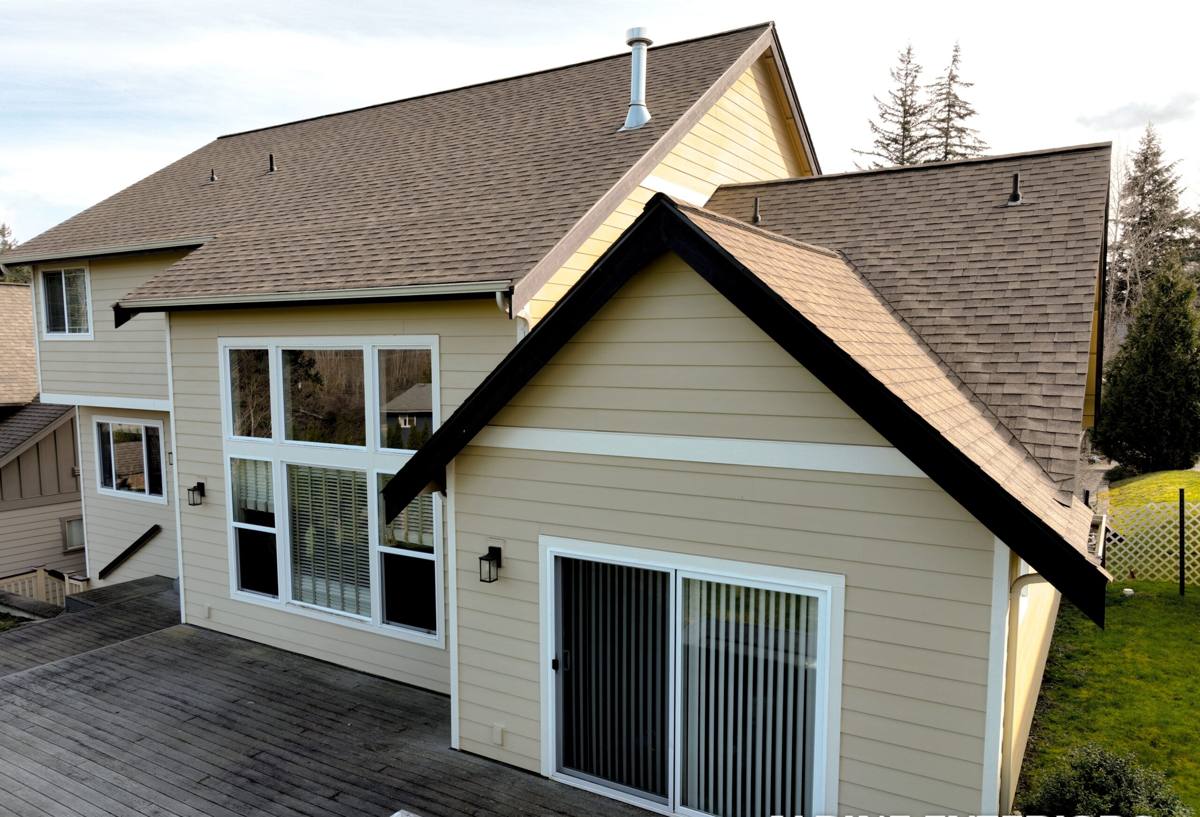
What a Correct Window Installation Actually Involves
There is a lot more to a proper install than setting a new unit into an old opening. The steps that matter most in this climate:
- Opening inspection. We check the framing, sill, and sheathing for hidden rot or moisture damage before anything new goes in. Installing a new window over a compromised opening just hides a bigger problem.
- Sill pan flashing. A sloped sill pan directs any water that gets past the window back outside instead of letting it sit against the framing. This is one of the most commonly skipped steps in budget installations, and it is the one that matters most in a high-rainfall climate.
- Proper integration with the water-resistive barrier. Flashing tape and building paper need to be layered correctly — upper courses overlapping lower ones — so water always sheds outward, never behind the barrier.
- Air sealing and insulation. The gap between the window frame and rough opening gets sealed and insulated correctly, which affects both energy performance and long-term moisture control.
- Exterior sealant and trim. Backer rod and sealant at the right joints, correctly sized and tooled, keep wind-driven rain from tracking in around the perimeter.
- Final adjustment and operation check. Every window gets checked for square, level, and smooth operation before we call the job done.
Choosing the Right Window for a Fraser Valley Home
There is no single "best" window material — the right choice depends on the home, the budget, and how much upkeep the owner wants to take on. Here is how the common options compare for a coastal, high-rainfall climate like this one:
| Frame Material | Moisture Performance | Upkeep | Notes for This Climate |
|---|---|---|---|
| Vinyl | Good — won't rot, low water absorption | Low | Solid all-around choice for wet climates; quality varies a lot between manufacturers |
| Fiberglass | Very good — dimensionally stable, resists warping | Low | Handles temperature and moisture swings well; typically a higher upfront cost |
| Wood (clad exterior) | Depends on cladding integrity | Moderate to high | Attractive interior finish, but any breach in the exterior cladding invites moisture into the wood core |
| Aluminum | Poor thermal performance, prone to condensation | Moderate | Conducts cold and can corrode faster near salt air; we don't recommend it for most Abbotsford-area homes |
We are not tied to one brand or product line. Our job is to walk through the trade-offs honestly and help pick what fits the home and the budget, not to upsell whatever carries the best margin.
Full Replacement vs. Repair
Not every window issue means a full replacement. Sometimes a failed seal, worn weatherstripping, or a damaged sash can be repaired without replacing the whole unit. Other times, the frame or surrounding wall structure has degraded enough that repair is just delaying an inevitable replacement — and possibly hiding rot that keeps spreading behind the trim.
Signs It's Time to Replace, Not Repair
- Soft or spongy wood at the sill or jambs
- Persistent fogging between panes on multiple units
- Visible daylight or drafts around a closed window
- Frame material that has warped, cracked, or separated from the wall
- Windows original to a home built before modern flashing standards were common
We will tell you straight if a repair makes more sense than a replacement. A smaller job now is better for everyone than talking a homeowner into work they don't need.
Our Process, Start to Finish
The process is the same whether the job is one window or a whole-house replacement:
- On-site assessment. We look at the existing windows, the wall assembly where visible, and talk through what the home actually needs.
- Written estimate. Clear scope, materials, and pricing — no vague allowances that turn into surprise charges later.
- Scheduling around the weather. In a climate this wet, timing matters. We plan installs to minimize how long any opening sits exposed.
- Installation. Careful removal of the old unit, inspection of the opening, proper flashing and sealing, and setting the new window to spec.
- Cleanup and walkthrough. We walk the finished work with the homeowner, check operation on every unit, and answer any questions before we consider the job done.
Why a Local, Cross-Border Crew Matters
Abbotsford is close enough to our Lynden base that we treat it as part of our regular service area, not a special trip. That matters in a few practical ways. We already know what this climate does to a window installation over five, ten, twenty years — because we see the results of both good and bad installs throughout Whatcom County and the surrounding Fraser Valley communities. We are not learning the region's weather patterns on your job.
It also means we can be realistic about scheduling, follow-up, and being reachable if a question comes up after the work is done. A crew that treats every job as a one-time visit has less incentive to get the small details right — the flashing lap, the sealant joint, the sill slope — that only show their worth years down the road.
Maintaining Your Windows After Installation
Even a correctly installed window needs some basic upkeep in this climate:
- Clear moss and organic debris away from exterior trim and sills at least once a year
- Check exterior caulking annually for cracking or separation, especially after a hard winter
- Keep weep holes on operable windows clear of debris so water can drain properly
- Watch for condensation between panes, which signals a seal failure worth addressing early
- Lubricate hardware periodically, especially on units facing prevailing wind and rain
A few minutes of seasonal attention goes a long way toward protecting the installation and catching small issues before they become expensive ones.
If you're weighing a window replacement or repair for a home in the Abbotsford area, we're happy to take a look and give you a straight, no-pressure estimate. Fill out the form below and we'll set up a time to come by.