 Lynden Exterior
 Building Decks for Blaine's Coastal Conditions
Blaine sits right on the water at the edge of Whatcom County, and that changes what a deck has to survive compared to a deck built a few miles inland. Salt-laden air off the bay, wind-driven rain that gets pushed sideways into every joint and seam, and a wet season that stretches long enough to grow moss on almost anything horizontal — these aren't abstract concerns here, they're the baseline. A deck built to a generic spec sheet will often look fine for a year or two and then start showing problems: soft spots, rust streaks at fastener heads, green film on the boards by late fall. A deck built for Blaine specifically holds up because the material choices, the fastener hardware, and the drainage details were picked with this exact climate in mind.
This page covers what we actually do differently when we build a deck for a home in Blaine, not a generic overview of deck construction. If you want the broader picture of our deck services across the area, that's covered on our main decking page — this one is about the coastal specifics.
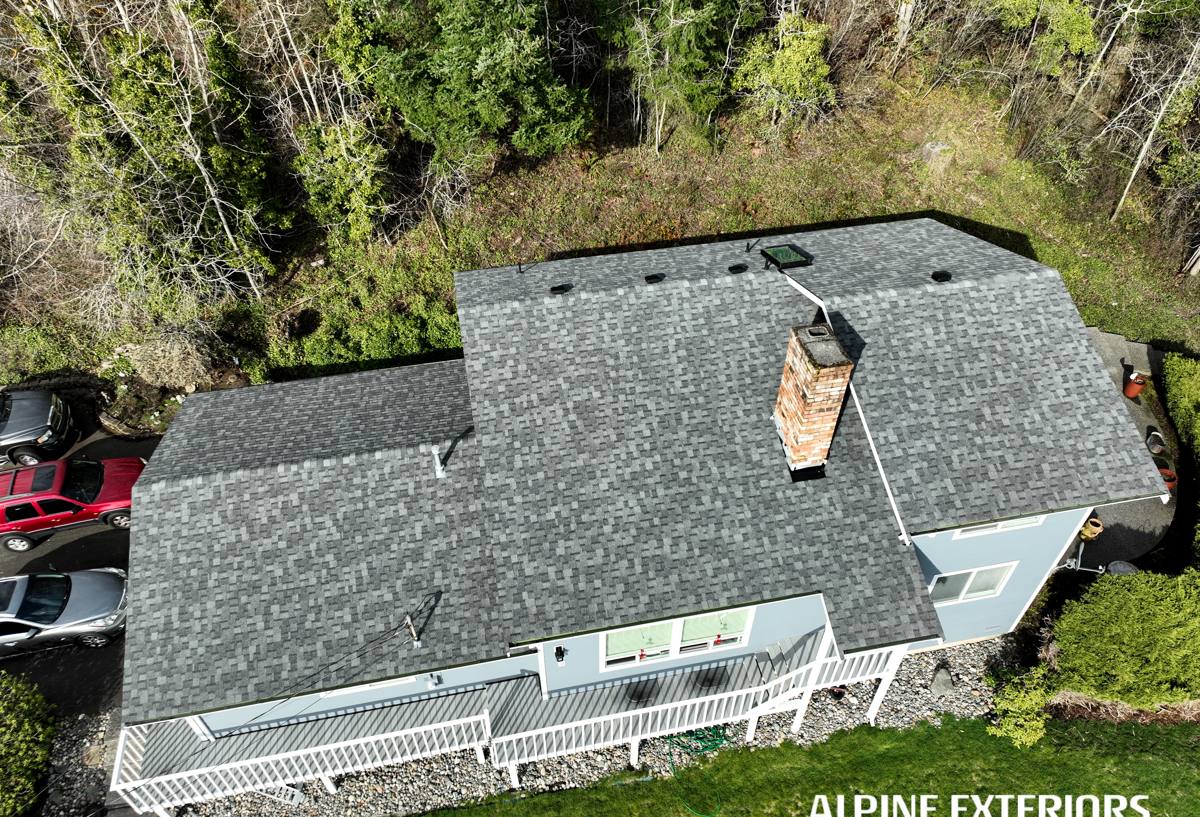
What Salt Air and Long Wet Seasons Do to a Deck Over Time
Three things drive deck failure in a coastal Whatcom County location like Blaine, and they compound each other:
Corrosion
Salt air accelerates corrosion on any exposed metal — nails, screws, joist hangers, structural brackets. Standard galvanized fasteners that would last decades inland can start showing rust bleed within a few years this close to the water. Once a fastener starts corroding, it loses holding strength long before it looks obviously bad, which is part of why deck fastener choice matters more here than in most parts of the county.
Moisture cycling
Driving rain doesn't just fall on a deck, it gets pushed under railings, into end-grain cuts, and behind fascia boards where it doesn't dry out quickly. Wood that stays damp for extended stretches is exactly where rot starts, and it usually starts from the inside of a board or the underside of a ledger, not the visible top surface.
Moss and organic growth
A long moss season means anything shaded or slow to dry becomes a growth surface. Beyond looking bad, moss and algae hold moisture against the decking surface and make boards slick and unsafe underfoot, especially on stair treads.
None of this means a deck in Blaine can't last — it means the build has to account for these three things at every stage, from footings to the final board.
Choosing the Right Decking Material for a Coastal Home
There's no single "best" decking material for every homeowner — it depends on budget, maintenance tolerance, and how close to the water the home sits. Here's how the common options actually perform under Blaine's conditions:
| Material | Coastal Performance | Maintenance | Typical Lifespan Here |
|---|---|---|---|
| Pressure-treated pine | Fair — needs consistent sealing to resist moisture cycling | Annual cleaning, re-seal every 1-2 years | 10-15 years with upkeep |
| Cedar | Good natural rot resistance, but surface grays and softens without upkeep | Regular cleaning and periodic oiling | 15-20 years with upkeep |
| Capped composite | Very good — shell resists moisture absorption and salt staining | Occasional washing, no sealing | 25-30+ years |
| PVC decking | Excellent — fully synthetic, unaffected by moisture or salt | Occasional washing | 25-30+ years |
We're honest with homeowners about the trade-off: cedar and pressure-treated wood cost less up front and look the part, but in a salt-air, high-rain location they demand more upkeep to hit a long lifespan. Capped composite and PVC cost more initially but remove most of the maintenance burden, which matters if the deck is meant to be enjoyed rather than maintained. We install both — the right call depends on your budget and how much annual upkeep you actually want to sign up for.
Framing and Fasteners: Where Coastal Deck Problems Actually Start
The decking surface gets all the attention, but framing failures are what actually bring a deck down, and framing is where a lot of corner-cutting happens because it's hidden once the boards go on. For Blaine builds we treat the substructure as the priority, not an afterthought:
- Stainless steel or coated structural screws instead of standard galvanized, especially for ledger bolts and joist hangers exposed to salt air
- Joist tape or flashing on top of every joist to stop water from sitting against the wood and wicking into fastener holes
- Correctly sized and spaced joist hangers rated for the load and the fastener type being used
- Pressure-treated framing lumber rated for ground contact where posts meet footings, even if the visible structure sits above that line
This is also where we see the most corner-cutting on decks that were built quickly or cheaply — a deck can look identical from the top with correct or incorrect framing underneath, and the difference only shows up five or ten years later as soft spots, sagging, or a railing post that's gone loose.
Footings, Drainage, and Ledger Attachment
Whatcom County's building codes set minimum footing depth and ledger attachment standards for good reason — frost heave and moisture-saturated soil both put real stress on a structure that isn't anchored correctly. For a coastal build we pay particular attention to:
Footing depth and drainage
Footings need to sit below the frost line and on stable, well-draining soil. Where soil holds water, we address drainage around the footing rather than just pouring concrete and hoping — a footing sitting in saturated ground is a long-term problem regardless of how much concrete goes in.
Ledger board attachment
The ledger board — where the deck attaches to the house — is the single most common source of structural deck failure nationwide, and it's a moisture point that matters even more with driving rain pushing water sideways into that seam. Proper flashing behind and over the ledger, correct fastener spacing, and a small gap or flashing detail to keep water from tracking behind the siding are non-negotiable on every deck we attach to a home.
Post-to-footing connections
We use appropriate metal connectors rated for uplift and lateral load, not just posts set into wet concrete, which traps moisture against the base of the post and is a common rot starting point.
Our Deck Building Process
We walk every Blaine job the same way, because skipping steps is exactly how coastal-specific problems get missed:
- On-site assessment — we look at sun exposure, prevailing wind and rain direction, drainage patterns, and how close the site sits to salt-air exposure, since even within Blaine that varies by lot.
- Material and layout discussion — we walk through decking material trade-offs, railing style, and layout with you before anything is ordered.
- Permitting — we handle the permit application and inspections required for the build, which is standard for most deck projects in this jurisdiction.
- Footings and framing — built to code minimums or better, with coastal-grade fasteners and flashing throughout, not just at the ledger.
- Decking, railing, and finish work — installed per manufacturer spec where composite or PVC products are used, since improper spacing or fastening on these products can void warranty coverage.
- Final walkthrough — we go over basic maintenance expectations for whatever material was installed, so there are no surprises in year two or three.
Railings, Fascia, and Finish Details That Matter Here
Finish details are where a lot of coastal decks show wear first, because they're often lower-grade materials than the main decking surface. Fascia boards, stair stringers, and railing posts all take direct rain exposure and don't always get the same fastener and flashing attention as the main deck field. We apply the same coastal-grade fastener and flashing standard to these components as we do to the structural framing — a deck with a solid frame but a rotting fascia board still looks unfinished and still needs repair. Aluminum and composite railing systems are worth considering here specifically because they don't carry the same corrosion and moisture-absorption concerns as painted wood railings exposed to salt air.
Keeping a Blaine Deck in Good Shape
Whatever material you choose, a little seasonal attention goes a long way in this climate. A simple checklist we give homeowners:
- Sweep debris and standing organic matter off the deck surface regularly, especially in fall
- Rinse or lightly scrub off moss and algae before it gets established, particularly on shaded areas and stair treads
- Check fastener heads once a year for early rust staining, which shows up before structural weakening does
- Inspect the ledger board area and flashing annually for signs of water tracking behind the house siding
- Re-seal wood decking on the schedule appropriate to the product — don't wait until it looks obviously weathered
- Keep gutters and downspouts near the deck clear so roof runoff isn't dumping extra water onto or under the structure
Why It Matters to Hire a Crew That Already Works in Blaine
A contractor who mostly builds decks inland, away from salt air, isn't necessarily building to the wrong standard — they're building to a different standard, one that doesn't need to account for the corrosion, moisture cycling, and moss growth that are routine here. We build decks across Whatcom County, including plenty in Blaine and other coastal spots around the bay, so the coastal-grade fastener choices, flashing details, and material trade-offs described above aren't an upsell — they're just what we do by default for this location. That local pattern recognition is worth something: it means fewer surprises during the build and a deck that's still solid a decade in, not just good-looking at handoff.
If you're planning a new deck or replacing one that's showing its age, we're happy to take a look and put together a straightforward, no-pressure estimate — just fill out the form below.