 Lynden Exterior
 Storm Damage in Acme Isn't Like Storm Damage Everywhere Else
Acme sits in a part of Whatcom County where weather doesn't arrive politely. The valley terrain around the Nooksack River funnels wind in ways that flatter, more open ground doesn't, and the tree cover that makes the area beautiful also means limbs, cones, and whole branches come down on roofs during fall and winter storms. Add in the marine-influenced moisture that pushes inland off the Sound and settles into these low-lying, tree-shaded lots, and you get roofs that stay wet longer after a storm than they would in drier parts of the state. That combination of wind-driven damage and slow-drying surfaces is exactly what leads to problems that don't show up right away — a lifted shingle or a cracked flashing seal that looks minor in October can be a soaked deck by January.
We're not describing a generic weather pattern here. It's the specific mix of wind exposure, tree density, and prolonged dampness that shapes how we inspect and repair roofs in this part of the county, and it's why a storm repair done for a house in a more exposed, open location doesn't always translate directly to a wooded Acme lot.
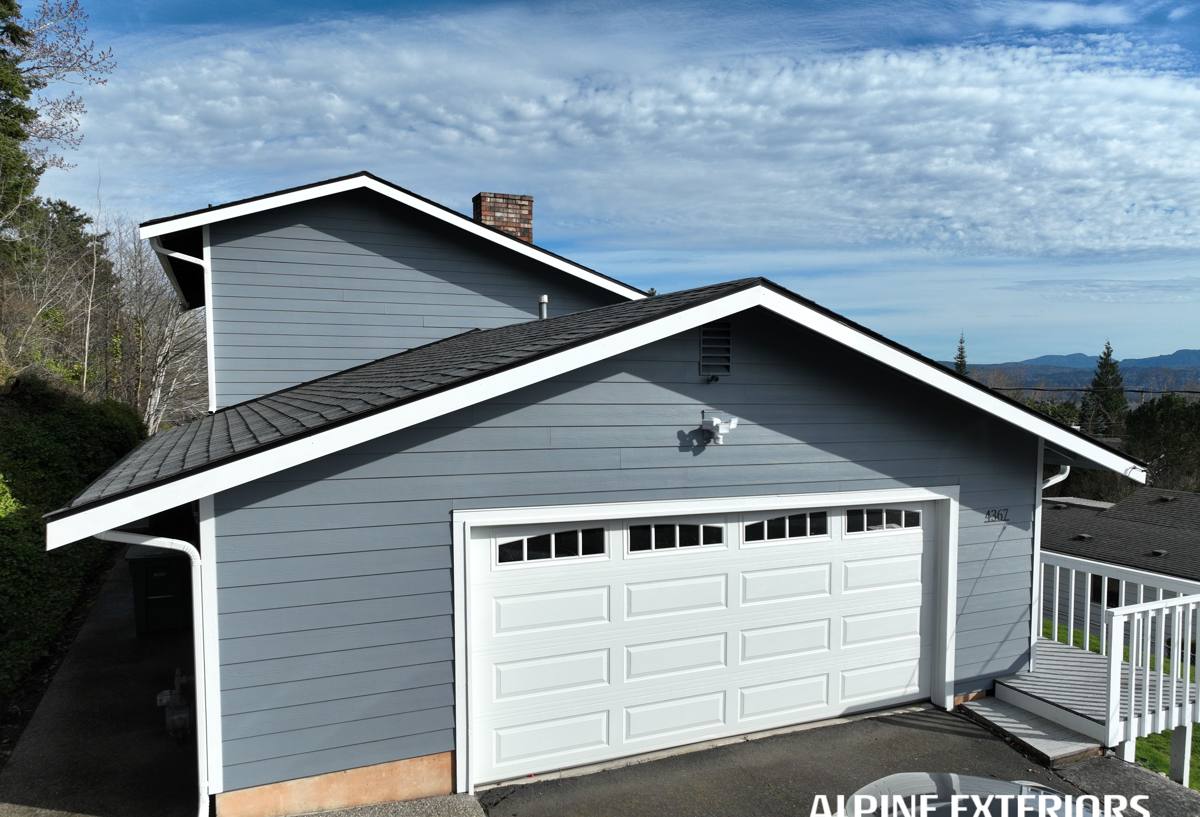
What Storm Damage Actually Looks Like Up Close
Wind Damage
Gusts don't need to be extreme to cause damage — they need to catch a shingle edge, a ridge cap, or a piece of flashing that was already slightly loose. Once wind gets under an edge, it can peel shingles back, crack sealant strips, or pull fasteners partway out. From the ground, a wind-damaged roof often looks fine. Up close, it's a different story.
Impact Damage
Falling branches and debris are a real factor on tree-lined lots. Impact damage ranges from cracked or punctured shingles to bruised areas that don't leak immediately but lose their granule protection and age faster from that point forward. Larger limbs can crack sheathing, which is a structural issue, not just a surface one.
Moisture and Moss Damage
This region's long moss season does more than make a roof look neglected. Moss holds moisture against the shingle surface, works its way under tabs and around fasteners, and gradually lifts material that would otherwise stay sealed. A roof that's been growing moss for a couple of seasons is often more storm-vulnerable than a clean roof of the same age, because the moss has already been prying at the seals.
Flashing and Penetration Failures
Chimneys, vents, skylights, and valleys are where most storm-related leaks actually originate — not the open shingle field. Flashing that's rusted, under-lapped, or sealed with caulk instead of proper step flashing is a common failure point after wind and heavy rain work on it repeatedly.
Our Storm Damage Repair Process
1. Inspection First, No Guessing
We walk the roof and the attic, not just one or the other. Ground-level inspections miss lifted tabs and cracked flashing; attic-only inspections miss the source until water has already spread. We check for active leaks, soft or discolored decking, damaged flashing, and shingle condition across the whole roof, not just the area the homeowner noticed damage.
2. Documentation
We photograph and note what we find in enough detail to support an insurance claim if the homeowner decides to file one. This isn't an adjuster's report, but clear documentation of the damage, its likely cause, and its extent makes the claims process faster and reduces back-and-forth.
3. Stabilize First if Needed
If there's an active leak or exposed decking, our priority is stopping further water intrusion before anything else — temporary protection over the damaged area while a full repair is scoped and materials are sourced. A roof that's actively taking on water doesn't wait for a scheduling gap.
4. Repair to Match, Not Just to Patch
We replace damaged shingles, flashing, and any compromised decking with materials that match the existing roof's profile and, where possible, color and weight. A repair that stands out or behaves differently than the surrounding roof tends to fail at its edges first.
Repair or Replace: How We Actually Decide
Not every storm-damaged roof needs full replacement, and not every roof that "just needs a patch" is actually a good repair candidate. We look at the age, condition, and extent of damage together before recommending either path.
| Factor | Leans Toward Repair | Leans Toward Replacement |
|---|---|---|
| Roof age | Under 10-12 years | Nearing or past expected service life |
| Damage extent | Isolated area, single slope | Spread across multiple slopes or the whole roof |
| Moss/moisture history | Minimal, recently cleaned | Long-term moss growth with underlying wear |
| Decking condition | Sound, dry | Soft, delaminated, or repeatedly wet |
| Shingle match availability | Matching material available | Discontinued or badly faded, mismatch would be obvious |
When a roof is borderline, we'll tell you honestly which way we'd lean and why, including the trade-offs — a repair is cheaper up front but if the roof is already near the end of its service life, you may be paying for a second repair sooner than you'd like.
Working With Insurance on a Storm Claim
A lot of storm damage in this area is claim-eligible, but the process goes smoother when the homeowner understands the sequence. We're not the insurance adjuster and we don't represent the insurance company — our job is to give you an honest, well-documented account of the damage so your claim reflects what's actually wrong with the roof, not more and not less.
- We document damage before any repair work covers it up
- We provide a written scope of the repair, including materials and labor
- We're available to meet with an adjuster on site if that's helpful to you
- We don't inflate scope to pad a claim — it's not good for you long-term and it's not how we operate
Materials and Standards We Hold To
Storm repairs are only as good as what's underneath the visible shingle. We use ice-and-water shield or equivalent underlayment at vulnerable areas like valleys and eaves, proper step and counter-flashing at walls and chimneys rather than caulk-only fixes, and shingles matched as closely as possible to the existing roof's brand, style, and color run. Where an exact match isn't available because a product line has been discontinued or the existing roof has faded significantly, we'll walk you through the options rather than installing a visibly mismatched patch and calling it done.
We're upfront when a repair approach has real trade-offs. For example, a quick surface-level patch over a valley with underlying moisture damage might look fine for a season, but it doesn't address the moisture problem — our standard is to open up and correct what's actually wrong, even if that means a slightly larger repair than the homeowner initially expected.
Reducing Repeat Storm Damage
A repair fixes what already happened. A few ongoing habits reduce how often it happens again, especially on a wooded, moisture-prone Acme property.
- Keep gutters clear so water isn't backing up under the roof edge during heavy rain
- Trim back branches that overhang the roofline before they become a wind hazard
- Address moss early — a light, roof-safe treatment is far cheaper than the repair that follows years of moss lifting shingle tabs
- Have the roof checked after any significant windstorm, even if nothing looks obviously wrong from the ground
- Don't ignore small interior signs — a faint ceiling stain or musty attic smell often shows up long before a visible leak does
Why It Matters That We Already Work in Acme
A roofing crew that mostly works in open, exposed neighborhoods elsewhere in Whatcom County will approach a wooded Acme roof differently than one that already understands how tree cover, valley wind, and prolonged shade change what fails first and where. We know which areas of a roof tend to hold moss longest in this kind of setting, which flashing details tend to fail under sustained wind funneling through the valley, and how storm damage here tends to progress if it's left alone through a wet winter.
That familiarity also means faster response after a storm. When wind and rain move through this part of the county, we're not learning the terrain for the first time — we're already working it.
Get an Honest Look at Your Roof
If a recent storm has you wondering whether your roof took damage, or you've already spotted a problem area, we're glad to come take a look. The estimate is free, there's no pressure to move forward, and you'll get a straight answer about what's actually going on and what it would take to fix it right. Use the form below to get started.